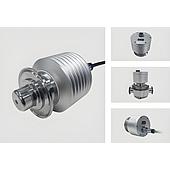
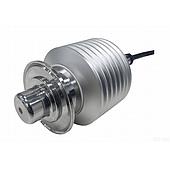
EL detector applications extend across photovoltaic (PV) workflows, from controlled research environments to large outdoor power stations. Each setting has different priorities: laboratory teams may focus on image detail and defect analysis, receiving teams need prompt checks at the delivery point, and operations teams need equipment that can be deployed in the field. Selecting an EL inspection solution therefore starts with defining the inspection task, site conditions, and required level of detail.
How EL detector applications support PV quality control
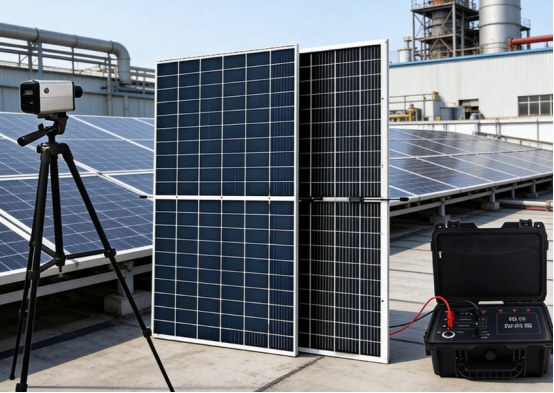
Electroluminescence inspection is used to examine PV modules for issues such as micro-cracks. The inspection process can support quality-management decisions at multiple points in a module’s lifecycle, including material research, production-related quality control, incoming acceptance, installation verification, routine operation and maintenance, and post-event investigation.
The same inspection objective does not always require the same equipment. A laboratory environment can prioritize detailed imaging and analysis, while a warehouse or outdoor site may place greater emphasis on speed, portability, and practical deployment. For extensive solar sites, airborne inspection can provide a way to screen a large area before directing closer follow-up work.
Laboratory R&D and detailed quality evaluation
Laboratory research and quality-control work generally requires high-definition imaging and the ability to investigate subtle module defects. These capabilities can help teams study materials, review processes, and evaluate the condition of individual modules in greater detail.
The FigSpec-PL-500 is identified for laboratory-oriented photovoltaic material research and quality-control applications, with hyperspectral imaging technology and analysis software. For high-detail EL inspection, the CS-EP-270 is presented as a higher-pixel option. The available information lists a resolution of up to 2560×2048 for this model and describes its use for observing subtle defects, including micro-cracks.
When the objective is technical investigation rather than rapid site screening, the inspection workflow should allow time for image review and defect interpretation. This makes laboratory-oriented systems a relevant option where detailed evidence is needed to support research or quality decisions.
Incoming module acceptance and warehouse spot checks
Incoming inspection is concerned with identifying potential transport-related damage without unnecessarily slowing installation schedules. In this setting, the ability to perform checks at a warehouse, unloading location, or other receiving area is central to the workflow.
The CS-EP series is described as a portable all-weather photovoltaic EL/PL tester range for in-situ spot checks. The source information states that these checks can be conducted directly at incoming material locations without auxiliary facilities. The CS-EP-250 is positioned as a mid-range choice for conventional receiving and incoming-material inspection scenarios.
A practical receiving plan can use sampling to focus inspection efforts on delivered modules before they move into installation. Where findings require closer review, the results can inform the next quality-control step without treating a broad screening exercise as a substitute for detailed analysis.
Post-installation inspection and daily PV maintenance
After installation, EL detector applications can help verify whether module handling or installation activity has introduced micro-cracks. During routine operation and maintenance, inspection can also contribute to a timely view of module condition and help prioritize additional investigation.
For field deployment, the available product information describes a lightweight CHNSpec EL detector design with total equipment weight below 1 kilogram and tablet-based operation. These characteristics are relevant where inspection teams work across uneven or complex terrain and need to set up quickly.
The CS-EP-230 is identified as an entry-level, 1.3-megapixel option for common power-station inspections. For more detailed work, including post-disaster assessment, higher-pixel models may be considered when the inspection plan calls for a deeper defect investigation. The appropriate choice depends on the required inspection detail rather than on a single model designation alone.
Drone-based screening for large photovoltaic sites
Large-area PV plants present a different inspection challenge: teams may need to screen many modules across a broad site efficiently. The EP-DU/EP-NU airborne EL/PL inspection detector series is intended for drone inspection in this type of application.
According to the available information, EP-DU/EP-NU is adapted to DJI M350/M400 drone platforms and supports nighttime EL, daytime EL, and daytime PL inspection modes. The series is also described as having a lightweight airframe to reduce drone load and a smart controller with a built-in display for real-time image preview.
Airborne screening can be useful for finding areas that warrant further attention. A well-structured workflow can combine this broad view with targeted ground-level inspection when confirmation or more detailed defect evaluation is required.
Choosing an EL inspection approach by scenario
For PV teams, the most relevant EL detector applications are determined by the location and purpose of inspection. Laboratory work calls for detailed imaging and analysis. Incoming acceptance emphasizes rapid, on-site checks. Field maintenance requires portable operation, while drone workflows focus on broad-area screening.
The CHNSpec examples in the available information span these scenarios: FigSpec-PL-500 for laboratory-oriented work, CS-EP-270 for higher-detail inspection, CS-EP-250 for incoming checks, CS-EP-230 for common field inspections, and EP-DU/EP-NU for airborne screening. Reviewing the inspection objective first helps match the workflow to the appropriate equipment category and level of inspection detail.