
PCB protective coating thickness gauge is an essential part of coating process control and post-production quality inspection for printed circuit boards. The protective coating, also known as conformal coating, is applied to printed circuit boards to help protect components and electrical circuits from dust, sand, moisture, salt spray, and conductive particles. Depending on the material, the coating can also help improve resistance to abrasion, impact, temperature effects, ozone exposure, and degradation caused by ultraviolet radiation
The appropriate measurement approach depends on the board construction and the available measurement location. Before selecting an instrument or method, consider the material beneath the coating, the size of the unpopulated area, and the specified thickness range. A copper ground plane, copper traces, fiberglass construction, and limited probe access can each affect the practical measurement method.
Why measure conformal coating thickness?
For PCB manufacturers, thickness checks can support control of coating application while maintaining adequate coverage. For incoming inspection, measurement can be part of a quality routine when coating condition is important to long-term product reliability after assembly.
Common conformal coating materials include acrylic and silicone. Epoxy, urethane, parylene, and UV-curable coatings may also be used. Application methods can include dipping, spraying, flow coating, selective coating, and robotic dispensing. Because the coating system and PCB construction vary, a method that works on one assembly may not be suitable for another.
PCBs with copper ground planes
For a PCB with a copper ground plane, eddy-current measurement using the PosiTector 6000 can provide a straightforward option. Measurements must be taken directly above the copper ground plane in an unpopulated board area. For best accuracy, the gage should be zeroed on the solder mask before measuring the conformal coating.
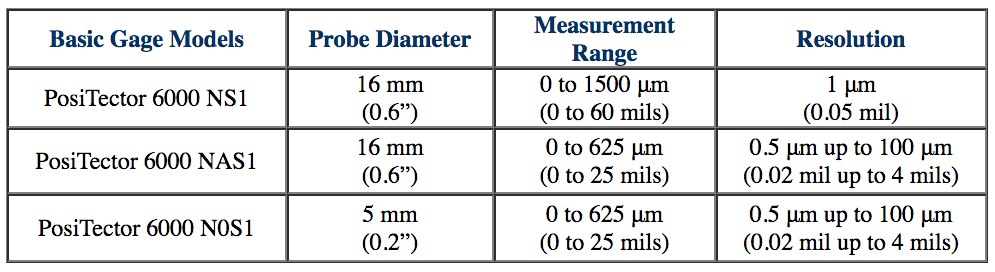
Probe selection should reflect the available open area, expected coating thickness, and required resolution. The PosiTector 6000 NS1 is presented as a simple solution for this application. The PosiTector 6000 NAS1 provides greater measurement resolution, while the PosiTector 6000 N0S1 has a smaller probe-tip diameter for smaller unpopulated areas and difficult-to-reach locations. A probe fixture stand may be used to reduce operator influence.
PCBs without copper ground planes
On some PCBs without a copper ground plane, the ultrasonic PosiTector 200 B1 can measure conformal coating thickness. This approach has limitations: the probe cannot be zeroed on the solder mask, and the layered structure of many PCBs can occasionally produce false thickness values. Its suitability should therefore be evaluated for the specific board and coating application.
Applications identified as potentially suitable include thick silicone coatings and measurements over 2-layer boards. The PosiTector 200 B1 has a stated measurement range of 13 to 1000 microns (0.5 to 40 mils) and a resolution of 2 μm (0.1 mil). Its 30 mm (1.2 in) diameter probe requires a relatively large unpopulated area, although the actual measurement area is 8 mm (0.3 in). A drop of water serves as the couplant during measurement.
When the PCB surface cannot be accessed
Heavily populated boards may not provide enough accessible surface for a probe. In this situation, the substitution method can be considered. A metal coupon is introduced into the same coating process and coated alongside the PCB, allowing thickness to be checked on the coupon instead of directly on the board.
For a non-ferrous metal coupon, such as aluminum, a PosiTector 6000 NS1 can be used for conformal coating thickness measurement. For a ferrous metal coupon, the magnetic PosiTector 6000 FS1 is required. The coupon should be processed alongside the board so that it represents the same coating operation.
A practical selection checklist
- Identify whether the measurement point is above a copper ground plane.
- Confirm the size and location of any unpopulated measurement area.
- Review the specified coating thickness range and required resolution.
- Consider whether the board construction may limit ultrasonic measurement.
- Use a coated metal coupon when direct surface access is unavailable.
By matching the method to PCB construction and access conditions, teams can establish a more appropriate conformal coating inspection process without relying on a single approach for every board design.
Selecting the appropriate measurement principle, probe, and inspection location helps ensure that measurement data more accurately reflects the actual condition of the coating. This provides a basis for monitoring the stability of the coating process, supporting quality inspection, and evaluating PCBs before they proceed to subsequent production stages.
Before standardizing a process with a coating thickness gauge, it is recommended to identify the coating type, PCB structure, locations of unpopulated areas, and coating method being used. On PCBs with copper planes, the measurement point should be located directly above the underlying copper layer. For ultrasonic measurement, suitability should be evaluated based on the specific board structure, as measurement results can be affected by the internal layers.




