So how does a vacuum cleaner work and why should you use one? The benefits it brings will definitely make you consider investing in one right away. Let's find out in the article below!
What is a vacuum cleaner used for?
Vacuum packaging machines are used in packaging and preserving food by removing air from the packaging.
Under normal conditions, oxidation reactions occur with organic substances in the product, causing them to spoil quickly. In particular, fresh foods such as pork, chicken, beef, or seafood such as shrimp, crab, and fish can usually only be preserved for 1-3 days at room temperature. Similarly, fruits such as strawberries or tomatoes are also very susceptible to spoilage in a short time.
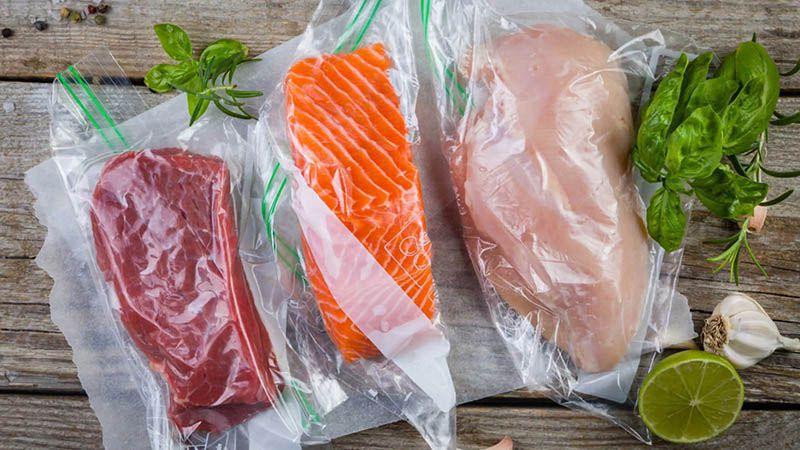
In order to meet the need for more effective food preservation, vacuum machines were born as a modern and convenient solution. This device not only helps to extend the shelf life but also preserves the quality and freshness of the product.
Vacuum cleaner classification
Vacuum packaging machines are divided into two main types, meeting different usage needs:
- Mini vacuum machine (family): Suitable for households and small businesses, with compact design and easy to use.
- Industrial vacuum machine: Designed for industrial zones or large manufacturing enterprises, meeting packaging requirements with high productivity.
Why is this method necessary?
The reason is because this is an effective preservation method, often applied to food, pharmaceuticals, medical equipment, and seafood. By removing air from the packaging, the product is protected from oxidation and bacteria, helping to extend its shelf life and ensure quality.
Not only stopping at food, the vacuum packaging method is also applied to protect other types of goods such as documents, electronic equipment, and industrial products. Removing air helps minimize the impact of the environment, ensuring that the product is not damaged by mold or corrosion.
What are the advantages of vacuum packaging method?
The vacuum packaging method utilizes specialized machines to remove oxygen from the packaging, helping to prevent oxidation and fermentation— the main causes of food spoilage.
Thanks to the vacuum environment, food products are preserved for a longer period, extending their shelf life by 3 to 5 times compared to conventional methods. This technique also slows bacterial growth, prevents mold and insects, and helps maintain the food’s freshness.
Beyond preservation, vacuum packaging helps retain the natural moisture and original color of food while protecting it from freezer burn. For dry goods, this method also ensures long-term stability.
Additionally, removing air helps save storage space, making transportation and usage more convenient. That’s why vacuum-packed food is commonly found in supermarkets, with its color and flavor preserved just like when it was first packaged.
Explore vacuum packaging machines at: EMIN Vacuum Packaging Machines