Consistent soy milk concentration is an important process objective for manufacturers. Variations in soluble solids can affect mouthfeel, product uniformity, heating behavior, and the suitability of the liquid for further soy product processing. An inline refractometer for soy milk provides a way to monitor concentration directly in the production line, helping teams observe changes without relying solely on manual sampling.
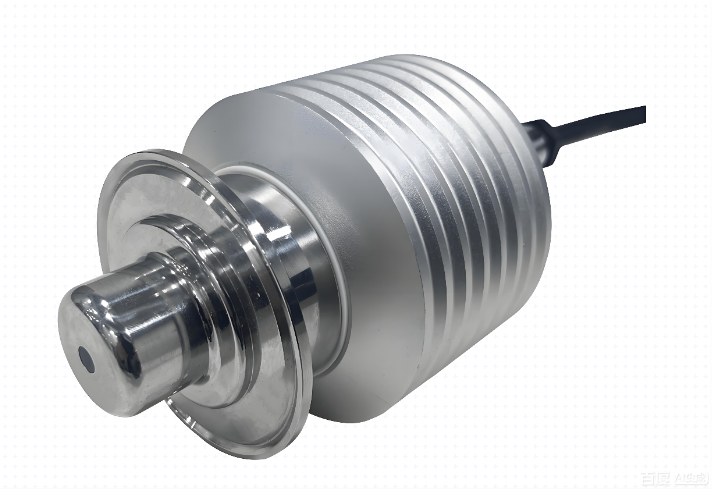
When selecting an instrument, the most useful decision criteria are not limited to a single accuracy figure. The measurement range, temperature conditions, presence of fine soybean residue, installation requirements, control-system connectivity, and maintenance approach should all be reviewed against the actual production process.
Why monitor soy milk concentration inline?
Soy milk contains water, proteins, carbohydrates, and other components. In production, concentration assessment is commonly associated with soluble solids measurement. A refractometer determines a reading from the refractive index of the liquid, allowing process teams to follow concentration trends during production.
If concentration is too high, the finished product may develop a thicker or stickier mouthfeel. Process issues during heating, including scorching or clumping, may also become more likely. If concentration is too low, the product can taste diluted and may affect downstream processing for products such as tofu or yuba.
An inline measurement point can support a faster response to changing conditions than a workflow based only on periodic samples. It also keeps concentration information closer to the point where operators need to make process decisions, such as adjusting water addition or dosing.
Key requirements for an inline refractometer
Measurement range and resolution
The source data describes soy milk soluble solids in a typical range of 8% to 12%. The CHNSpec Inline Refractometer is stated to cover 0–85% Brix, with accuracy up to ±0.01% Brix. This range is intended to capture relatively small concentration changes within the soy milk process range.
Rather than evaluating a specification in isolation, manufacturers should confirm that the instrument’s operating range and measurement capability fit their own concentration targets, recipes, and control limits.
Temperature compensation
Temperature is a practical consideration because soy milk may be processed at 40–80°C. The source describes temperature compensation over 0–100°C for the CHNSpec Inline Refractometer. Compensation is designed to reduce the influence of temperature changes on measurement results, which is especially relevant where process temperatures vary across production stages.
Suitability for residue in the line
Fine soybean residue can be present in the liquid and may accumulate on a measurement surface. The source states that the instrument uses a sapphire lens with wear- and corrosion-resistant characteristics, together with a self-cleaning design. In an application review, the production team should consider the nature of solids in the line, cleaning practices, and the accessibility of the installed probe.
Supporting real-time process control
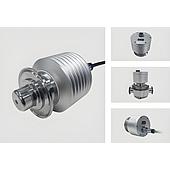
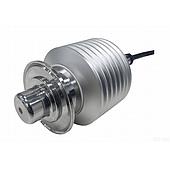
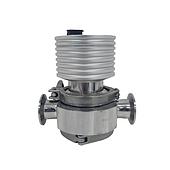
The CHNSpec Inline Refractometer is described as being installed directly on a soy milk pipeline, where it can collect and transmit concentration data in real time. The source states an update rate of up to 50 times per second.
For a production line, the value of inline Brix measurement is often in the workflow that follows the reading. When a measurement moves outside a defined threshold, the system may be configured to provide an alarm or work with dosing and water-addition equipment. This creates a measurement, feedback, and adjustment process that can help operators address deviations earlier.
The appropriate control response should be determined by the manufacturer’s own process design. Thresholds, adjustment logic, and verification procedures need to reflect the product specification and operating conditions.
Data handling and system integration
Process records can be useful for production review and quality traceability. According to the source, the instrument includes a touchscreen interface and supports RS485 and Ethernet communication. These interfaces can support connection to a production management system for storing, querying, and exporting concentration data.
Before selection, confirm the communication method required by the existing control environment. Teams should also define which data must be retained, how often it is recorded, who reviews deviations, and how the records fit into their internal quality procedures.
Maintenance and installation considerations
Food production environments can be humid and dusty, while continuous operation places additional demands on equipment. The source lists protection up to IP67 for the CHNSpec Inline Refractometer and indicates that routine maintenance involves periodic probe cleaning.
Installation should be planned around the pipeline layout and operating conditions. Important considerations include pipeline diameter, available mounting location, process capacity, cleaning access, and the location of any control-system connections. Reviewing these factors in advance helps ensure that the instrument is positioned where it can provide useful, representative readings.
How to choose for your soy milk line
A suitable inline refractometer should align with the actual production application. Start by documenting the soluble-solids target, normal temperature range, process flow, residue level, desired data connection, and control strategy. Then compare these needs with the instrument’s stated range, temperature compensation, probe design, protection level, and communication options.
For manufacturers seeking continuous soy milk concentration testing, the CHNSpec Inline Refractometer is presented as an option with 0–85% Brix coverage, stated accuracy up to ±0.01% Brix, 0–100°C temperature compensation, and RS485 and Ethernet connectivity. A final selection should be based on a technical review of the specific pipeline and production requirements.