The Moving Die Rheometer GT-KR01 is a rubber testing instrument used to evaluate how a rubber compound behaves during curing. For laboratories and production quality-control teams, cure behavior is important because it helps them understand how a formulation responds to controlled heat, pressure, and mechanical movement. The resulting information can support formulation development, process monitoring, and more consistent evaluation of rubber compounds.
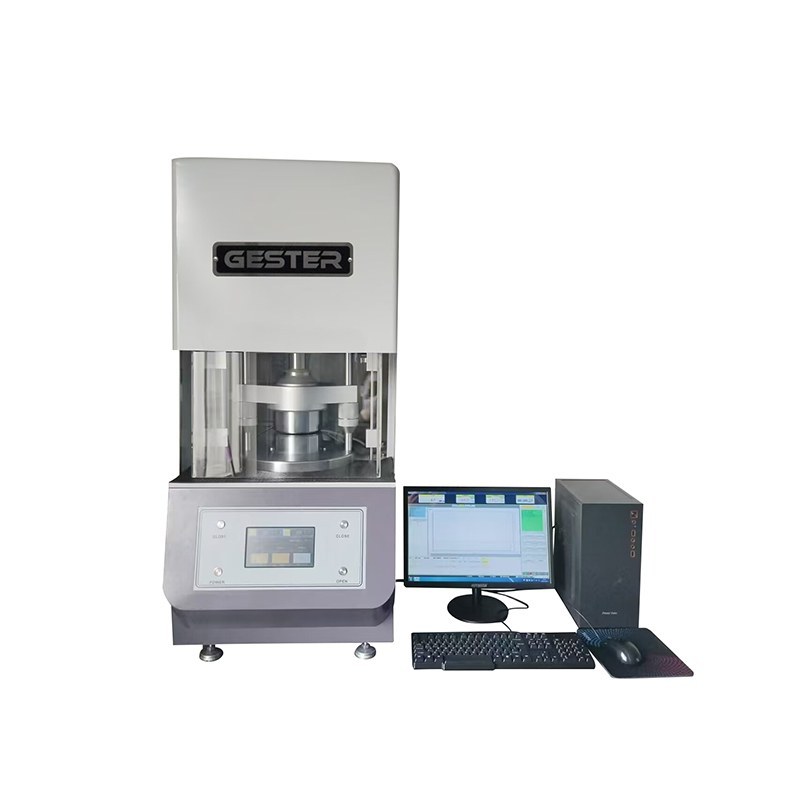
What does the Moving Die Rheometer GT-KR01 measure?
A moving die rheometer, often called an MDR rheometer or rubber rheometer, examines the rheological response of a rubber specimen while it cures. In this context, rheological response describes the material’s behavior under the test conditions rather than a finished product’s field performance.
The GT-KR01 is described as measuring torque response as the specimen undergoes cure. This response can be used to assess key curing characteristics, including scorch time, cure time, cure rate, viscoelasticity, and the cure plateau. Reviewing these values together gives users a clearer view of how a compound develops during the test cycle.
Key cure parameters
- Scorch time (tₛ): the time before the curing process begins.
- Cure time (t₉₀): the time associated with the rubber reaching its optimal cure condition.
- Cure rate: the speed at which the compound cures.
- Viscoelasticity: a measure related to resistance to deformation while retaining elastic behavior.
- Cure plateau: an indication that the curing response has stabilized.
How the GT-KR01 testing process works
The test begins with placement of a small rubber compound specimen into a sealed, pressurized cavity between two dies. The system then applies controlled heating at a specified temperature to initiate and monitor the cure process.
During the test, the lower die generates sinusoidal oscillations. The rubber sample responds to this movement as its condition changes under heat and pressure. A torque sensor associated with the upper die detects the corresponding torque response. Rheometer software is used to analyze the test data and present a profile of the compound’s curing characteristics.
This controlled sequence is useful because it brings several influential conditions together in one method: sample confinement, temperature, oscillation, and torque detection. Instead of relying only on a final cured sample, users can examine changes occurring throughout the curing phase.
Why cure analysis matters for rubber quality control
Rubber compounds are used in products and components with different functional requirements. A testing workflow that tracks cure-related behavior can help laboratories compare compound responses and investigate differences between samples. It can also support decisions when refining formulations for a specific intended application.
For manufacturing teams, scorch time, cure time, and cure rate are particularly relevant to production planning and process control. Identifying these characteristics can help teams evaluate curing schedules and reduce uncertainty when reviewing compound consistency. The instrument is also positioned for research and development work, where detailed cure analysis can assist development of rubber formulations.
Results from a rubber rheometer should be interpreted within the laboratory’s own test procedures and product requirements. The instrument provides cure-characteristic data; acceptance decisions should remain tied to the applicable specification and established quality process.
Typical application areas
The Moving Die Rheometer GT-KR01 may be used wherever rubber compounds need curing analysis before or during development and quality evaluation. The source information identifies several relevant application contexts:
- Automotive: evaluating tire compositions and other rubber materials where durability and performance are important.
- Consumer goods: quality control of rubber products such as seals, gaskets, and footwear-related materials.
- Industrial manufacturing: development and evaluation of rubber components used in machinery and tools.
- Medical-related products: testing rubber formulations intended for medical equipment and supplies.
Software and data review
The GT-KR01 is described as using rheometer software for in-depth analysis of curing characteristics. A useful data-review workflow starts by confirming the test conditions, then comparing the curve and calculated parameters across samples tested under the same procedure. This helps users distinguish a meaningful material difference from a change in test setup.
For research teams, torque data and cure parameters can provide a structured basis for comparing candidate formulations. For quality-control teams, the same information can support routine checks of compound behavior. In both cases, consistent sample handling and controlled test conditions are important for meaningful comparison.
Standards listed for the Moving Die Rheometer GT-KR01
The source information lists the following standards in connection with the Moving Die Rheometer GT-KR01:
- GB/T 16584-1996
- ISO 6502-3-2018
- ASTM D5289-2017
When a laboratory needs to work to a particular standard, it should confirm that the selected test method, settings, specimen preparation, and documentation align with its required procedure. Standards requirements can vary by application, material, and quality program.
Choosing an MDR rheometer for your workflow
When considering the Moving Die Rheometer GT-KR01, focus on the information needed from each test: the cure parameters to be reviewed, the role of the data in R&D or quality control, and the standards relevant to the laboratory. Its sealed cavity, controlled heating, sinusoidal lower-die movement, torque detection, and software-based analysis form the core of the stated testing approach.
By generating a detailed view of cure behavior, the GT-KR01 can help users assess rubber compounds before they move further through manufacturing or product-development workflows.