If you're interested in how water turbidity meters work, keep reading. They work on the principle that light rays pass through a water sample, and from there, evaluate the opacity of the water. This allows the water turbidity level to be determined accurately and quickly.
Don't let water turbidity negatively affect public health and aquatic production. Learn more about how turbidity meters work to keep your water in top condition.
What is water turbidity?
Turbidity, also known as opacity, is a measure of the loss of transparency in water. It results from the presence of small fine particles, invisible to the naked eye. These particles directly affect the color of the water, creating a "turbid" state and losing its aesthetics.
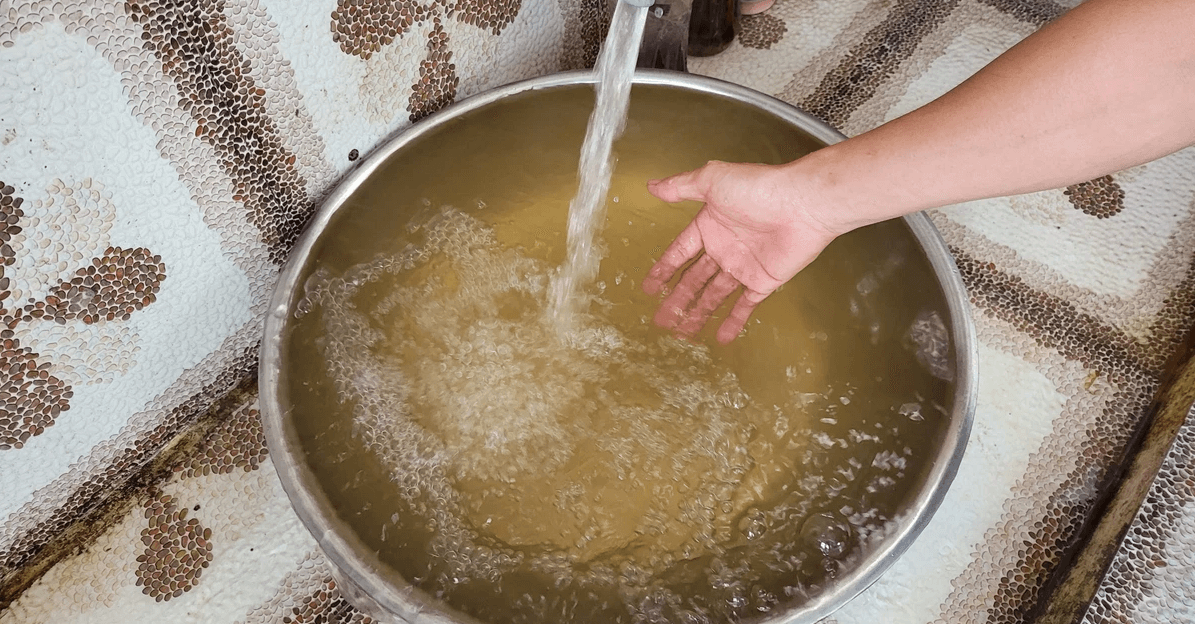
Turbidity represents an important optical characteristic of water, reflecting the degree to which light is scattered after passing through the water sample. The main cause is materials in the water source such as fine particles, silt, clay, moss, algae and microorganisms.
The higher the turbidity level, the greater the accumulation of particles and impurities in the water. This is also a typical indicator of the level of water pollution, which needs to be remedied to ensure it does not affect the health of humans and other living creatures.
Important units of measurement and causes of turbidity
To master water turbidity, learn about important measurement units such as NTU (Nephelometric Turbidity Units), FNU (Formazin Nephelometric Units), FTU (Formazin Turbidity Units) and FAU (Formazin Attenuation Units). Never forget that 1 NTU = 1 FNU = 1 FTU = 1 FAU.
The cause of turbidity is not simply from algae, dirt or minerals, but also from oil and even bacteria. The higher the turbidity level, the more the color of the water is affected.
Make a clear distinction between turbidity and TDS (Total Dissipation) - another important measurement. Turbidity represents the clarity of water, while TDS measures the total mass of suspended solids. Opacity is not simply opacity, but also has many more important meanings.
Don't be surprised that highly turbid water also comes with higher temperatures. Suspended particles absorb heat, leading to reduced dissolved oxygen concentrations. High turbidity also reduces light entering the water, limiting photosynthesis and oxygen production. This causes difficulties and great impacts on organisms living in the aquatic environment.
The higher the turbidity, the more suspended matter, causing more inconvenience and having a strong impact on the growth and development of species living there. The causes of water turbidity are diverse, ranging from soil erosion to wastewater discharge, urban runoff, and many other factors. Need to focus on solutions to protect water sources and living environment.
Effective method of measuring turbidity
Water with high turbidity not only affects aesthetics, but also creates favorable conditions for the growth of dangerous pathogens. This is why it is so important to measure turbidity in our water sources. This helps us control and handle this situation promptly, protecting the safety of the whole family.
There are two common methods for measuring water turbidity: visual methods and using a turbidity meter.
Intuitive method
To use this method, we need to prepare a Secchi disc - a simple monitoring tool to measure water turbidity. Secchi discs are usually made from stainless copper alloy, ensuring resistance to chemical environments.
The Secchi disc has a flat circular shape, equipped with a tape measure 5 - 10m long, divided into clearly numbered segments, each segment is 20cm long. We measure turbidity using Secchi disc as follows:
Step 1: Install the Secchi disc, tie the tape measure to the circular hook on the surface of the disc.
Step 2: Drop the disc into the water, hold your hand on the other end of the tape measure and release slowly until the disc is no longer visible.
Step 3: Maintain the same state, observe and mark the point of contact with the water surface of the tape measure.
Step 4: Continue lowering the disc another 0.5m, then lift it up slowly and read the turbidity value a second time.
Step 5: Calculate the average of the two turbidity values. The result will be an index showing the turbidity of the water.
Method of using turbidity meter
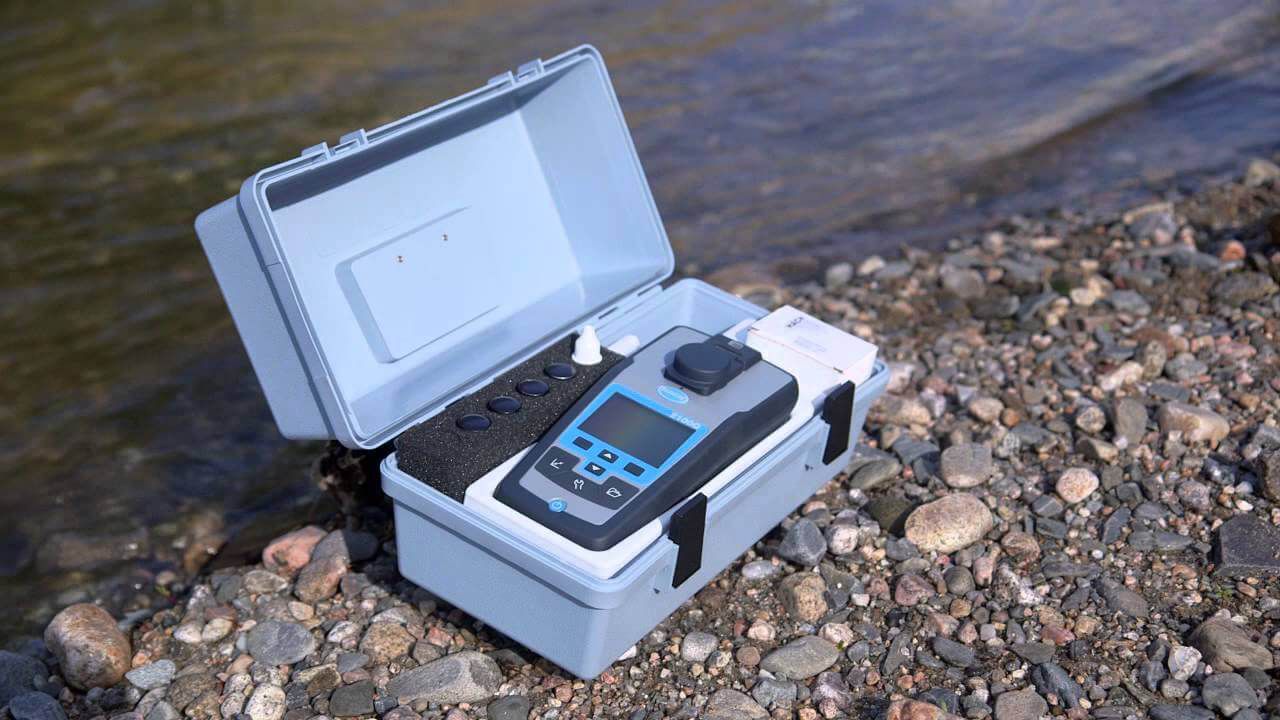
Although the visual method is quick and simple, for accurate results we should use a turbidity meter. This type of machine is designed to evaluate the turbidity level of water sources. This machine uses a light detection and image analysis system to measure the level of light scattering. This method is very effective and widely used to control water pollution.
To measure turbidity, we take a water sample and place it in the light source of the meter. Particles and impurities in the water sample will scatter light to the detector at a 90 degree angle. The detector automatically determines the level of scattering and compares it to standards on the curve accurately.
Ways to reduce turbidity you should know
Testing and measuring water turbidity is a necessary step to come up with the most effective treatment solutions. There are many different methods to help make our water cleaner and more secure. Below are some specific methods:
Use Alum:
Alum (KAl(SO4)2.12H2O) is a solution that has been used for a long time. It is simple, quick and cost-effective to implement. Just 1 gram of alum can treat 20 liters of water.
How to use: Add alum to the water source to be treated. After a period of time, the dirt will sink to the bottom, leaving clean water on the surface. This method is relatively safe and does not affect the environment.
(Note: To shorten the time, you can use PAC chemical sedimentation aid, which is also very effective).
Use Chlorine Chemicals:
Chlorine (Cl2) creates hypochlorous acid (HOCl) when it reacts with water. HOCl has the ability to kill bacteria, microorganisms and harmful germs in water. Chlorine also acts with solids in water, making the water clean and odorless.
This method is especially safe and is often used in daily drinking water treatment. Chlorine can be used as powder or TCCA 90 tablets.
Steps to disinfect water with chlorine:
Step 1: Add chlorine to the original water source to be treated.
Step 2: After a period of time, impurities, dirt and microorganisms will be removed and settle to the bottom, filtering the water.
Step 3: Add a sufficient amount of chlorine to the water to ensure clarity and prevent the growth of microorganisms and bacteria.
Disinfect Water with Salt
Using salt is a fairly common and effective way to disinfect water sources. Salt usually comes in the form of milky white crystals, and has the ability to destroy pathogens that may exist in water.
This method is extremely simple: just add a certain amount of salt to the turbid and colored water. Next, stir well or let the salt dissolve naturally. You will see the water gradually become transparent and pollution significantly reduced.