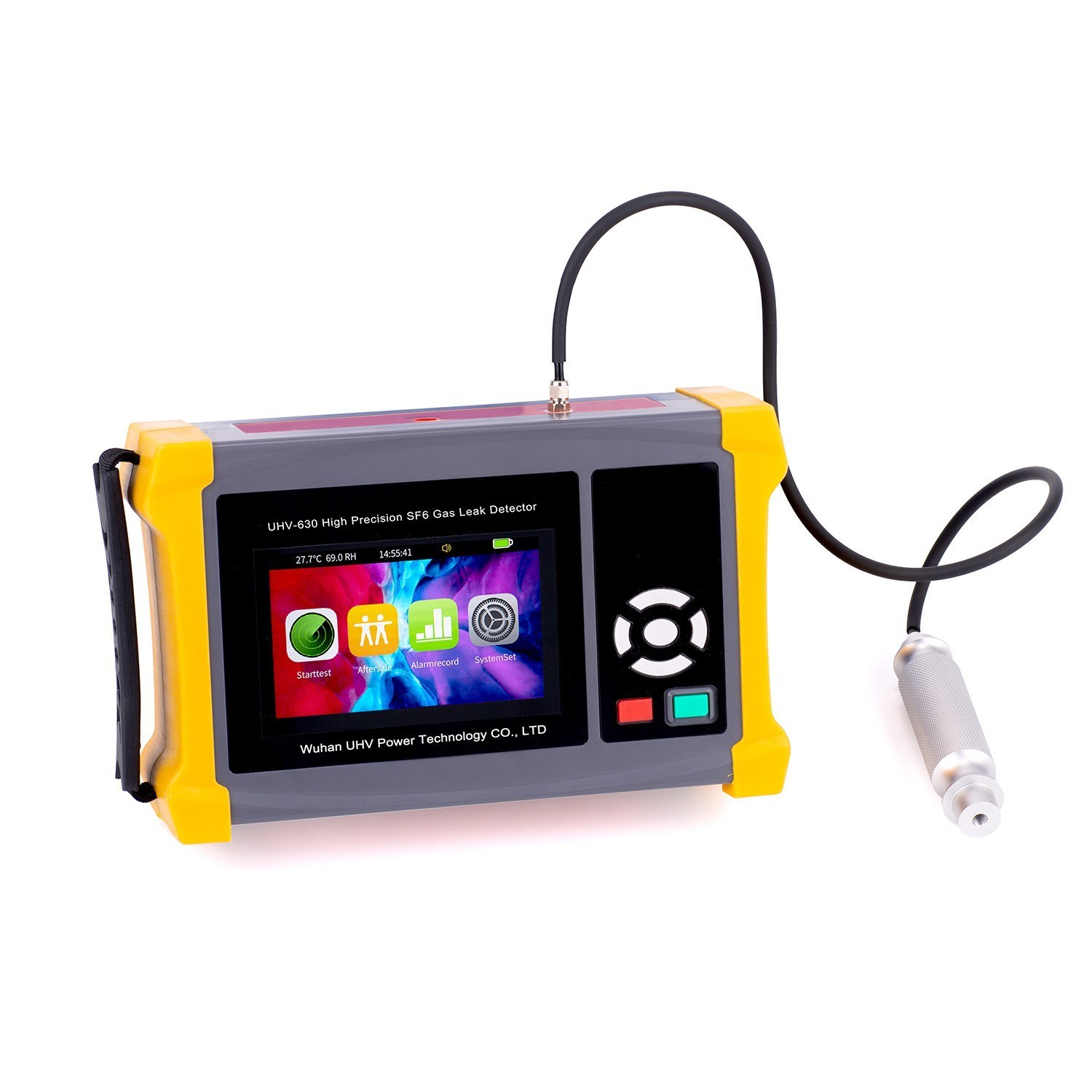
An SF6 quantitative leak detector helps maintenance teams identify suspected sulfur hexafluoride (SF6) gas leaks around high-voltage equipment. SF6 is used as an insulating medium in equipment such as high-voltage circuit breakers, gas-insulated switchgear, and gas-insulated transmission lines. A structured leak-detection process can help teams investigate equipment condition, prioritize maintenance work, and support records for SF6 gas management.
Why SF6 leak detection matters
Gas condition is an important consideration where SF6 serves an insulation function. If gas is lost from equipment, maintenance personnel may need to assess the source, operating condition, and required corrective action. Detecting a suspected leak early can help avoid repeated gas filling and unplanned maintenance activities.
SF6 management also has an environmental dimension. The source material identifies SF6 as a greenhouse gas, so reducing losses is part of a more responsible approach to handling gas-filled electrical equipment. A quantitative detector provides useful field information when it is combined with regular inspection procedures and accurate service records.
What an SF6 quantitative leak detector does
An SF6 quantitative leak detector is designed to detect SF6 in air near the equipment being inspected. By observing changes in gas concentration around fittings, joints, enclosures, and other suspected locations, an operator can narrow down the area that needs attention. This supports a more targeted inspection than relying on a visual check alone.
Detection technologies referenced for this type of work include infrared absorption spectroscopy and mass spectrometry. The appropriate method and instrument should be selected according to the maintenance task and site requirements. Rather than assuming one instrument fits every situation, teams should review the equipment type, working environment, and the information needed from the inspection.
Typical applications in high-voltage maintenance
SF6 leak testing is commonly associated with maintenance and inspection work on SF6-filled high-voltage equipment. It can be performed during routine service, after equipment work, or when there is a reason to investigate gas loss. Indoor switchgear areas and outdoor installations can present different operating conditions, but both require an organized approach to locating potential leakage points.
For practical field work, technicians can inspect areas where seals, connections, and gas-containing sections require attention. The detector reading should be treated as part of the overall assessment, alongside equipment status and the maintenance plan. This helps separate initial indication from the decision about follow-up repair, gas handling, or additional testing.
Site conditions that can affect results
Leak detection is influenced by the environment around the equipment. Temperature and humidity changes may affect measurement conditions. Air movement and ventilation can disperse leaked gas, making it more difficult to identify its origin. Conversely, poorly ventilated spaces may allow gas to remain near a location for longer.
Equipment operation can also matter. Vibration and electromagnetic fields may interfere with certain detection approaches. Before starting work, operators should consider whether the equipment is operating, how air is moving through the area, and whether conditions are consistent enough to compare readings. Following the instrument instructions and site safety procedures remains essential.
A practical SF6 leak-detection workflow
- Plan the inspection: Define the equipment to be checked and review the maintenance objective.
- Assess site conditions: Note ventilation, air movement, temperature, humidity, and equipment operating status.
- Survey suspected areas: Move methodically around accessible gas-containing sections and record notable detector responses.
- Confirm the finding: Recheck the area under suitable conditions before identifying it as a maintenance priority.
- Document and act: Record the inspection result, then incorporate corrective work, gas recovery, purification, or further assessment into the maintenance plan when required.
How to select and use the instrument effectively
Selection should focus on whether the detector supports the intended task: finding a suspected source, assessing concentration changes, or supporting a documented maintenance process. Ease of use, suitability for the expected environment, and clear presentation of readings can all affect field efficiency.
Operator training is equally important. Personnel should understand how to scan an area consistently, recognize the effect of wind and ventilation, and interpret readings within the context of the inspection. A detector is most valuable when it is used as part of a repeatable program that includes routine checks, data recording, and follow-up action.
SF6 management beyond leak location
Leak detection is one element of a broader SF6 management process. The source material also references SF6 gas recovery devices, purification devices, density relay monitoring, and gas sampling analysis. These activities have different roles: a quantitative leak detector is particularly useful for locating and assessing suspected leaks, while other methods can contribute to gas handling or equipment-condition evaluation.
Combining appropriate detection tools with planned maintenance helps organizations make better-informed decisions about SF6-filled equipment. The goal is not simply to obtain a reading, but to use reliable inspection information to support safe, stable equipment operation and more controlled gas handling.
Frequently asked questions
Where is an SF6 quantitative leak detector used?
It is used during maintenance and inspection of SF6-filled equipment, including high-voltage switchgear, circuit breakers, GIS equipment, and gas-insulated transmission lines.
Can ventilation affect SF6 leak testing?
Yes. Strong air movement can disperse gas from a leak source, while limited ventilation can change how gas accumulates in an area. These conditions should be considered when interpreting results.
Is a quantitative leak detector the only SF6 assessment method?
No. The source material also identifies density relay monitoring and gas sampling analysis. Each method provides different information, while a quantitative detector is especially useful for locating suspected leaks.
Why should inspection results be documented?
Records support routine maintenance planning and help teams track inspection findings, gas handling activities, and required follow-up work over time.