SMEMA Standard on PCB Conveyors
When a conveyor pushes a PCB forward before the downstream machine is ready, two boards overlap at the junction, scratching components or jamming the track. This issue occurs on any SMT line linking multi-vendor equipment without coordinated signaling. SMEMA was created specifically to prevent this bottleneck—which is why conveyors, loaders, and unloaders all list SMEMA ports in their specifications.
What Is SMEMA and What Does IPC SMEMA 9851 Define?
SMEMA stands for Surface Mount Equipment Manufacturers Association, founded in 1984 by North American equipment makers and merged into IPC in 1999. The current revision, IPC SMEMA 9851, was published in February 2007, replacing SMEMA 1.2.
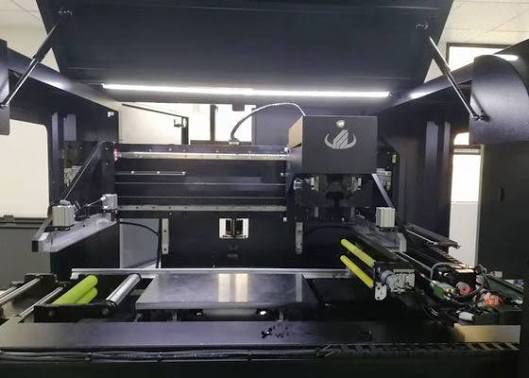
The standard consists of two parts. The mechanical section defines pass height, fixed rail location, and conveyor width. The electrical section defines handshake signals between adjacent machines. This enables a solder paste printer from brand A, a conveyor from brand B, and a pick-and-place machine from brand C to operate together on one line without manual board transfers.
How SMEMA Works: Board Available and Machine Ready Signals
SMEMA uses physical signal cables connecting machines via a 14-pin interface without transmitting complex data. The handshake revolves around two mandatory signals between the upstream and downstream machines.
- The upstream machine finishes processing, holds a PCB at its exit, and sends the Board Available signal.
- The downstream machine is empty and responds with the Machine Ready signal.
- Only when both signals are active does the conveyor motor run to transfer the PCB to the next stage.
- Once the board passes the sensor, the signals reset and both machines wait for the next cycle.
In addition to these two signals, SMEMA includes an optional Failed Board Available signal. This allows downstream conveyors to divert defective PCBs after AOI or SPI off the main line without halting production.
How Does the SMEMA Standard Benefit an SMT Line?
Conveyors hold boards until the downstream machine finishes its previous cycle, preventing track jams and component scratches at transfer points.
Anda, Censtar, I.C.T, and Suneast conveyors integrate directly into existing SMT lines thanks to shared mechanical and electrical standards.
The entire line—from entry loading through processing stages to exit unloading—runs continuously without manual operator intervention.
How Does SMEMA Differ From Hermes, and Should Your Factory Upgrade?
Hermes (IPC HERMES 9852) is the successor to SMEMA, released in April 2017 and recognized by IPC in 2018. The difference lies in data richness: SMEMA only communicates "board present" and "ready to receive," whereas Hermes also transmits unique board identifiers so lines do not need barcode scanners at every station. According to the Hermes standard group, newer Hermes equipment can run alongside legacy SMEMA-only machines.
What to Verify When Selecting a SMEMA-Compatible Conveyor
Matching SMEMA ports only solves electrical signaling. Mechanical alignment determines whether PCBs travel straight between machines—engineering and purchasing teams should verify four key points.
The standard specifies an adjustable transport height from 940 mm to 965 mm measured from the floor to the PCB underside. Because 900 mm ± 20 mm still appears on many conveyors, measure the actual height of each machine on your line and level all units with adjustable feet.
Confirm whether your line runs left-to-right (L to R) or right-to-left (R to L), and configure SMEMA send/receive directions accordingly.
The standard defines the front rail as the fixed reference rail. If your existing line uses a rear fixed rail, order a matching conveyor configuration so PCBs stay centered between machines.
Lines equipped with AOI or SPI require conveyors supporting this optional signal—verify availability before placing an order.
Read more:
Reducing PCB Scratches and Drops During Stage Transfers in SMT Assembly Lines
SMEMA-Compatible Conveyors at EMIN
EMIN supplies PCB handling and transport equipment supporting SMEMA connectivity, categorized by line function.
Factories adding conveyors to an existing SMT line can contact EMIN's engineering team with your flow direction, fixed rail position, and adjacent conveyor heights for compatibility verification and a detailed quote.
Send your flow direction, fixed rail side, and adjacent machine pass heights—EMIN's engineering team will verify compatibility and provide a detailed quote.
Frequently Asked Questions
What is SMEMA?
An interface standard for SMT equipment covering both mechanical dimensions and electrical handshake signals, allowing machines from different manufacturers to transfer PCBs on the same line.
Can conveyors from different manufacturers be connected together?
Yes, provided pass height, flow direction, and fixed rail alignment match. SMEMA handles electrical signaling, while mechanical dimensions must be verified separately.
Does SMEMA transmit PCB tracking data?
No. SMEMA only sends electrical signals indicating board availability and machine readiness. Board ID data transmission falls under the Hermes standard.
Is the Failed Board signal mandatory?
No, it is an optional signal used to automatically divert defective boards off the main production line.