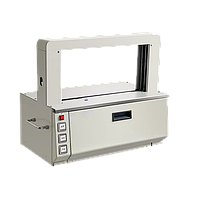
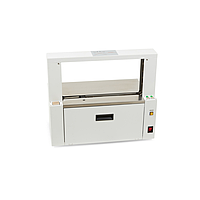
Banding Machine
Fast, tidy bundling matters in document processing, print finishing, retail back rooms, banking support areas, and light industrial packing lines. When stacks of paper, leaflets, cartons, cards, or small packaged items need to be grouped quickly without bulky strapping, a Banding Machine offers a clean and efficient solution that improves handling and presentation.
On this category page, buyers can explore tabletop and standalone systems designed for different bundle sizes, throughput needs, and installation layouts. The available range focuses on practical automation for repetitive bundling tasks, with options that support paper or OPP film rolls and adjustable settings for tension, arch size, and working dimensions depending on the model.
Where banding machines fit in daily operations
A banding machine is typically used when products must be secured together without damaging edges, crushing contents, or adding unnecessary packaging material. In office and commercial environments, this can include printed materials, envelopes, labels, vouchers, and paper stacks. In packaging workflows, it may also support light bundles of cartons or grouped items that need a neat hold for storage or dispatch.
Compared with heavier strapping methods, banding is often preferred for smaller, lighter, or presentation-sensitive bundles. The process is straightforward: the machine applies a band around the item, tensions it to the selected level, and seals it in a fast cycle. For teams reviewing broader options across this equipment segment, the main banding machine range can help clarify the available formats.
Tabletop and standalone formats for different layouts
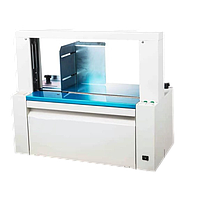
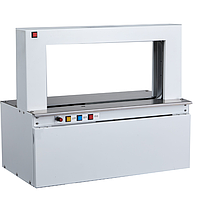
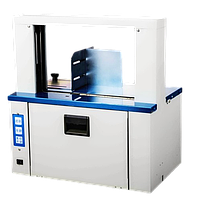
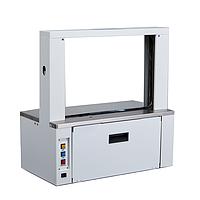
One of the main selection points is machine format. Tabletop units are suitable where space is limited or where operators work at benches, counters, or compact packing stations. In this category, models such as the FOLKTRONICS NM-420A, NM-420B, and NM-420C represent compact automatic solutions for standard bundle sizes, while the NM-230 is aimed at smaller-format applications.
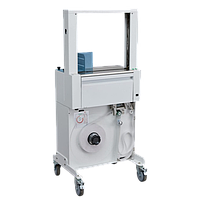
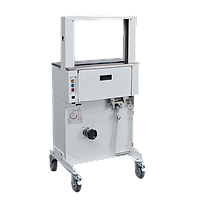
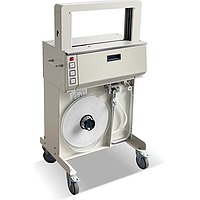
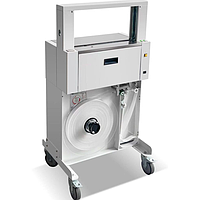
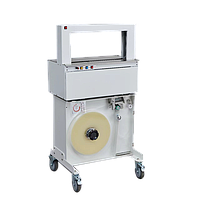
Standalone machines are more appropriate when bundling is part of a continuous workflow and the unit needs a dedicated floor position. Examples include the FOLKTRONICS NM-420A-ST, NM-420B-ST, M-420C-ST, and the NM-430-ST. These configurations can make operation more convenient in higher-volume environments, especially where bundle handling and feeding need a more stable working setup.
Typical performance features buyers look for
Across the listed models, several features are especially relevant for procurement and operations teams. These include support for both paper and OPP film rolls, short binding cycles around the 2-second mark, and configurable tension suited to different bundle types. That combination is useful when the same machine may handle paper documents one day and light packaged items the next.
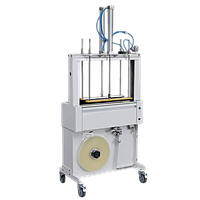
Another important point is binding range. Many models in this category support bundles up to 410 × 200 mm, while the smaller NM-230 is intended for more compact sizes. For specialized requirements, the FOLKTRONICS NM-420P compression banding machine extends the application scope toward larger bundled dimensions and added compression handling, making it a better fit for specific packing scenarios rather than general desktop use.
Highlighted FOLKTRONICS models in this category
FOLKTRONICS is the primary manufacturer represented here, with a range that covers compact tabletop operation, high-speed bundling, and standalone floor units. For example, the NM-430 and NM-430-ST are positioned for faster throughput than standard 28-bundle-per-minute models, which can be useful where operators need to reduce waiting time between cycles.
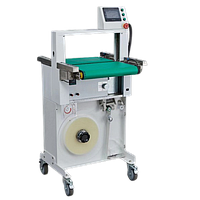
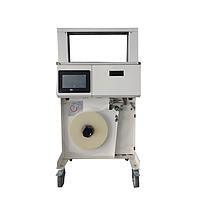
The NM-420L-ST standalone LCD display banding machine may suit users who want a floor-standing format with an interface-oriented design, while the NM-420T belt standalone banding machine is better aligned with workflows that benefit from belt-based product handling. Rather than choosing only by model name, it is usually more effective to compare machine format, bundle size range, working speed, and how the unit will fit into the actual process on site.
How to choose the right machine for your application
The first step is to define the bundle itself: width, height, thickness, surface sensitivity, and whether the items are rigid, flexible, or compressible. A machine that handles standard office paper stacks may not be the ideal choice for larger or bulkier packaged products. Buyers should also consider whether they need paper banding for a more paper-based presentation or OPP film for a different appearance and handling requirement.
The second step is to match the machine to workflow conditions. Ask whether the operation is intermittent or continuous, operator-fed or line-supported, and whether the workstation requires adjustable table dimensions or arch height. If the application is related specifically to cash packaging, it may also be useful to compare with a currency binding machine, since that category can be more specialized for banknote handling.
A final consideration is maintenance practicality. In many B2B environments, ease of loading consumable rolls, predictable cycle time, and stable tension are just as important as headline speed. Selecting the right machine usually means balancing throughput with consistency, footprint, and operator convenience.
Applications across office, retail, and light packaging environments
Banding machines are not limited to one industry. They are commonly used in print shops, administrative centers, retail distribution rooms, e-commerce preparation areas, and document handling departments. Typical tasks include bundling reports, brochures, cards, folded inserts, labels, envelopes, and grouped products prepared for internal transfer or final packing.
Because the band holds items together without the bulk of larger strapping systems, these machines can support a more organized workflow and cleaner presentation. In some businesses, they are also part of a wider office equipment setup alongside consumables and handling tools. Related categories such as office supplies may also be relevant when planning the surrounding workspace.
Why configuration details matter more than model count
When reviewing a category like this, it is easy to focus only on speed or on whether a unit is tabletop or standalone. In practice, the better purchasing decision often depends on smaller details such as arch dimensions, adjustable working length, required floor space, and the expected bundle thickness. Those factors have a direct impact on usability and long-term fit.
For that reason, a compact tabletop machine like the NM-230 may be the right answer for one team, while another may need a higher-speed or floor-standing system such as the NM-430-ST. A larger or more specialized application could point toward the NM-420P compression model instead. The goal is not to choose the most complex machine, but the one that matches the real operating requirement.
Finding the right banding machine for your workflow
This category brings together practical options for organizations that need reliable, repeatable bundling of documents or light products. With FOLKTRONICS models covering compact deskside use, faster operation, and standalone installations, buyers can compare equipment based on bundle size, speed, layout, and handling method rather than guesswork.
If you are narrowing down options, start with the material to be bundled, the expected daily volume, and the available installation space. From there, it becomes much easier to identify whether a standard tabletop unit, a high-speed machine, or a standalone system is the better fit for your process.
直接联系认证专家