
|
Maximizing Battery Life of IoT Devices By Minimizing Load Current Draw The Challenge of Measuring Low IoT CurrentsTo maximize battery life, your product current draw must be kept to an absolute minimum. This requires that you use low power components and efficient techniques to de-energize components when they are not in use. You need sensitive measurement instrumentation to measure current levels as low as nA. Determine the load current profileIt can be difficult to characterize the load current profile of a prototype IoT
To accurately capture these widely varying load current levels, you need an exceptional measurement solution that includes:
Keithley’s DMM7510 7½-digit Graphical Sampling Multimeter is well-equipped to meet these demands, as it offers:
Watch now to learn how to solve the IoT measurement challenges. Determine the Average Current of an IoT Device Simulate any battery typeHow low can the battery voltage drop before your IoT device turns off? Gauging battery performance at different stages of battery discharge is difficult, as it requires instrumentation that can accurately simulate battery performance. To address this, Keithley’s 2281S-20-6 Battery Simulator makes it easy to model any type of battery. It allows you to efficiently test prototype IoT devices in any battery state, with high repeatability to effectively estimate battery life. Combining a 2281S-20-6 Battery Simulator with a DMM7510 Graphical Sampling Multimeter will give you a complete solution for assessing power consumption and battery life of your IoT prototypes.
Program the battery simulator for any state of charge, such as near the completely discharged state, to determine how a product performs under a low battery condition and to determine the low battery shut-off voltage. Model any type of battery
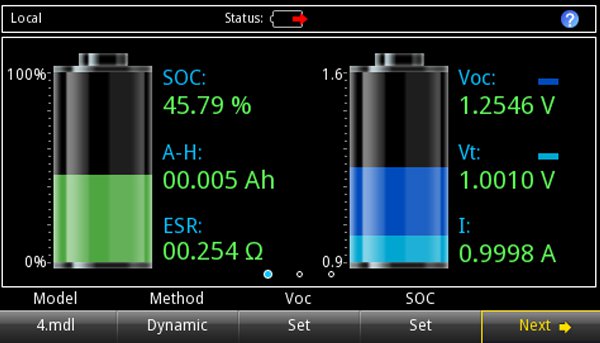
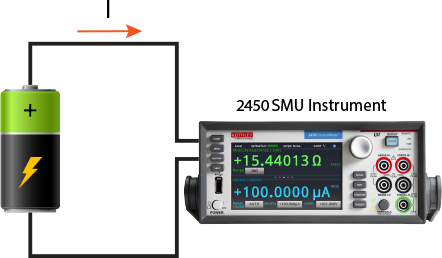
Create any battery model. The final piece of the puzzle is to create a model for the battery that powers your IoT device. Keithley’s 2450 or 2460 Graphical SourceMeter® Source Measure Unit (SMU) instruments make it easy to create the model for the battery used by your product. A battery model-generating script operates the SMU instrument as a controlled current load and derives the model parameters.
|
Maximizing Battery Life of IoT Devices By Minimizing Load Current Draw
2018年05月03日 09時54分49秒
The Challenge of Measuring Low IoT Currents To maximize battery life, your product current draw must be kept to an absolute minimum. This requires that you use low power components and efficient techniques to de-energize components when they are not in use. You need sensitive measurement instrumentation to measure current levels as low as nA.

相关新闻
2026年11月10日 16時45分58秒
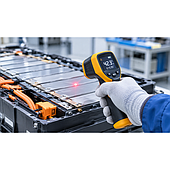
An infrared thermometer is a useful tool for quickly checking the surface temperature of lithium batteries without direct contact. This method allows technicians to identify abnormal temperature areas, assess operating conditions, and inspect battery systems during maintenance.
2026年11月10日 15時13分05秒
You are measuring an amplifier, and only one peak appears on the screen—even though there are clearly two carriers. Or, you know for a fact that harmonics are present, but the noise floor sits above them. Or, after making adjustments, the scanner slows down to the point where you find yourself waiting for each individual sweep. These three scenarios often share a common cause: the RBW (Resolution Bandwidth)
2026年11月10日 14時13分59秒
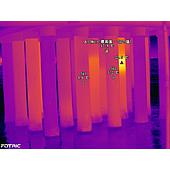
Thermal imaging can support periodic inspection of aging oil and gas infrastructure by helping teams identify worn pipe insulation, aged flange joints, and failing cable wires from a distance.
2026年11月10日 14時12分57秒
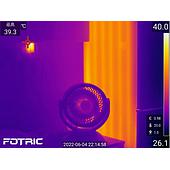
Thermal imagers detect infrared radiation associated with surface temperature differences, so they can work without visible light. They do not see through walls, glass, or metal, although temperature patterns may reveal certain conditions.
2026年11月10日 14時06分04秒
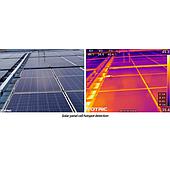
Thermal imaging helps inspection teams identify temperature anomalies associated with PV panel, connection, junction-box, inverter, and battery issues while the system is operating.
快速支持
直接联系认证专家