Interestingly, there are ponds with crystal-clear water, stable filtration systems, and ideal temperatures, yet the shrimp still don't thrive as expected. Read on to find out more!
What are the effects of TDS in shrimp tanks?
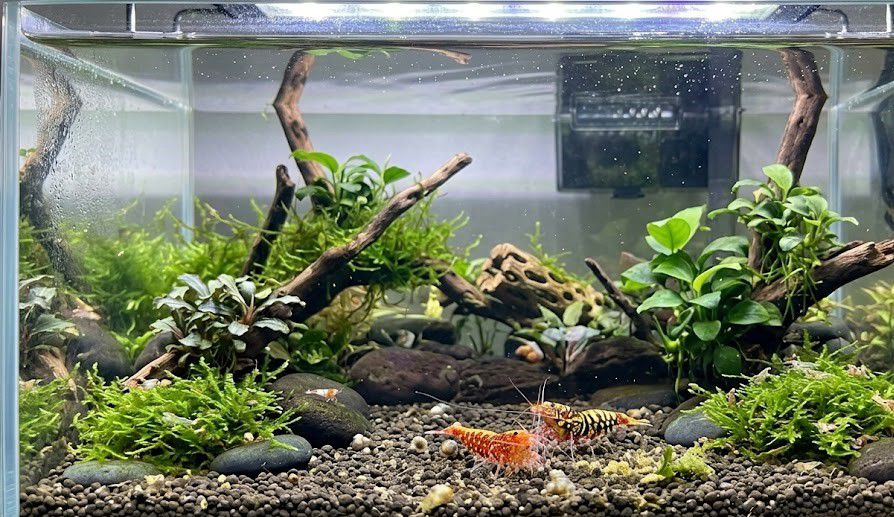
TDS is the total amount of dissolved solids in water, including minerals, salts, and ions present in the tank. For aquarium fish, TDS is usually not a very sensitive factor. However, for shrimp, especially bee shrimp, changes in TDS directly affect molting, growth, and adaptation to the environment.
Experienced shrimp keepers often recognize this quite quickly. A tank with appropriate TDS typically shows a high molting rate, active shrimp, vibrant colors, and more stable reproduction.
Conversely, a reading far from the appropriate threshold will cause shrimp to exhibit many abnormal behaviors even if other parameters remain within safe limits.
What is a suitable TDS level for a shrimp tank?
There is no ideal TDS level for all shrimp species. Bee shrimp species such as Red Bee, Black Bee, Panda, King Kong, or Blue Bolt generally thrive in the 80-120 ppm range.
Popular colored shrimp species like Red Cherry, Yellow Cherry, Orange Rili, or Red Rili have a wider adaptability, usually growing stably in the 100-200 ppm range. Amano shrimp tend to prefer a more mineral-rich environment, so TDS is usually maintained around 160-200 ppm.

The table below is a reference used by many hobbyists when setting up new tanks: These numbers are for reference only. Stability is more important. A tank that consistently maintains a level of 130 ppm is generally much better than one that fluctuates between 90 and 180 ppm for just a few days.
If TDS is too low, what are the common symptoms of shrimp?
Beginner shrimp keepers often think the cleaner the water, the better, so they try to lower the TDS (Total Dissolved Solids) to very low levels.
This is actually the reason why many shrimp colonies encounter problems.
When the amount of dissolved minerals is insufficient, the process of shell formation and hardening after molting becomes difficult. Shrimp may molt, but the new shell remains unusually soft for a long time, their swimming reflexes are weaker, or they may exhibit prolonged neck exposure before molting.
In some more severe cases, shrimp have been observed dying immediately after successful molting.
These symptoms usually appear gradually, making them easy to mistake for disease or poor stock quality.
How does high TDS affect shrimp?
High TDS doesn't necessarily mean the tank has plenty of beneficial minerals.
After a period of operation, excess food, shrimp waste, excessive mineral supplementation, or an improper water change schedule can all cause TDS to gradually increase.
At this point, shrimp keepers often see their shrimp eating more, but molting frequency decreases significantly. Their colors become duller, growth slows down, and reproduction rates also decrease.
Some tanks with persistently high TDS may even experience scattered deaths despite other parameters being almost normal.
That's why many shrimp keepers monitor TDS regularly instead of just checking it when problems arise.
Why does the TDS in my shrimp tank keep increasing even without adding minerals?
This is a fairly common situation for ponds that have been in operation for months.
Water evaporates daily, but minerals remain in the pond. After each water refill without regular water changes, the amount of dissolved substances gradually accumulates, causing the TDS to increase.
In addition, excess food, decaying leaves, shrimp feces, and decomposing organic matter also contribute to changes in this indicator over time.
Many people only discover this after re-measuring and realizing that the TDS has increased by several tens of ppm compared to when the pond was initially set up.
What is a quick and accurate way to measure TDS in a shrimp tank?
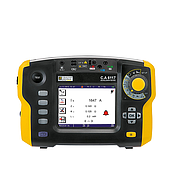
The simplest method currently available is using a handheld TDS meter.
The device is compact, quick to operate, and provides almost instantaneous results. Simply take a water sample or directly immerse the probe in the tank to monitor TDS changes at any time.
Pen meters like the Hanna HI98301 are a popular choice among aquarium enthusiasts due to their fast measurement capabilities and ease of use.
The important thing isn't to measure many times a day, but to establish a habit of regular monitoring. Checking weekly or after major water changes allows for early detection of any unusual changes in the tank.
Is looking at TDS alone enough to assess a shrimp tank?
TDS is important but it doesn't reflect the overall water quality.
Two tanks showing 120 ppm can still yield completely different results if the actual pH, temperature, or mineral content are different.
That's why experienced shrimp keepers often monitor TDS alongside pH, temperature, and water change schedules. When all parameters are stable, the shrimp population will have significantly better conditions for growth compared to focusing on only a single indicator.
Conclude
If you're looking for the ideal TDS level for your shrimp tank, a range of 80-120 ppm is generally suitable for most bee shrimp species, while colored shrimp can maintain higher levels, ranging from 100-200 ppm depending on the variety.
However, the best value isn't necessarily the highest or lowest number. What contributes to healthy shrimp, consistent molting, and stable coloration lies in maintaining a stable water environment over a long period. That's why TDS is always considered one of the most important parameters for any shrimp enthusiast.