Particularly in the field of cooling and ventilation, wind speed plays a crucial role as it determines the level of air exchange and the comfort level when using the equipment.
How is wind speed formed?
Wind occurs when air moves from areas of high pressure to areas of low pressure. This pressure difference usually stems from differences in atmospheric temperature. The greater the difference, the faster the air moves.
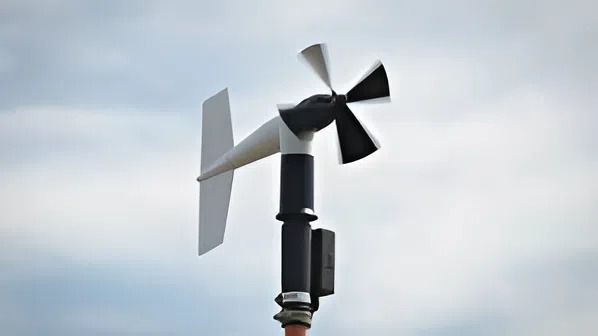
In natural conditions, wind direction and speed are not entirely straightforward. The Earth's rotation and atmospheric structure cause wind currents to be deflected and unevenly distributed. Therefore, wind speeds can vary significantly in different areas at the same time.
The role of wind speed in production and daily life
Wind speed directly affects weather, air and maritime traffic, and many outdoor activities. Furthermore, it impacts heat and humidity exchange, thereby affecting daily life and production.
In enclosed environments such as factories or living spaces, wind speed determines air circulation. Too weak wind causes stagnant air, while too strong wind is uncomfortable and disperses airflow unevenly.
Factors that change wind speed
Wind speed is influenced by a variety of factors, ranging from large-scale to local conditions. Atmospheric pressure differences are a fundamental factor, but topography also has a significant influence.
Open areas generally have higher wind speeds than areas with many obstacles. Furthermore, weather phenomena such as monsoons, storms, or tornadoes can cause rapid changes in wind speed over short periods. Local climatic conditions therefore play a crucial role in the formation and maintenance of wind currents.
Measure and assess wind speed
Wind speed is currently determined using specialized measuring equipment. In addition, in some cases, observation-based scales are still used to classify wind levels based on their impact on the surrounding environment.
Measuring and evaluating wind speed serves not only weather research but also helps control operating conditions in various fields, especially ventilation and cooling.
Reference: EMIN anemometer
Wind speed on cooling devices
For fans and cooling devices, wind speed indicates how quickly the airflow passes through the air outlet. This indicator depends on the airflow rate and the air outlet area of the device.
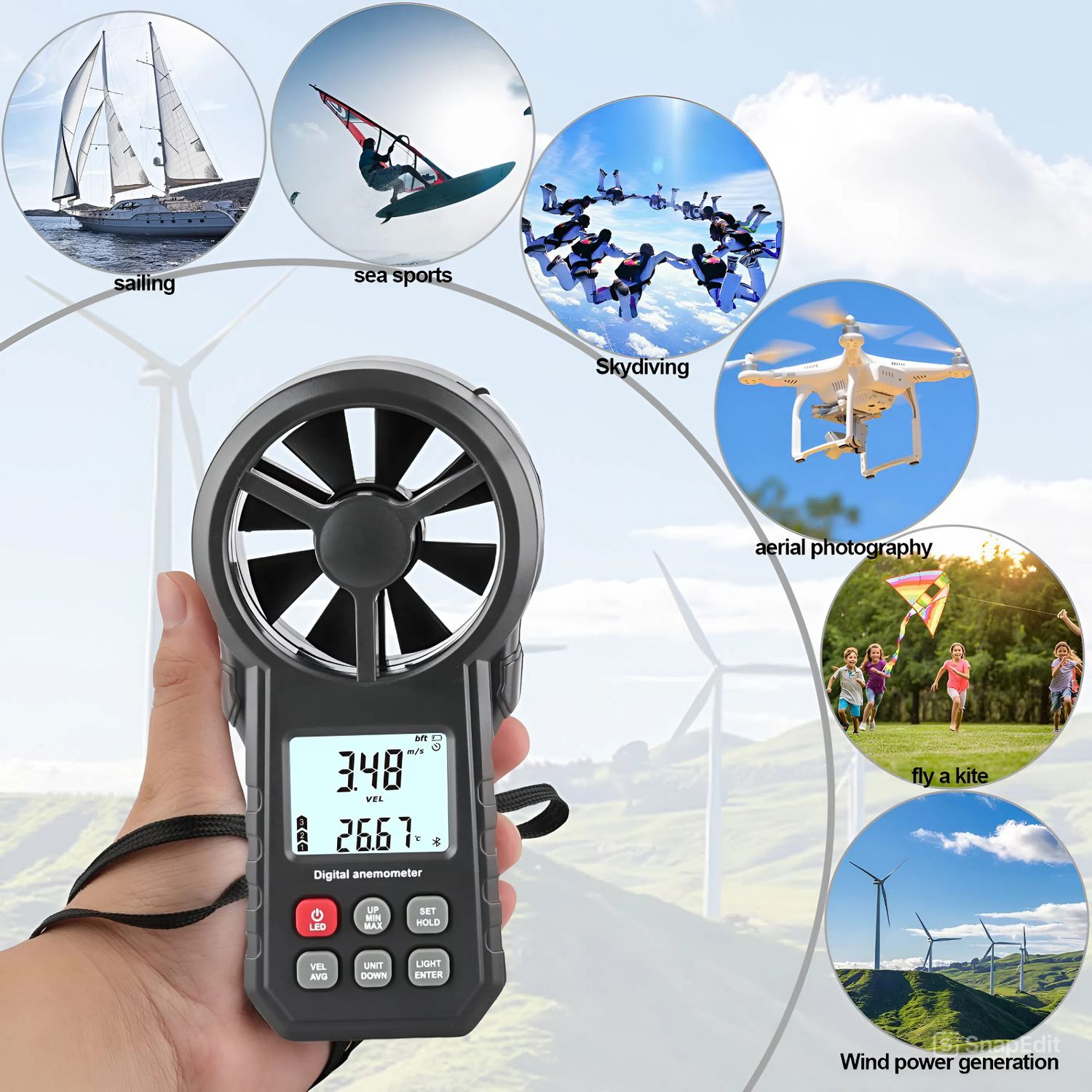
In practical use, wind speed directly affects the feeling of coolness and the efficiency of air circulation. A device with a wind speed suitable for the space will be more effective than one that focuses solely on power or airflow.
Related articles:
What makes the Extech AN100 anemometer so special and sought after?