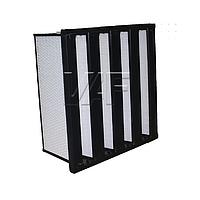
Air Filter
Controlling airborne particles is a basic requirement in cleanrooms, ventilation systems, electronics production areas, and many regulated industrial environments. Choosing the right Air Filter is not only about capture efficiency, but also about airflow stability, pressure drop, service life, and how the filter fits into the overall contamination-control strategy.
On this category page, you can explore filter options used for different stages of air treatment, from coarse and medium prefiltration to high-efficiency final filtration. This helps buyers compare solutions for protecting downstream equipment, maintaining cleaner process areas, and supporting consistent HVAC or cleanroom performance.
Where air filters are commonly used
Air filtration is relevant across a wide range of technical environments. In clean manufacturing and controlled spaces, filters help reduce dust, fibers, and fine airborne contaminants before they reach sensitive products, work surfaces, or ventilation zones. In HVAC and process air systems, they also help protect fans, ducts, coils, and high-efficiency downstream filters from early loading.
Typical applications include cleanroom support systems, extraction units, local clean-air stations, and enclosed handling areas. In facilities where personnel and product cleanliness both matter, filtration is often used together with equipment such as air shower systems or a clean bench to improve overall environmental control.
Understanding prefilters and HEPA filters
A practical filtration setup often uses multiple stages. Prefilters are placed upstream to capture larger particles first, which reduces loading on the final filter and helps extend system life. This is especially useful in ventilation systems that run continuously or in facilities where the incoming air quality can vary over time.
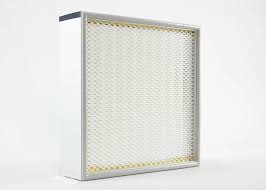
HEPA filters are used when much finer particle retention is required. These are commonly selected for cleaner process zones, fume extraction units, and environments that need a higher level of particulate control. In many systems, the prefilter and HEPA stage are designed to work together, balancing cleanliness targets with acceptable pressure loss and maintenance intervals.
Representative products in this category
This category includes both prefiltration media and high-efficiency filters from established manufacturers such as VAF, Airtech Thelong, and WELLER. The product mix shows that the range is suitable for both general ventilation support and more demanding clean-air applications.
For example, the Airtech Thelong H13 Hepa fillter is a high-efficiency option built with fiberglass media and an aluminum frame, intended for fine particle capture where final-stage filtration is required. The WELLER T0058762701 HEPA filters are another example of a system-oriented filter solution, listed with M5 pre-filters and a main H13 filter, which reflects the common multi-stage approach used in extraction and clean-air equipment.
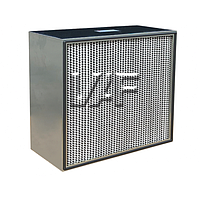
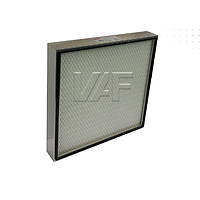
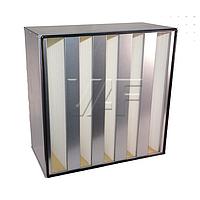
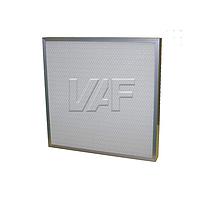
For upstream filtration, several VAF models illustrate the breadth of available prefilter choices. Options such as VAF V-Roll-600, V-Roll-560, V-Roll-92, and V-Roll-85 Prefilters show different filter classes and material formats, while framed variants such as VAF V-RZ 92, V-RZ 85, V-RW 92, V-RW 85, and V-R 92 Prefilters are relevant when structure, mounting style, and maintenance handling are part of the selection process.
How to choose the right filter for your system
The first step is to identify the role of the filter in the air path. If the goal is to remove larger dust loads and protect downstream equipment, a prefilter may be the right starting point. If the application requires tighter particulate control at the point of supply or extraction, a HEPA stage becomes more important.
Buyers should also compare filter class, media type, physical dimensions, and frame construction with the requirements of the installed system. Pressure drop matters because it affects fan performance, energy use, and replacement timing. In a well-designed setup, the selected filter should support the target cleanliness level without creating unnecessary airflow restrictions.
Selection factors that matter in real operation
In technical B2B purchasing, the best choice is usually the one that fits the actual operating condition rather than the broadest specification. Air volume, installation space, maintenance access, humidity, and operating temperature can all influence whether a roll media prefilter, a framed panel style, or a final HEPA filter is the better fit.
It is also important to consider the wider controlled environment. In some facilities, filtration performance is tied closely to adjacent equipment such as a ventilation chamber or containment equipment like biological safety cabinets. Looking at the system as a whole can help avoid mismatches between airflow design, contamination risk, and maintenance planning.
Why multi-stage filtration is often the practical choice
A single filter rarely solves every air-quality requirement efficiently. Multi-stage filtration helps divide the workload: coarse and medium filters remove larger particles first, while the final stage focuses on finer contaminants. This structure can improve service life, reduce replacement frequency for expensive final filters, and support more stable operating performance.
The product examples in this category reflect that logic. VAF prefilters can serve as upstream protection in many air-handling arrangements, while H13-grade options such as the Airtech Thelong and WELLER examples are better aligned with finer filtration duties. For many buyers, this staged approach is the most realistic path to balancing cleanliness, cost, and maintenance effort.
Finding a suitable air filter for clean and controlled environments
This category is designed to support buyers who need filtration products for cleanroom support, ventilation systems, and controlled industrial applications. Whether you are replacing an existing element, planning a multi-stage filtration setup, or comparing manufacturers for a new installation, the key is to match filter type and efficiency to the real operating environment.
By reviewing the available prefilters and HEPA filter options carefully, it becomes easier to shortlist products that align with airflow requirements, installation format, and cleanliness objectives. A well-matched filtration solution helps protect equipment, support process quality, and maintain more consistent environmental control over time.
Get exclusive volume discounts, bulk pricing updates, and new product alerts delivered directly to your inbox.
By subscribing, you agree to our Terms of Service and Privacy Policy.
Direct access to our certified experts