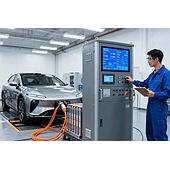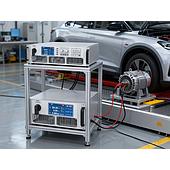
Bidirectional power supplies provide controlled power in both directions for EV and HEV test setups. They can emulate batteries and other DC sources while absorbing regenerated energy from inverters, motor drives, chargers, and V2G systems.
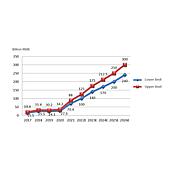
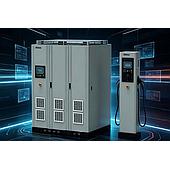
Bidirectional power supplies provide controlled power in both directions for EV and HEV test setups. They can emulate batteries and other DC sources while absorbing regenerated energy from inverters, motor drives, chargers, and V2G systems.

ANEVH is a bidirectional programmable DC power supply designed to support BOBC testing by combining source and load functions, simulating batteries and grid conditions, and supporting parallel operation for higher-power test needs.

Bidirectional DC test power supplies combine source and regenerative-load operation to test EV chargers under controlled charging, discharge, and dynamic-load conditions.

Electronic loads draw controlled current or power to reproduce operating demand. They support testing of EV batteries, battery management systems, chargers, charging infrastructure, and energy storage equipment.

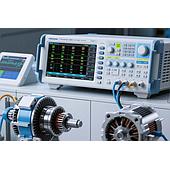
Multi-channel power analysis brings electrical and mechanical measurements onto a common time base for EV drive testing. It supports efficiency calculations, transient power-flow analysis, and coordinated measurement of dual-motor systems.

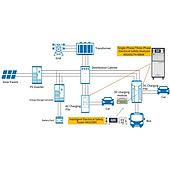
EV charging pile safety testing evaluates electrical risks related to withstand voltage, insulation, grounding, and leakage at charging pile input and output circuits. The source describes the AN1651TH-60(F)CP solution as covering nine test areas with MES connectivity support.

DC fast charger laboratories use high-power bidirectional DC electronic loads to simulate EV battery behavior while evaluating charger output, control response, and communication-related test conditions.

A regenerative grid simulator is used for EV charger testing because it can handle bidirectional power flow, reproduce changing grid conditions, and support automated, repeatable test procedures.

A traditional DC power supply suits stable voltage or current tests, while an ANEVS battery simulator is intended to reproduce changing battery behavior, including SOC-OCV relationships, internal resistance, and programmed operating conditions.

A programmable DC electronic load can simulate controlled steady-state, transient, and fault conditions when evaluating EV charging modules. Key checks include efficiency mapping, voltage ride-through, short-circuit protection, and current sharing among parallel modules.
Get exclusive volume discounts, bulk pricing updates, and new product alerts delivered directly to your inbox.
By subscribing, you agree to our Terms of Service and Privacy Policy.
Direct access to our certified experts