Anti-static trays and bins
In ESD-controlled production areas, even simple handling and disposal accessories can affect product safety, housekeeping, and workflow stability. Choosing the right anti-static trays and bins helps reduce the risk of electrostatic discharge while keeping components, consumables, and process waste organized across assembly, inspection, and clean work areas.
This category brings together conductive and permanent ESD bin solutions used in electronics manufacturing, service benches, and controlled industrial environments. Whether the requirement is a compact container beside a workstation or a larger wheeled bin for higher-volume waste collection, the goal is the same: maintain a more controlled handling environment without treating storage and waste management as an afterthought.
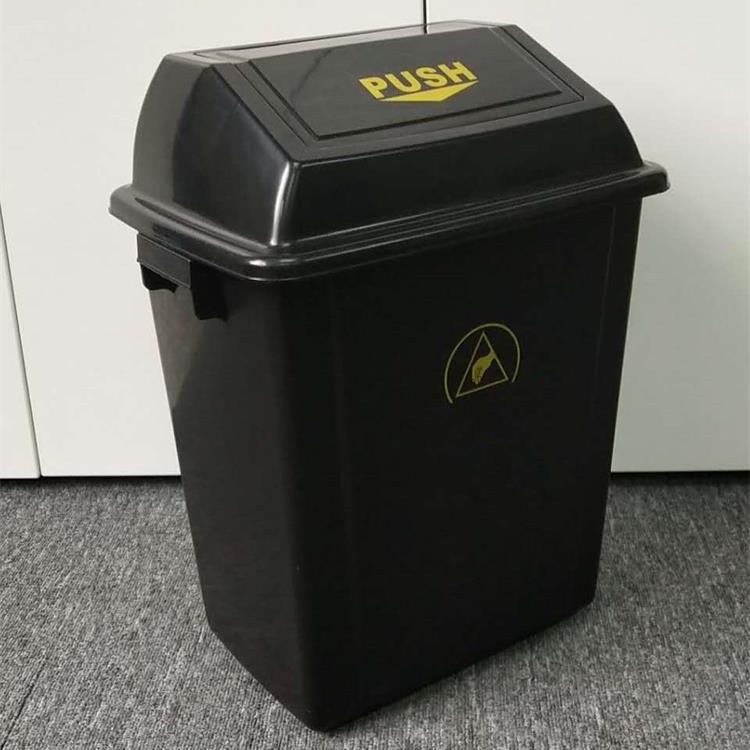
Why anti-static trays and bins matter in ESD-sensitive areas
Trays and bins are often in constant contact with packaging materials, rejected parts, wipes, scrap, and everyday workstation items. In electronics assembly and repair settings, standard plastic containers may not be suitable because they can contribute to charge generation or fail to support an ESD-safe workflow. A properly selected bin made from conductive material can become part of a broader ESD control system rather than just a storage accessory.
These products are especially relevant in PCB handling, semiconductor-related work, cable assembly, test labs, and controlled benches where sensitive devices may be exposed during processing. In practice, the right bin size and material help teams separate waste clearly, keep work surfaces uncluttered, and support better discipline around protected areas.
Category scope: from bench-top bins to large-capacity waste collection
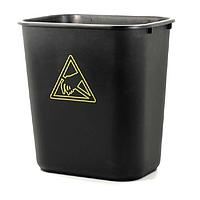
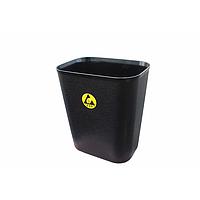
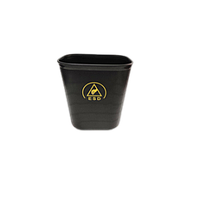
This range covers multiple capacity levels, making it easier to match the container to the workstation layout and the amount of material handled each day. Smaller options such as the Bosch Static BSC-J45 8L, BSC-J43 14L, and BSC-J44 or BSC-J47 16L bins are suitable for individual stations, technicians’ benches, or localized collection of light process waste.
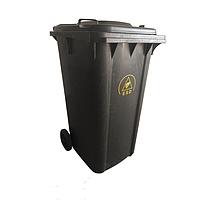
For broader production use, mid-size and larger models such as the BSC-J48 35L, BSC-J50 20L, BSC-J51 40L, and the 60L versions BSC-J49 and BSC-J52 provide more capacity without moving to industrial wheeled formats. Where waste volume is significantly higher, the BSC-J53 120L and BSC-J54 240L offer larger collection capacity and mobility, which can be useful for line-side or shared area deployment.
Material behavior and electrical characteristics
Several featured models are described as conductive, with resistance values in the 10E5 to 10E6 range. In ESD applications, that type of electrical behavior is important because it supports controlled dissipation rather than leaving charge unmanaged on common handling items. For many facilities, this is a practical requirement when bins sit close to sensitive assemblies, operators, or grounded workstations.
The term permanent ESD is also important in this category. It generally indicates that the anti-static performance is inherent to the material rather than depending only on a temporary surface treatment. For buyers evaluating long-term use in production environments, this can be a helpful distinction when comparing durability, cleaning routines, and consistency of ESD performance over time.
How to choose the right tray or bin for your process
Selection usually starts with the intended use case. A compact bench-side bin is often enough for trimming waste, labels, wipes, or small packaging remnants generated during assembly and inspection. Larger containers are more appropriate when operators need fewer change-outs, when multiple users share a station group, or when the process generates bulkier discard materials.
Physical footprint matters just as much as volume. Diameter, height, or rectangular form factor can influence where a bin fits under a bench, beside a trolley, or at the end of a production cell. Lid design is also relevant in many facilities, especially where cleanliness, visual control, or temporary containment of waste is part of the operating procedure.
Mobility becomes more important at higher capacities. Models such as the Bosch Static BSC-J53 and BSC-J54 include wheels and closable lids, making them better suited to centralized collection points or routes where staff move waste through larger controlled work areas. If the bin will remain fixed at a single station, a smaller non-wheeled format may be more practical and space-efficient.
Typical applications in electronics and controlled environments
These bins are commonly used in electronics assembly lines, ESD-protected repair benches, incoming inspection areas, and packaging stations where sensitive parts are frequently handled in the open. They can also support cleaner segregation of non-product materials such as discarded tapes, gloves, wipes, or packaging remnants, provided the waste stream is compatible with the facility’s procedures.
In broader controlled environments, anti-static containers are often part of a complete housekeeping approach alongside work surfaces, airflow equipment, and cleaning tools. Facilities that are setting up or upgrading supporting infrastructure may also review related categories such as clean bench systems or air shower equipment to maintain better process control across the workspace.
Featured Bosch Static solutions in this category
Bosch Static is the key manufacturer represented here, with a selection that spans compact conductive bins through to large permanent ESD waste bins. This makes the range useful for buyers who want a more consistent approach across individual benches, shared operator zones, and high-volume disposal points.
Representative options include the small Bosch Static BSC-J45 8L for limited bench space, the BSC-J48 35L for medium-capacity use, and the BSC-J52 60L where larger collection volume is needed without moving to wheeled industrial sizes. For centralized waste handling, the BSC-J53 120L and BSC-J54 240L provide higher capacity and easier movement within production or support areas.
Integration with cleaning and contamination control routines
Although ESD performance is a primary concern, bins also contribute to routine housekeeping and contamination management. Well-matched containers help keep benches clear, improve material segregation, and make daily cleaning easier in work areas where component protection and cleanliness are closely linked.
Depending on the environment, users may also pair these products with practical cleaning accessories such as dustcloth and mop solutions. In areas with more structured airflow or enclosure requirements, related infrastructure such as a ventilation chamber may also be part of the wider setup.
Choosing with confidence for long-term ESD workflow control
The right bin is not only about capacity. It should match the way operators work, the space available around the station, and the level of ESD discipline expected in the process. Conductive materials, permanent ESD properties, lid style, and mobility all influence whether a given model will fit smoothly into day-to-day operations.
For teams building or maintaining protected work areas, this category offers practical options across multiple sizes and usage scenarios. By selecting anti-static trays and bins that suit both the environment and the waste profile, it becomes easier to support safer handling, cleaner workstations, and a more consistent ESD-aware workflow.
Get exclusive volume discounts, bulk pricing updates, and new product alerts delivered directly to your inbox.
By subscribing, you agree to our Terms of Service and Privacy Policy.
Direct access to our certified experts