Battery Short Circuit Test
When evaluating battery safety, one of the most critical checks is how a cell or battery behaves under abnormal electrical conditions. In production, incoming inspection, and R&D environments, short-circuit related testing helps identify insulation weaknesses, internal leakage risks, and potential quality issues before batteries move further into assembly or field use. That is why Battery Short Circuit Test equipment plays an important role in modern battery testing workflows.
This category is intended for users who need instruments for checking resistance behavior, insulation conditions, and short-circuit related characteristics in lithium cells and other battery components. Whether the task is screening individual cells, supporting process control, or building a broader battery safety test setup, selecting the right instrument depends on the test range, voltage capability, accuracy, and how the device fits into the rest of the test bench.
Why short-circuit related battery testing matters
A short circuit is not simply a pass/fail event. In many practical test scenarios, engineers need to detect low-resistance paths, insulation degradation, or abnormal internal conditions that may indicate a hidden defect. These checks support safer battery handling and help reduce the risk of failures appearing later during charging, discharging, transport, or end-use operation.
For lithium battery manufacturing especially, early detection of abnormal resistance characteristics can improve sorting consistency and process reliability. Short-circuit test instruments are often used alongside other tools such as battery impedance testers to build a more complete picture of cell condition and electrical integrity.
What to consider when choosing Battery Short Circuit Test equipment
The right selection depends first on the type of battery or cell being evaluated and the purpose of the test. Some users need broad resistance coverage to detect subtle insulation issues, while others focus on repeatable production screening. In either case, it is useful to review the available test range, applied voltage, measurement stability, and the expected sensitivity at low or high resistance values.
Another practical point is workflow integration. In a battery lab or manufacturing environment, the instrument should match the speed, fixturing, and data requirements of the overall process. If the short-circuit test is part of a larger system, it may be helpful to consider related equipment such as a battery simulating DC power supply for controlled electrical test scenarios or power source validation during development.
Representative instrument in this category
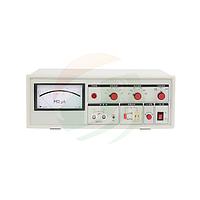
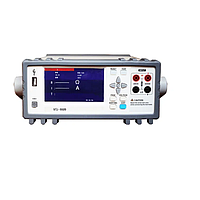
A notable example in this category is the MultiTech MTJ-5520 Lithium Core Short Circuit Tester. This model is positioned for insulation resistance and short-circuit related evaluation, with a measurement range extending from 0Ω to 4000MΩ and test voltage options from 25 V to 1000 V DC. That range makes it relevant for applications where both low-resistance behavior and high-resistance insulation conditions need to be assessed within one instrument.
For users standardizing around one supplier, MultiTech is one of the key manufacturers represented in this category. Rather than looking only at headline specifications, buyers should also consider how an instrument like the MTJ-5520 aligns with fixture design, sample type, operator workflow, and the required repeatability of the test process.
How this category fits into a broader battery test setup
Short-circuit testing is usually one part of a larger quality and safety process. Depending on the stage of production or validation, teams may also need tools for trend observation, source simulation, or ongoing condition checks. In these cases, battery monitoring equipment can complement short-circuit testing by supporting broader visibility into battery behavior over time.
This category is therefore most useful when viewed as part of an integrated ecosystem rather than a standalone device list. A short-circuit tester may help identify insulation or resistance anomalies, while other instruments address charging behavior, impedance, conductance, or controlled source conditions. Together, they support more reliable evaluation across development, incoming inspection, and production testing.
Typical application scenarios
In manufacturing, Battery Short Circuit Test instruments are commonly used for cell screening, process verification, and quality control before pack assembly. Detecting abnormal electrical paths early can reduce scrap propagation and prevent defective cells from moving into downstream operations where issues become more costly to isolate.
In laboratories and engineering environments, these instruments support product development, failure analysis, and verification of battery safety characteristics under defined electrical conditions. They can also be valuable when comparing samples from different production lots or when investigating process changes that may affect insulation behavior or internal resistance-related anomalies.
Practical buying considerations for B2B users
For industrial purchasing teams, the decision is rarely based on one parameter alone. Beyond measurement capability, it is worth reviewing whether the device suits the expected duty cycle, operator skill level, and documentation requirements. In regulated or quality-driven environments, clear and repeatable measurement processes are often just as important as the raw measurement range.
It is also useful to think about future expansion. If the current requirement is a dedicated short-circuit or insulation resistance check, the next step may involve additional battery analysis tools. Choosing instruments that fit logically into the same testing environment can simplify training, maintenance, and process standardization over time.
Finding the right Battery Short Circuit Test solution
This category is designed for engineers, test technicians, and procurement teams looking for equipment that supports safer and more consistent battery evaluation. The most suitable choice will depend on the battery type, the required resistance range, the test voltage, and whether the instrument is intended for lab analysis or routine production screening.
By comparing practical test needs with the available instruments in this category, buyers can build a more reliable battery test process and reduce the risk of overlooked electrical defects. If your workflow also includes impedance checks, source simulation, or monitoring, this category can serve as an important part of a broader battery testing strategy.
Get exclusive volume discounts, bulk pricing updates, and new product alerts delivered directly to your inbox.
By subscribing, you agree to our Terms of Service and Privacy Policy.
Direct access to our certified experts