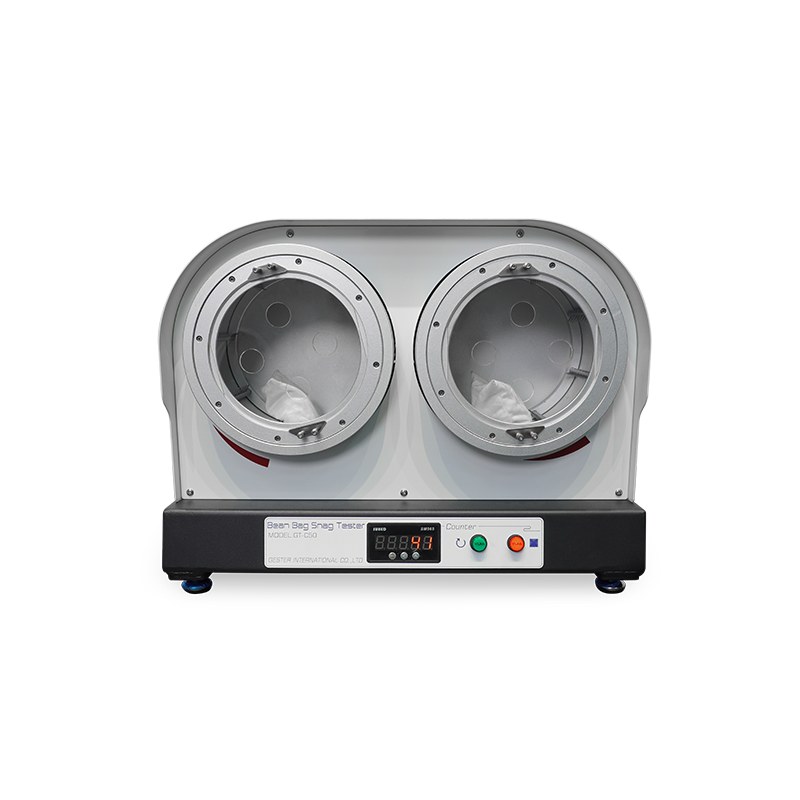
The Bean Bag Snag Tester GT-C50 is a textile testing instrument used to evaluate the snagging resistance of knitted fabrics. Snagging occurs when loops or threads are pulled from a fabric surface. This can affect the visual appearance of a material and may influence how it is judged for its intended application.
For quality control and inspection teams, a controlled snagging test creates a repeatable way to compare fabric samples. The GT-C50 supports assessment of knitted materials during product development, incoming material inspection, and manufacturing quality control.
What the Bean Bag Snag Tester GT-C50 Evaluates
The tester is intended to assess a fabric's resistance to snagging. In knitted fabrics, exposed loops can catch on objects during handling or use. The resulting pulled loops or threads can compromise surface appearance, even when the material remains otherwise intact.
A snag resistance evaluation helps manufacturers and laboratories compare materials under a defined test process. It can be useful when appearance retention and fabric durability are important considerations. The results may also help textile developers review material constructions while working toward more snag-resistant knitted fabrics.
Typical Applications in Textile Quality Control
The Bean Bag Snag Tester GT-C50 can be incorporated into inspection activities where knitted fabric surface performance needs to be reviewed. Common uses described for this type of test include:
- Knitted fabric durability assessment: examining the tendency of a sample to snag under controlled conditions.
- Production quality control: comparing material batches or checking whether fabrics meet an established internal or customer requirement.
- Material research and development: evaluating fabric options while developing materials with improved resistance to surface snagging.
Because the final assessment considers visible damage on the specimen, consistent sample handling and a clearly defined evaluation procedure are important when comparing results.
How the Bean Bag Snagging Test Works
The test process uses a fabric specimen that encases a bean bag. The specimen is placed into a roller fitted with rows of needles. As the roller turns, the needle arrangement creates conditions intended to simulate snagging forces on the fabric surface.
After the selected number of cycles is completed, the specimen is removed and inspected for snagging. The observed surface damage is then evaluated using the applicable grading scale or test requirement. This approach gives the testing team a structured process for documenting fabric appearance after exposure to the test action.
Basic Operating Sequence
- Switch on the instrument.
- Set the required number of test cycles on the counter.
- Open the cover and place the prepared specimen in position.
- Start the test cycle.
- When the preset count is reached, remove the specimen and evaluate visible snagging according to the selected standard or procedure.
The source operating example uses a setting of 100 cycles. Laboratories should use the cycle count and assessment method required by their applicable test procedure rather than treating one example as a universal setting.
GT-C50 Design Features
The Bean Bag Snag Tester GT-C50 includes design elements intended to make the test process easier to observe and control. Its roller is described as aluminum, a material selected for this key test component. A transparent glass cover allows the operator to view the test while it is running.
The instrument also includes an automatic counting function. Once a preset number of cycles has been entered, the tester can stop at the selected count. This helps create a consistent sequence between samples and reduces the need to monitor the cycle count manually throughout each run.
For routine inspection work, this combination of a visible test area and preset counting can support orderly test execution. Operators can focus on correct specimen placement, test setup, and the post-test grading process.
Standards Referenced for Snag Resistance Testing
The product information identifies ASTM D5362 and JIS L1058 as referenced standards for the bean bag snagging tester. These standards provide a framework for assessing fabric snag resistance and fabric quality. Before testing, laboratories should confirm the exact procedure, specimen preparation, cycle requirement, and grading criteria that apply to their own quality program.
Using a defined method is important because a snagging grade should be interpreted in context. Fabric construction, intended use, sample condition, and the selected evaluation criteria all affect how a result is used in a quality decision.
Choosing a Practical Test Workflow
To obtain meaningful comparisons with the Bean Bag Snag Tester GT-C50, prepare samples consistently and record the test conditions used for every specimen. Keep the selected cycle count consistent for samples being compared, and examine each specimen using the same grading approach.
The GT-C50 is therefore suited to organizations that need a controlled method for reviewing snagging behavior in knitted fabrics. By combining a needle-roller test action, direct specimen observation, and automated cycle counting, it supports a practical workflow for textile quality control and material evaluation.