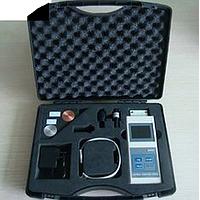
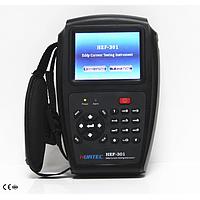
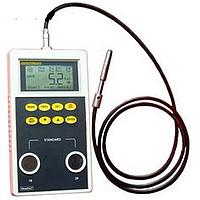
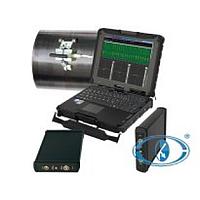
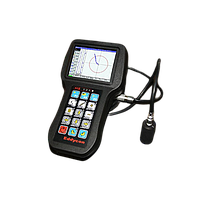
Eddy Current Conductivity Meter
When fast, non-destructive material evaluation is required, conductivity measurement is often one of the most practical ways to assess metal condition without cutting, damaging, or interrupting production. In aerospace, metalworking, maintenance, and quality control, eddy current conductivity instruments help teams verify alloy consistency, monitor heat treatment effects, and detect changes linked to material structure or surface condition.
Eddy Current Conductivity Meter products in this category are intended for users who need reliable electrical conductivity testing as part of a broader non-destructive inspection workflow. Alongside dedicated conductivity meters, this range also includes related eddy current instruments and probes that support flaw detection, coating evaluation, and application-specific inspections in industrial environments.

Where eddy current conductivity testing fits in inspection work
Eddy current testing is widely used when inspectors need quick feedback on conductive materials, especially metals. By observing how an electromagnetic field interacts with the test piece, the instrument can provide information related to conductivity and, depending on the device and probe setup, support evaluation of surface and near-surface conditions.
This makes the method useful for incoming inspection, process verification, maintenance checks, and field service. It is especially relevant where portability, minimal surface preparation, and repeatable measurement are important. For companies comparing methods, conductivity testing often complements other NDT techniques such as ultrasonic flaw detectors for internal discontinuity evaluation or magnetic flaw detector systems for ferromagnetic surface inspection.
Typical equipment found in this category
The category covers both dedicated conductivity instruments and broader eddy current systems. A portable model such as the Koehler K11420 Portable Digital Conductivity Meter is suited to straightforward conductivity checks where operators need a compact handheld device and clear digital readings.
For users who need a wider inspection scope, instruments like the NOVOTEST EDDY SENSE Eddy Current Flaw Detector and the PCE USC 30 Coating Thickness Gauge illustrate how conductivity-related measurement can sit within a more advanced eddy current platform. These solutions are typically considered when conductivity assessment is only one part of a larger inspection routine involving crack detection, coating checks, or comparative material analysis.
Probe selection matters as much as the instrument
In eddy current applications, the probe has a direct impact on sensitivity, access, geometry compatibility, and the type of flaw or condition that can be evaluated. That is why this category also includes specialized probe options from OKO, which can support inspections in holes, grooves, curved surfaces, and other demanding test areas.
Examples include probes such as the OKO PN-05-TD01, PN-05-TD04, and PN-6×8–TD01 for surface crack, void, corrosion, or groove-related inspection tasks, as well as variants like PNR-03×(5-6)-TD01 and PN-08-TD01C for more specific geometries. For buyers, this highlights an important point: choosing an eddy current conductivity solution is not only about the main device, but also about matching the probe configuration to the material, part shape, and inspection objective.
How to choose the right eddy current conductivity meter
The best selection process starts with the application rather than the product name. Consider what you need to measure first: basic conductivity, comparative material verification, coating-related evaluation, or combined flaw detection and conductivity testing. From there, review whether the instrument must be handheld for field use, suitable for workshop conditions, or flexible enough for different probe types.
It is also important to check the expected material range, operating frequency, required sensitivity, and environmental conditions. Some users need a simple go/no-go style conductivity check, while others need trend analysis, adjustable settings, or broader signal control. If your inspection plan also includes other methods, related categories such as X-ray flaw detector equipment or a metal content meter may be useful for expanding your inspection capability.
Common industrial uses
Conductivity measurement is often used to support alloy sorting, verification of heat-treated parts, assessment of material consistency, and maintenance inspections where a fast non-destructive check is preferred. In production environments, it can help detect variation between batches or support process control for conductive materials.
Within service and maintenance work, eddy current instruments are also applied to identify surface-connected defects, corrosion-related changes, and localized damage in accessible areas. The exact use depends on the instrument and probe combination, which is why category-level selection should always consider the inspection task rather than only the headline specification.
Featured manufacturers in this range
This category includes solutions from established manufacturers such as NOVOTEST, PCE, Koehler, and OKO. Each brand reflects a different emphasis within the eddy current ecosystem, from portable conductivity measurement to multifunction inspection instruments and application-specific probes.
NOVOTEST is relevant for portable eddy current flaw detection platforms, PCE appears in multifunction test and coating-related equipment, Koehler represents dedicated portable conductivity measurement, and OKO contributes specialized probes for targeted inspection geometry. For B2B buyers, this mix is valuable because it supports both direct replacement purchasing and more tailored system selection.
What buyers should prepare before ordering
To shorten the selection process, it helps to define the base material, part geometry, expected defect type or measurement goal, and whether the device will be used in the lab, on the shop floor, or in field service. If a probe is required, note the access area, surface profile, and whether the inspection concerns surface cracks, subsurface indications, corrosion effects, or conductivity comparison.
It is also useful to confirm whether you need a dedicated meter or a broader multi-function eddy current instrument. In many industrial settings, the right answer depends on whether conductivity is the main parameter or part of a larger NDT procedure. A clear application brief usually leads to a better fit than choosing by model alone.
Final considerations
This category is designed for professionals who need practical tools for non-destructive conductivity and eddy current inspection across manufacturing, maintenance, and quality assurance. From portable conductivity meters to advanced instruments and specialized probes, the available range supports both routine measurement and more application-specific inspection tasks.
If you are comparing options, focus on measurement purpose, probe compatibility, portability, and the broader inspection workflow. That approach makes it easier to select an eddy current conductivity solution that fits your materials, operating conditions, and technical requirements with fewer compromises.
Get exclusive volume discounts, bulk pricing updates, and new product alerts delivered directly to your inbox.
By subscribing, you agree to our Terms of Service and Privacy Policy.
Direct access to our certified experts