Why Does Loose Thread Quality Often Occur?
To thoroughly resolve an issue, one must understand its root causes. So, why does loose thread quality happen? In reality, this error is rarely caused by a single factor but is rather a combination of tools, materials, and operating techniques.
The most common cause is incorrect pilot hole sizing. When the initial drill hole diameter is larger than the standard, the tap lacks enough material to form full thread profiles. This results in shallow crests, dull roots, and a significant decrease in bolt engagement. A deviation of just a few percent of a millimeter can compromise thread quality.
Furthermore, using unsuitable or worn-out taps is a major factor. Using a tap designed for soft materials on hard steel can tear the thread surface, leading to uneven pitch. Over time, the thread bond rapidly degrades.
A less noticed factor is the stability of the handheld tapping machine. Unlike CNC or automatic tapping machines, handheld devices rely heavily on the operator's manual force and alignment. If the machine tilts or vibrates during cutting, the thread pitch may expand beyond the original design, increasing the risk of loose thread quality.
Effective Process to Rectify Loose Thread Quality
To prevent loose thread errors from the start, technicians must strictly control every step of the tapping process. You can refer to the following steps
1. Drill Pilot Holes to Standard Specifications
Before drilling, always consult thread standards such as ISO, JIS, or DIN. For example, for an M10 thread with a 1.5 mm pitch, the standard pilot hole diameter is 8.5 mm. Estimating by eye often leads to inaccuracies. Using Digital Calipers to double-check the hole diameter is an essential practice.
2. Proper Lubrication During Tapping
Dry tapping increases friction and heat, causing material deformation and adhesion to the tap. This not only wears out the tool quickly but also results in rough, uneven thread surfaces. Using specialized Cutting Oils or Tapping Compounds facilitates better chip evacuation and ensures a smooth, stable thread surface, significantly reducing the risk of loose threads.
3. Control Angle and Pressure
When tapping manually, the tap must always remain perpendicular to the workpiece surface. Avoid applying excessive force; let the tap feed itself according to the pitch. Forcing the speed or pressure often deforms the threads and is a direct cause of loose thread quality.
What to Do When Threads Are Already Loose?
If a threaded hole has been processed but fails to meet requirements, several corrective options exist. The most popular method is using Helicoils (thread inserts) to recreate a stronger thread while maintaining the original size. Increasing the thread size is also a viable option if the component design allows. However, these are merely repair solutions and cannot replace proper quality control from the outset.
If all steps are followed correctly but the threads remain loose, the cause may lie within the equipment itself. Old handheld tapping machines with significant spindle play or a lack of torque control make it difficult to produce stable threads.
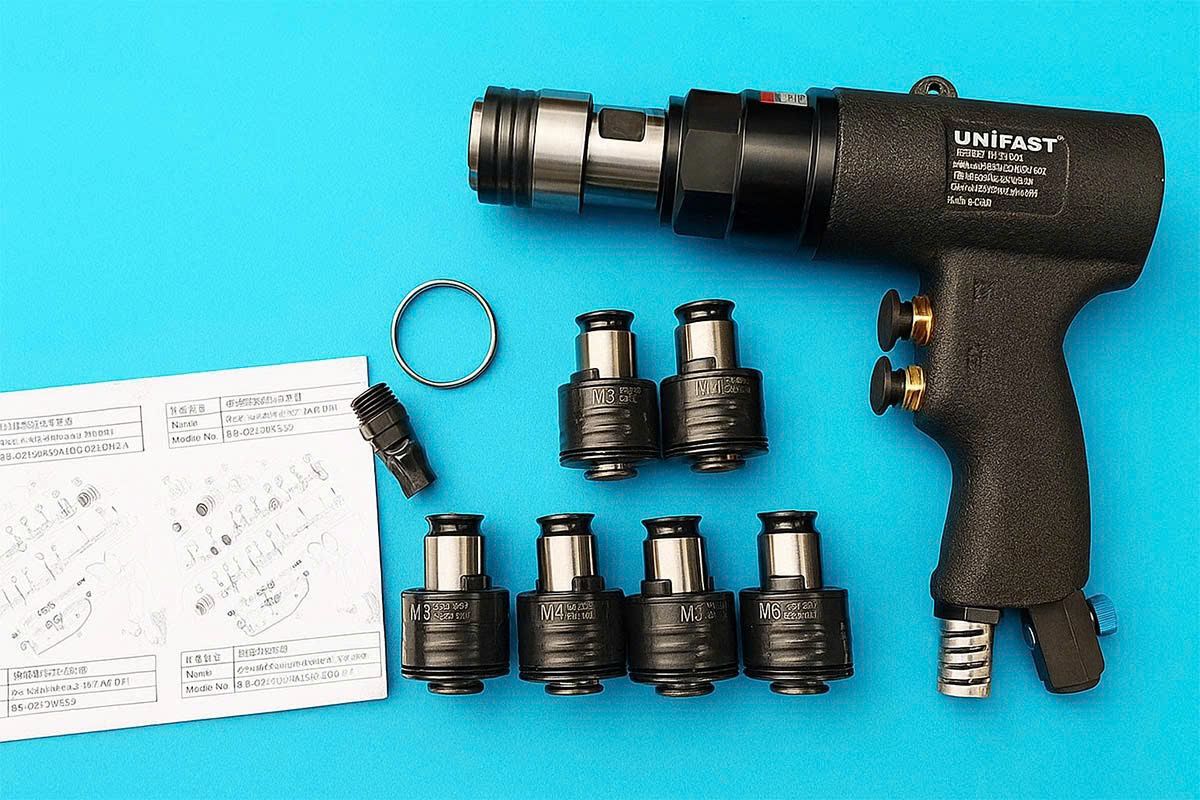
Investing in modern handheld tapping machines from reputable brands is an effective long-term solution. These machines feature torque control and auto-reverse functions, ensuring the tap always operates within safe limits. This not only protects the tool but also guarantees higher uniformity for every thread.
In conclusion, to prevent and rectify loose thread quality, it is vital to master the knowledge of handheld tapping machines, precise operating techniques, and appropriate equipment selection. Overlooking small details can lead to major failures, impacting product safety and durability.