In many cases, the controller of Thermostatic Bath indicates reach temperature, but have differences between test samples. Such issues are often linked to heat distribution within the bath and the operating condition of critical components.
Reduced Circulation of the Heat Transfer Medium
Temperature uniformity depends heavily on the circulation of the heat transfer medium. Heat generated by the heating element must be continuously distributed throughout the bath volume. When circulation weakens, heat tends to accumulate near the heating source while temperatures gradually decrease in more distant areas.
After extended operation, deposits may build up within the circulation system, the pump may lose efficiency, or the stirring mechanism may no longer provide its original flow rate. These changes reduce heat transfer performance and can create temperature variations between sample locations.
Excessive Sample Loading
The working chamber of a circulating bath is designed to allow the heat transfer medium to flow freely around samples. When too many bottles, test tubes, racks, or containers are placed inside the bath, circulation becomes restricted and heat transfer efficiency decreases.
This situation is commonly encountered in laboratory water baths, microbial culture baths, and biological sample thawing baths when a large number of samples must be processed simultaneously. Samples located near the main circulation path reach the target temperature more quickly, while those in obstructed areas heat more slowly.
Insufficient Fluid Level
In heating water bath, evaporation occurs continuously during operation, especially at elevated temperatures or during long testing periods. When the fluid level drops below the recommended level, heat transfer conditions within the bath begin to change.
Heat becomes concentrated near the heating element, while circulation to other areas is reduced. As a result, temperature differences across the bath tend to increase over time unless the fluid is replenished.
For oil baths, the condition of the heat transfer oil also has a direct impact on temperature uniformity. Oil that has oxidized or degraded after prolonged use may lose thermal performance and increase the likelihood of temperature variations within the bath.
Errors in Temperature Measurement and Control
Temperature sensors play a critical role in maintaining accurate temperature control. Over time, sensors may develop measurement errors due to aging or prolonged exposure to operating conditions.
In such cases, the controller may continue to display normal readings, while the actual bath temperature differs from the set value. Because these deviations often develop gradually, they can remain unnoticed unless the system is periodically verified using a calibrated reference thermometer or an independent measurement device.
Heating Element Performance Degradation
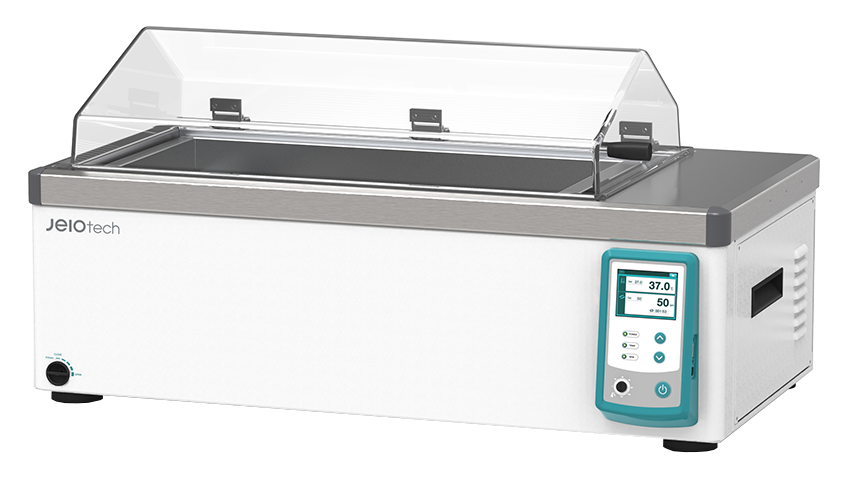
The heating element operates continuously under elevated temperatures and may gradually lose performance over time.
When part of the heating element no longer generates heat uniformly, the heat distribution within the bath becomes unbalanced. Some areas reach the target temperature quickly, while others require additional time to stabilize. Users may notice longer heat-up times or increased temperature fluctuations despite unchanged operating settings.
Installation Conditions and Environmental Influences
The surrounding environment can also affect temperature uniformity. A bath installed near doors, windows, or directly exposed to airflow from an air-conditioning system is more susceptible to heat exchange with the surrounding environment.
While these effects may be minor in routine applications, they can become significant in tests requiring tight temperature stability or extended holding times.
Regular Inspection Helps Maintain Temperature Uniformity
The temperature uniformity of a circulating bath can change over time as equipment ages and operating conditions vary. Components such as circulation pumps, temperature sensors, heating elements, and heat transfer fluids should be monitored regularly.
Measuring temperature at multiple locations within the bath provides a reliable assessment of heat distribution performance and helps identify potential issues before they affect testing results. Preventive maintenance not only extends equipment life but also improves the reliability of testing and calibration processes.
For applications involving calibration, inspection, research, and precision testing, routine verification of temperature uniformity, periodic calibration of measurement systems, and scheduled maintenance are essential for ensuring consistent and dependable performance.