FLIR thermal cameras reveal thermal details invisible to the naked eye. By analyzing thermal images, technicians can detect hotspots on electrical panels, motors, machinery, piping, or HVAC systems while the equipment is still in operation.
It is important to note that thermal imaging does not entirely replace electrical or mechanical measurements; rather, it provides an additional layer of data, alerting maintenance teams to areas showing signs of anomalies that require further, in-depth inspection.
What issues can be detected using a thermal camera?
The most common application is in electrical systems. Poor contact, loose terminals, or uneven load distribution often generate localized heat. When scanned with a thermal camera, these areas appear distinct from the rest of the equipment.
Some common scenarios include:
1. Abnormally hot terminals, terminal blocks, or connection points: potentially due to poor contact, oxidation, or improper tightening torque.
2. Overheating circuit breakers and switchgear: requires checking the operating load, contact condition, and current distribution across branches.
3. Unevenly heated power cables: potentially indicating overloading or an issue at a connection point.
4. Motor with abnormal thermal zones: heat concentrated on the motor body, bearings, or connection points may indicate issues requiring further inspection.
5. Electrical cabinet with a significantly hotter area: technicians can pinpoint the specific equipment needing inspection rather than manually checking every single component.
6. HVAC systems and piping: thermal imaging helps identify areas of heat loss, poor insulation, or uneven heat distribution.
A thermal camera does not automatically conclude that a component has definitely failed. Its value lies in the ability to quickly isolate anomalies, which can then be analyzed alongside data on current, voltage, load, mechanical condition, or operational history to determine the root cause.
What does a hot spot in an electrical cabinet indicate?
For instance, if two cable lugs supplying the same load exhibit similar temperatures that remain stable across multiple inspections, there is likely no cause for concern. Conversely, a lug showing a temperature significantly higher than comparable points in the same system warrants closer investigation.
Technicians typically focus on temperature differentials between similar points, the load level at the time of inspection, and temperature trends observed over successive measurements.
A single scan reveals signs, while multiple scans under consistent conditions help identify trends.
This is precisely why thermal cameras are so valuable for predictive maintenance. Technical teams can capture and store thermal images of the same electrical cabinet or motor during successive inspections, then compare them to track changes over time.
Is it necessary to cut the power when inspecting with a thermal camera?
In many cases, thermal cameras allow for equipment inspection while the system is in operation, making this method ideal for routine plant inspections.
Technicians can scan energized electrical cabinets, running motors, or active HVAC systems without dismantling components to check temperatures.
However, the fact that the power remains on does not eliminate the need to follow electrical safety procedures. Factors such as measurement distance, voltage levels, the working environment, and specific plant EHS regulations must still be considered prior to inspection.
A clear thermal image alone is insufficient to conclude that there is an equipment issue; load conditions, measurement distance, viewing angle, surface materials, and emissivity can all influence the results.
Why does a thermal image require more information than a red area?
While a basic thermal image can indicate which areas are hotter, a technician facing an electrical cabinet containing dozens of components still needs to pinpoint the exact location of any anomaly.
This is precisely where the FLIR Exx and Ex-XT series excel.
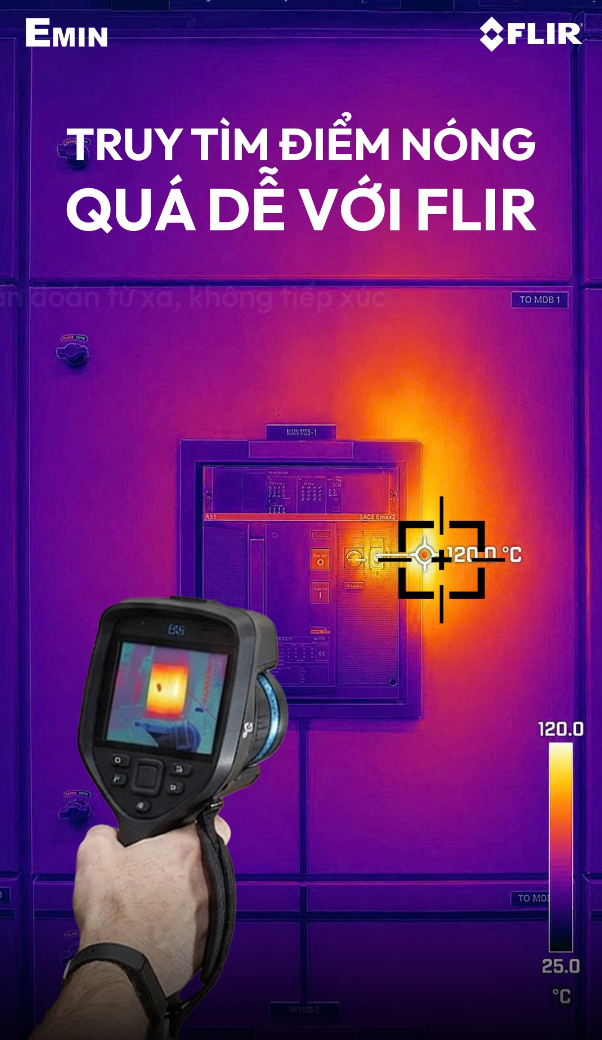
MSX (Multi-Spectral Dynamic Imaging) technology integrates visual details from the digital camera into the thermal image. This makes features such as conductors, terminals, equipment edges, and cabinet labels stand out clearly against the thermal background.
Instead of viewing an indistinct "hot spot," technicians gain the visual context needed to accurately isolate the specific area requiring inspection.
After capture, thermal data can be processed using FLIR Thermal Studio to generate reports for maintenance records and track equipment condition over successive inspections.
Where should a thermal camera inspection begin?
An effective inspection process rarely begins with simply picking up a camera and randomly scanning the entire facility.
First, the maintenance team must identify equipment that is critical or has previously shown signs of abnormality. Main electrical panels, distribution boards, high-power motors, transformers, and production lines requiring continuous operation typically fall into this category.
Next, technicians inspect the equipment under appropriate load conditions and record the operating status at the time of capture. Thermal images should be organized by area or specific piece of equipment to provide a baseline for future comparisons.
If an abnormal hotspot is detected, the thermal camera serves only as the starting point of the diagnostic process. Technicians can then proceed to examine load currents, connection points, mechanical conditions, or other relevant parameters to pinpoint the root cause.
This approach helps avoid the practice of immediately replacing components upon detecting heat—a habit that often drives up costs without necessarily addressing the underlying issue.
Which FLIR thermal camera should you choose for maintenance work?
Intended use largely dictates the choice of camera specifications. Compact models like the FLIR C3-X and C5 are ideal for quick inspections that require portability and frequent movement between areas.
Read more: Is the FLIR C5 thermal camera really as easy to use as the manufacturer claims?
For applications requiring greater image detail or in-depth inspections, models in the FLIR E52, E76, and E96 series meet more demanding requirements regarding resolution, measurement features, and lens interchangeability.
You should not base your decision solely on price from the outset. Maintenance teams for buildings, manufacturing plants, and power stations, as well as HVAC inspection units, may require vastly different camera configurations.
FLIR thermal cameras are suitable when businesses want to shift from repair-based maintenance to equipment condition monitoring
The greatest value of a thermal camera lies in the timing of detection. An abnormally hot cable lug identified during a routine inspection allows time to schedule tightening, load checks, or replacement. Early detection of a bearing showing signs of rising temperature enables the maintenance team to proactively schedule an inspection before an unplanned motor shutdown occurs.
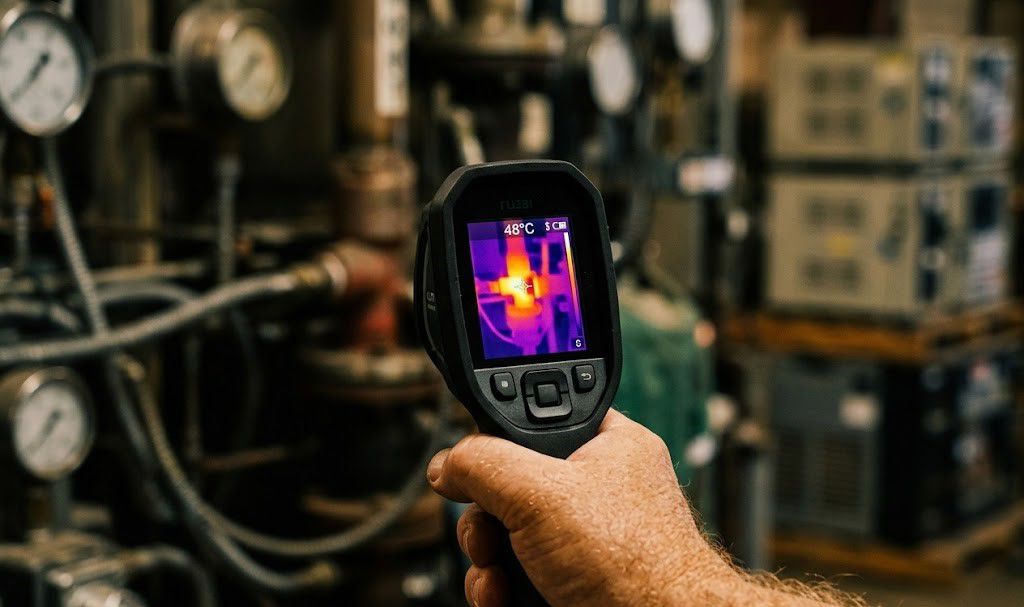
Therefore, thermal cameras are best utilized when integrated into an equipment condition monitoring program, rather than simply serving as handheld tools for troubleshooting after a machine has already stopped.
Based on thermal images, technical teams can build thermal profiles for each piece of equipment, track trends, and identify areas requiring priority inspection.
You might also be interested in: Can thermal cameras see through walls?
EMIN assists businesses in selecting FLIR thermal cameras that meet their specific needs.
A high-resolution camera is not necessarily suitable for every task. Factors such as measurement distance, object size, temperature range, the factory environment, and the type of equipment being inspected all influence the required configuration.
EMIN can recommend the appropriate FLIR camera series based on a business's specific inspection needs—whether for electrical cabinets, motors, production machinery, HVAC systems, or areas requiring periodic thermal inspections.
Instead of starting with a specific model, businesses can begin by asking: what type of anomaly needs to be detected, on which equipment, and from what distance?
This approach ensures that the camera configuration, lens, and accompanying software are accurately matched to actual maintenance requirements.