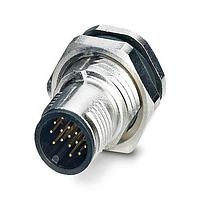
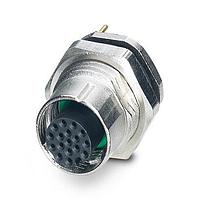
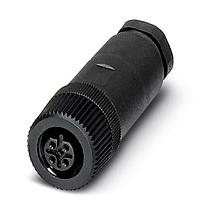
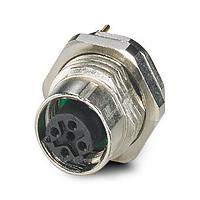
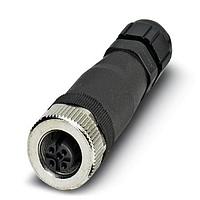
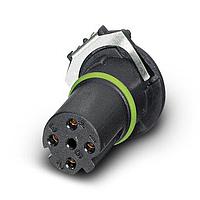
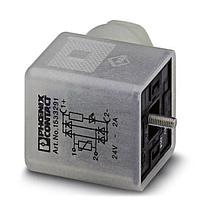
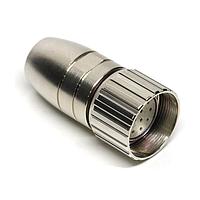
Circular Metric Connectors
Reliable field wiring often depends on connector systems that are compact, sealed, and easy to standardize across machines. In industrial automation, sensing, motion, and distributed I/O networks, Circular Metric Connectors are widely used because they support repeatable connections in space-constrained installations while helping simplify assembly and maintenance.
This category brings together connector solutions built around metric circular interfaces commonly selected for control cabinets, machine tools, process equipment, and factory devices. Whether the goal is to connect sensors, route power and signals, or adapt an existing harness layout, choosing the right format can improve uptime, reduce wiring errors, and make replacement faster in the field.
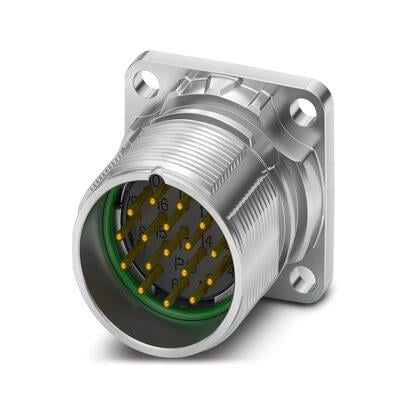
Where circular metric connectors fit in industrial systems
Metric circular interfaces are a practical choice when equipment needs a robust connector format with clear mechanical mating and consistent pin arrangements. They are commonly found on sensors, actuators, control modules, compact drives, and other devices that must be connected and disconnected without complex termination work.
Compared with more general connector families, these products are often chosen for applications where installers value a familiar, standardized form factor. If your project requires a different style of circular interface, it may also be useful to compare options such as Circular DIN Connectors or push-pull circular connectors depending on the locking method, environment, and service requirements.
Common configurations used in this category
One of the main advantages of this category is the variety of available configurations. Buyers typically evaluate connector gender, pin count, body orientation, and whether the part is intended as a straight-through adapter, a tee splitter, or a Y-style branch. These details matter because they affect cable routing, installation clearance, and the ability to expand an existing connection point without redesigning the whole harness.
Examples in this range include Amphenol parts such as the SS-050505-MFF-YS001 with a Y-style format, the SS-040404-MFM-TS001 in a tee-style arrangement, and the S-555555-FFFFFM-S001 in a straight configuration. These are useful illustrations of how the same connector family can support different wiring topologies, from simple inline links to multi-branch field connections.
How to choose the right circular metric connector
Selection usually starts with the mating interface. Confirm the connector style already used on the device, then verify the required position count, plug or receptacle arrangement, and whether the application needs a direct connection or an adapter between existing cable ends. Orientation is equally important in compact panels or on moving equipment, where a straight, tee, or Y body can make a significant difference to cable stress and available space.
Material and contact finish should also be reviewed in relation to the installation environment. Several featured products in this category use copper alloy contacts with gold plating, a common choice where reliable signal transmission and repeated mating cycles are important. For projects with broader connector requirements, users sometimes review related options in standard circular connector ranges to compare interface styles and mounting preferences.
Adapters and accessories for flexible wiring layouts
Not every connector requirement is a simple cable-to-device connection. In many machines, the immediate need is to split a connection, change gender, or extend an installed interface without replacing the original cable assembly. That is where circular adaptors and accessory-style parts become especially useful.
Within this category, Amphenol examples such as MC-000505-0FM-BS001, MN-050505-FMF-TS001, and NC-050505-FMF-TS001 show the practical role of compact adaptor components in the connector ecosystem. The X-LOK accessory references, including AB-AD-050505-FFM-TQ001 and AB-AD-050505-FMF-TQ001, are also relevant when users need a compatible accessory for an existing circular connector setup rather than a completely new wiring architecture.
Manufacturers commonly considered for connector sourcing
Industrial buyers often evaluate availability, ecosystem compatibility, and long-term maintenance support alongside the connector itself. In this category, Amphenol is a notable reference because the featured product range includes multiple circular adaptor formats suited to different connection layouts. Depending on the wider system design, teams may also compare offerings from suppliers such as HARTING, Hirose Electric, Banner Engineering, Belden, or AMP Connectors - TE Connectivity.
The right manufacturer choice usually depends less on brand recognition alone and more on fit within the installed base. Engineers and purchasing teams often standardize around a connector family that aligns with current machine interfaces, field service practices, and expected replacement cycles.
Typical application areas
These connectors are commonly used wherever compact, repeatable I/O connections are needed. Typical examples include factory automation lines, packaging equipment, conveyors, robotic cells, instrumentation skids, and sensor networks. In these environments, a metric circular format can help support organized cable management and simpler device replacement during maintenance.
They are also useful in modular equipment where pre-assembled cables and adapters can shorten installation time. For harsher or highly specialized environments, engineers may additionally review MIL Spec Circular Connectors when application standards, mechanical demands, or environmental expectations go beyond conventional industrial installations.
What to review before ordering
Before selecting a part, it helps to confirm a short list of practical details: connector format, number of positions, required gender combination, body orientation, and the physical routing space available around the mating point. If the part is an adapter, check both sides of the interface carefully so the connector can integrate with the existing cable and device without creating a mismatch.
It is also worth considering whether the connector will be used primarily for signal, power, or mixed-purpose connections, and whether future maintenance will require quick replacement in the field. A well-matched metric circular connector can make installation cleaner and more serviceable, especially when the wiring architecture is expected to scale across multiple machines or panels.
Final considerations
Choosing from a wide range of circular metric connector options is easier when the application is reviewed from a system perspective rather than as a single component purchase. Interface compatibility, routing geometry, and adaptor needs all influence long-term usability just as much as the connector form itself.
For automation, instrumentation, and machine wiring projects, this category provides a focused starting point for finding industrial connector solutions that fit established metric circular ecosystems. Reviewing the required mating pattern, layout style, and accessory role up front will help narrow the selection to parts that support reliable installation and smoother maintenance over time.
Get exclusive volume discounts, bulk pricing updates, and new product alerts delivered directly to your inbox.
By subscribing, you agree to our Terms of Service and Privacy Policy.
Direct access to our certified experts