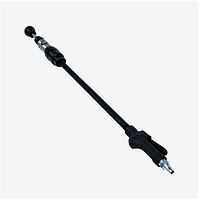
Sand rammer
Consistent compaction is critical in foundry work, mold preparation, and other tasks where loose material must be packed evenly into confined spaces. A sand rammer helps operators apply repeated impact force with better speed and repeatability than manual tamping, making it a practical choice for production environments that depend on stable material density and surface quality.
Within this category, the focus is on pneumatic sand rammers designed for industrial use. These tools are especially useful where compressed air is already available and where users need a compact, durable solution for repetitive ramming work across different mold sizes, depths, and access conditions.
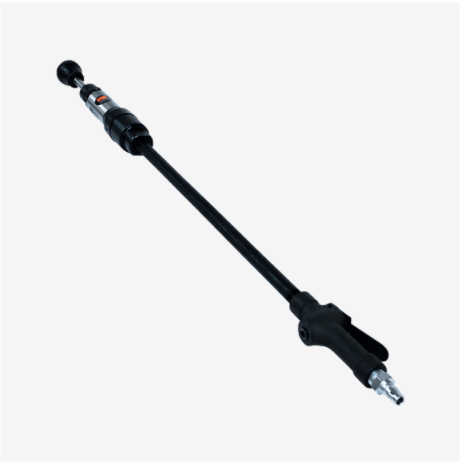
Where pneumatic sand rammers are commonly used
In many workshops, compacting sand or similar granular material by hand can lead to uneven results, operator fatigue, and slower cycle times. Pneumatic rammers are used to improve consistency, especially in areas that require controlled impact in narrow pockets, corners, or deeper mold sections.
They are often selected for applications where repeated impact compaction is needed without the bulk of larger equipment. Compared with general-purpose air tools, a sand rammer is built around axial striking action rather than drilling, grinding, or fastening, which makes it better suited to packing material instead of removing or shaping it.
How to choose the right sand rammer
Selecting the right model usually depends on the balance between impact size, tool length, weight, and air consumption. A smaller rammer can be easier to handle in tight spaces or for lighter work, while larger units are more suitable when deeper compaction or broader impact force is required.
Users should also consider the available air line setup, including inlet size and compressor capacity. If your process includes several pneumatic operations in the same area, it may also be useful to review related tools such as air drills or air grinders to standardize air supply planning across the workstation.
Understanding the KAWASAKI range in this category
This category features models from KAWASAKI, covering a broad range of sizes for different handling and compaction needs. The lineup spans compact, lightweight units through to longer and heavier tools with larger piston diameters, giving buyers options for both detailed work and higher-force applications.
At the smaller end, models such as KAWASAKI KPT-1 and KPT-2 are suited to applications where maneuverability matters. Their lower weight and shorter body can help when operators need to work in confined spaces, carry the tool frequently, or perform more delicate compaction control.
For intermediate requirements, KAWASAKI KPT-3 and KPT-4 offer a step up while remaining manageable in everyday use. Where deeper reach or greater working mass is preferred, larger models including KAWASAKI KPT-5, KPT-6, and KPT-7 provide longer overall length and larger piston dimensions, which can support more demanding molding or packing tasks.
Comparing compact and long-body models
One of the practical differences in this range is overall length. Short-body models are generally easier to position quickly and may reduce handling effort in bench work or where access is limited. Long-body versions can be advantageous when the operator must reach deeper sections without excessive repositioning.
There are also “L” variants such as KAWASAKI KPT-1L and KPT-2L, which provide extended length compared with their standard counterparts while keeping similar piston size. This kind of variation is useful when the application calls for similar impact characteristics but a different working reach.
Blow rate and air consumption should be considered together rather than in isolation. A higher blows-per-minute value can support fast repetitive compaction, but the overall suitability still depends on the material being packed, the required finish, and whether the available compressed air system can sustain the tool during normal production.
Key factors for operation and workflow
When evaluating a pneumatic sand rammer, buyers often look beyond headline size and compare how the tool fits into the real workflow. Tool weight influences operator fatigue over long shifts, while air consumption affects compressor loading and line sizing. In a busy production area, these operating details can have a direct effect on productivity and consistency.
It is also important to match the tool to the surrounding pneumatic setup. Facilities that already use air impact wrenches or air screwdrivers may already have suitable infrastructure, but line pressure stability, hose selection, and connection size still need to be reviewed for the specific rammer being used.
Why model variation matters in industrial purchasing
Not every production line needs the same compaction profile. Some users need a lightweight rammer for repetitive handling and fine control, while others prioritize stronger impact and longer reach for larger molds or denser packing tasks. That is why a category with multiple sizes is often more useful than relying on a single general-purpose option.
For procurement teams, comparing piston diameter, stroke, body length, and air demand helps narrow the shortlist quickly. For end users and maintenance teams, model variation also supports better standardization by allowing the right tool to be assigned to each station instead of overloading one tool type across all jobs.
Choosing with confidence
A well-matched sand rammer can improve compaction quality, reduce manual effort, and support more consistent results in day-to-day production. The KAWASAKI models in this category cover a useful spread of compact to larger pneumatic options, making it easier to choose based on reach, handling, and working intensity rather than on price or size alone.
If you are reviewing tools for a foundry, molding area, or other industrial compaction process, start by defining the material, access constraints, and available air supply. From there, it becomes much easier to compare the appropriate model within this category and build a more reliable pneumatic tool setup around the actual work requirement.
Get exclusive volume discounts, bulk pricing updates, and new product alerts delivered directly to your inbox.
By subscribing, you agree to our Terms of Service and Privacy Policy.
Direct access to our certified experts