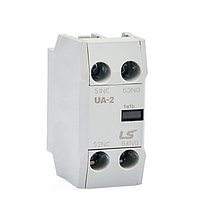
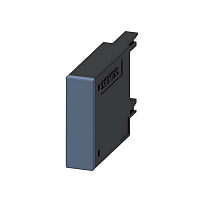
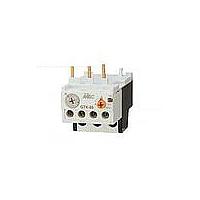
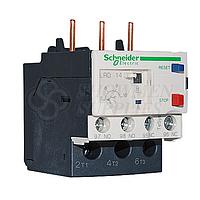
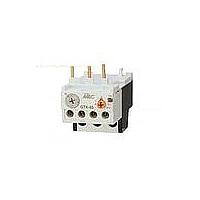
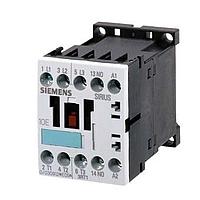
Relays, Contactors & Solenoids
From switching low-power signals to controlling heavy electrical loads, reliable electromechanical components remain essential across industrial automation, vehicles, control panels, and embedded equipment. This category brings together Relays, Contactors & Solenoids for applications where isolation, load control, status switching, and motion actuation all need to work together within a dependable control architecture.
Whether you are designing a new machine, maintaining a plant panel, or sourcing replacement parts for field equipment, the right component choice depends on load type, switching frequency, control voltage, mounting style, and environmental conditions. In practice, these devices often sit alongside controllers, feedback instruments, and protection hardware, so selection should always be made in the context of the wider control system.
Where these components fit in modern control systems
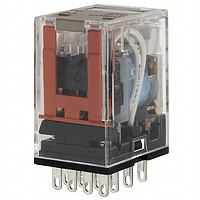
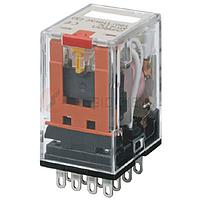
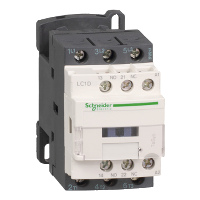
Relays, contactors, and solenoids serve different but closely related roles. A relay is commonly used for electrical isolation and signal or load switching, often in control circuits. A contactor is generally chosen for higher-power switching duties, especially for motors and other substantial electrical loads. A solenoid converts electrical energy into linear motion, making it useful for locking, releasing, positioning, and mechanical actuation.
Because these technologies support both switching and actuation, they appear in a wide range of systems: motor starters, safety interlocks, process equipment, access devices, automotive assemblies, instrumentation panels, and machine subsystems. In many installations, they are supported by control and monitoring accessories that simplify installation, wiring, protection, and maintenance.
Understanding the difference between relays, contactors, and solenoids
A practical way to approach this category is to think first about the job the device must perform. If the need is to switch a control signal, interface between circuits, or drive a moderate load with galvanic separation, a relay is often the correct starting point. If the application involves repetitive switching of motors, heaters, pumps, or other higher-current loads, a contactor is typically more appropriate.
Solenoids and actuators are selected when the output must be mechanical rather than purely electrical. They are frequently used to move latches, valves, plungers, or other mechanisms in response to a control signal. This distinction matters because the electrical and mechanical duty profiles are very different, even when the parts are installed in the same panel or machine.
Typical selection criteria for industrial and OEM buyers
For B2B sourcing, the most important selection factors usually start with the load itself. Buyers should confirm whether the device will switch AC or DC, the expected current and voltage, and whether the load is resistive, inductive, or motor-driven. Coil or control voltage must also match the available control circuit, while mounting method, terminal style, and physical dimensions affect panel integration and assembly workflow.
Operating environment is equally important. Temperature range, vibration, dust exposure, and service life all influence component suitability, especially in mobile equipment or industrial duty cycles. Where signal visibility and operator diagnostics are important, related devices such as meters and indicators can help technicians monitor status, troubleshoot switching behavior, and verify system response during commissioning or maintenance.
Representative products in this category ecosystem
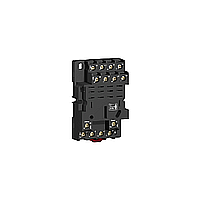
The product mix in this category reflects both switching and supporting hardware. On the relay side, examples such as the Amphenol LVRCM35SCF Automotive Relays and the Amphenol AHDM04-18-14SN Automotive Relays illustrate how relay-based control can be applied in demanding electrical environments. Relay-related support parts are also relevant, such as the Amphenol M12883/47-04 relay socket, which plays an important role in installation, serviceability, and replacement workflows.
Switching interfaces are another important part of the broader ecosystem. Products like the Alps Alpine SKELALA010 tactile switch, SKQJAE tactile switch, and SSAJ120100-BLK slide switch represent user or system input elements that may work upstream of relay or contactor logic. The Alps Alpine SPVQ811000 detector switch similarly shows how position or status detection can complement switching architectures in compact electromechanical assemblies.
Manufacturer context and sourcing considerations
When standardizing a build or maintaining an approved vendor list, buyers often prefer to source from recognized manufacturers with established industrial portfolios. Within this category context, brands such as Alps Alpine, Amphenol, ABB, Autonics, and TE Connectivity-related lines may be relevant depending on whether the requirement is user input switching, relay interfacing, load control, or panel integration.
It is also useful to consider whether the project requires consistency across multiple related component types. For example, one sourcing strategy may prioritize tactile and slide switches for operator interaction, while another centers on relay hardware and accessories for serviceable control panels. Choosing within a familiar manufacturer ecosystem can simplify qualification, documentation, and replacement planning, but the final decision should still follow application requirements rather than brand preference alone.
How these devices are used together in real applications
In many systems, these components are not selected in isolation. A controller may send a low-power signal to a relay, which then enables a contactor or an actuator in the field. A detector switch can confirm position, and the resulting status may be passed back into supervisory logic or into process control and monitoring devices for alarm handling, sequence control, or operational feedback.
This layered approach is common in factory automation, transportation-related systems, access mechanisms, and machine safety logic. It allows designers to separate control-level electronics from power-level switching and mechanical output functions, improving both maintainability and system clarity.
Choosing the right category path for your application
If your requirement is very specific, narrowing the selection by function can save time. Relay-focused applications often benefit from looking at switching ratings, coil behavior, and socket compatibility first. For motor or power switching, contactor-oriented filtering is usually more productive. If the challenge is movement, locking, or release, solenoids and actuators are the more relevant starting point.
It can also help to define whether the part is for new design, retrofit, or maintenance replacement. New projects may prioritize footprint, integration, and lifecycle planning, while replacement sourcing often focuses on form-fit-function compatibility and service access. A clear understanding of the duty cycle and control architecture will usually narrow the shortlist faster than comparing model names alone.
Final thoughts
This category supports a broad range of switching and actuation needs, from compact interface-level components to devices intended for heavier control duties. By evaluating the load, control method, environment, and integration requirements together, buyers can identify parts that fit both the electrical design and the maintenance strategy.
If you are comparing options for a panel, machine, or embedded control assembly, start with the function the device must perform, then refine by installation and operating conditions. That approach makes it easier to choose relays, contactors, and solenoids that align with real application demands rather than only catalog labels.
Get exclusive volume discounts, bulk pricing updates, and new product alerts delivered directly to your inbox.
By subscribing, you agree to our Terms of Service and Privacy Policy.
Direct access to our certified experts