The Global AI Race and the Essential Demands for Computer Hardware Infrastructure
Artificial intelligence is rapidly shifting from theoretical models to real-world deployment systems. The continuous emergence of large language models, intelligent robotics, and autonomous vehicle technologies has caused global computing demands to surge. No matter how intelligent an AI model is, it must operate on physical hardware infrastructure. Without sufficiently powerful computing systems and a stable chip supply, all content creation and data processing technologies risk severe bottlenecks.

The Technology Race and Growing Pressure on Computer Components
Next-generation artificial intelligence systems are consuming hardware resources at an unprecedented rate. Alibaba recently unveiled its Qwen3.8-Max model featuring 2.4 trillion parameters and a context window capable of handling up to 1 million tokens. To prevent system overload, engineers implemented a mixture-of-experts architecture that activates only around 95 billion parameters per response query.
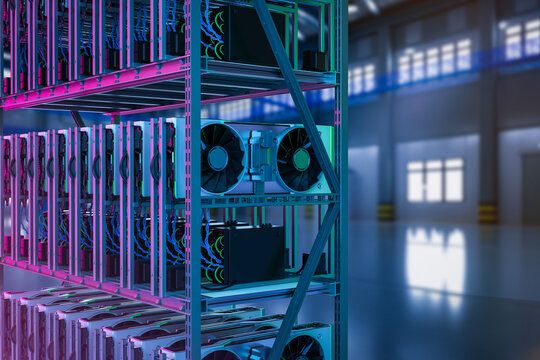
Around the same time, OpenAI announced upgrades to its GPT-5.6 model with integrated deep reasoning modes, placing continuous loads on server infrastructure. Meanwhile, the Discovery Loop project, founded by former Google expert Quoc V. Le and his colleagues, aims to utilize AI to recursively improve future AI generations—a self-learning loop requiring massive, continuous computational capacity.
All of these technological developments point to one concrete conclusion: computing infrastructure must be upgraded accordingly at every level. Graphics cards play the most critical role in AI processing due to their high VRAM capacity and dedicated compute cores. Processors (CPUs) manage data coordination to ensure uninterrupted data flows. High-speed RAM (at least 32GB) combined with NVMe SSDs ensures seamless, low-latency data storage and retrieval. Meanwhile, mainboards provide stable power delivery and high bandwidth required for continuous 24/7 operations.
Elon Musk's Semiconductor Self-Reliance Strategy in Texas
Global chip shortages prompted Elon Musk, together with SpaceX and Tesla, to execute a bold strategy: constructing their own semiconductor manufacturing complex, Terafab, in Texas, USA. The project involves an initial investment of $16.8 billion, with total funding potentially reaching $119 billion across future expansion phases spanning a 9.3 million m² site.
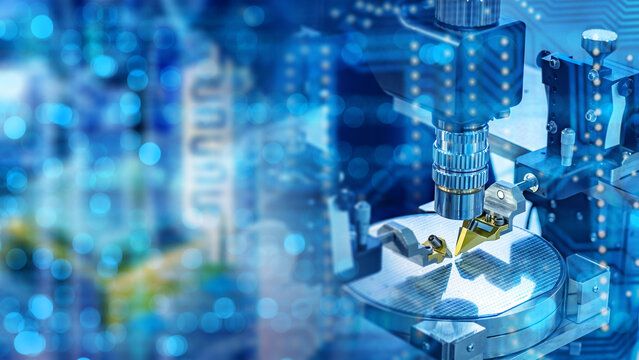
The project aims to supply over 1 Terawatt of equivalent computing power for the entire ecosystem. Terafab sets itself apart through a fully integrated, end-to-end model—handling wafer fabrication, packaging, and chip testing at a single location. The resulting chips will directly power Tesla's Cybercab autonomous vehicles, Optimus humanoid robots, and SpaceX's orbital data centers. Tesla partnered with Intel to leverage the Intel 14A process node, with trial operations expected between 2028 and 2029.

Global Overview of the Hardware Infrastructure Race
It is not just US tech giants driving this shift; nations worldwide are committing massive resources to hardware infrastructure. In the US, SpaceX and Tesla are focusing on the $16.8 billion Terafab complex to produce specialized AI chips for robotics, autonomous vehicles, and satellite networks.
You might also be interested in: OpenAI unveils AI chip
In China, the government aims to expand national AI computing capacity to 9,800 exaflops by 2030 while encouraging domestic enterprises like Huawei to develop proprietary chip lines. In Japan, AI data center expansion projects are attracting roughly $60 billion in investments to quadruple computing capacity over the next decade. At tech corporations like Alibaba, running 2.4-trillion-parameter models continues to drive demand for high-capacity server infrastructure.
Implications for Users and Technology Enterprises
The race to build fabrication facilities alongside the advent of next-gen AI models proves that artificial intelligence cannot advance without hardware upgrades. Whether configuring enterprise data centers or personal workstations for content creation, high-standard hardware remains a prerequisite. Motherboards, CPUs, GPUs, and RAM form the core foundation enabling users to master modern technology applications.
To stay updated on the latest computer component solutions, measurement equipment, and emerging technologies, follow upcoming analytical articles from EMIN.
Partnering with EMIN empowers businesses and engineers to access cutting-edge hardware technology solutions, optimize computing infrastructure, and boost operational efficiency in the AI era.