Decoding the High-Temperature Challenge in Semiconductor Testing
The hotspots and solutions from Tektronix & Keithley
In automated test equipment (ATE) systems, burn-in stress screening chambers and chip R&D labs, high temperature is one of the biggest enemies: it introduces measurement error and shortens hardware life.
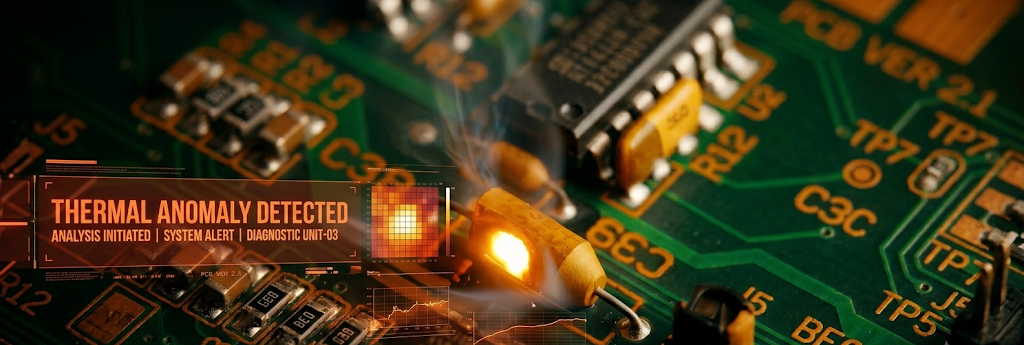
As the industry moves into the era of wide-bandgap semiconductors (SiC/GaN) and AI infrastructure running under harsh conditions, managing heat at hotspots inside test equipment has become a make-or-break problem for R&D engineers. So which parts are most often exposed to high temperature, and how can the problem be solved?
1The “hotspots” that endure high temperature in test systems
In the in-depth semiconductor test ecosystem, overheating concentrates in the following hardware connection components and specialized power circuits:
A. Probe tips & probe cards
In wafer-level test systems, the probe card takes the harshest temperatures. New-generation chips such as SiC (Silicon Carbide) and GaN (Gallium Nitride) operate from −40 °C to 200 °C, putting the probe tips under heavy thermal stress.
High temperature changes the contact resistance of the probe, causing serious errors in tiny-current measurements (pA/fA range).
B. Input connectors and termination (Input Terminations)
On high-speed pulse measurement equipment and wide-bandwidth oscilloscopes, the input termination (typically 50 Ω) overheats easily when a signal beyond the design limit is applied by mistake.
A sudden spike in heat can damage internal components.
C. Power stage of the SMU (Source Measure Unit)
When high-current pulses (several amps, hundreds of watts) are driven through a Keithley SMU to expose device defects, the internal power stage and the 4-wire (Kelvin) connections must absorb a great deal of localized heat.
Without optimal heat dissipation, accumulated heat damages the instrument and generates thermoelectric EMF, skewing ultra-low-resistance measurements of semiconductors.
D. Cabling and thermal noise
Signal cables running from the instrument to the high-temperature test chamber conduct heat back from the chamber.
Thermal (Johnson) noise increases, the main cause of disruption to nano-amp leakage current measurements in transistors.
2Measurement and overheat-diagnosis solutions from Tektronix & Keithley
To eliminate hotspots and correct heat-induced error without affecting the chip structure, leading engineers now apply the following high-tech set of solutions:
Extreme heat-resistant probes and materials
Tektronix uses high-temperature epoxy ring boards and the IsoVu™ optically isolated probe with a specialized tip, rated for −40 °C to 125 °C, helping limit noise in high-heat environments.
Smart pulse technique
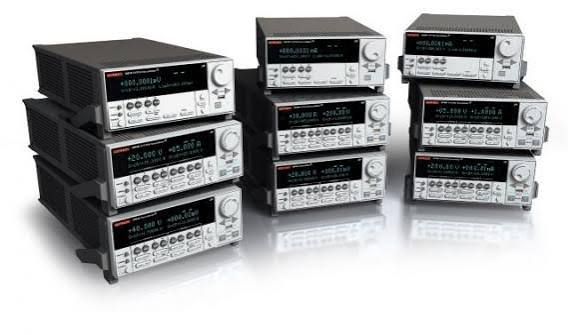
Instead of sustaining continuous DC current, which builds up heat in the SMU, Keithley 2450, 2460 and 2600B series let you configure a short pulse mode: it drives the device to the required threshold while protecting the instrument.
Combining electrical measurement with lock-in thermography
To find microscopic faults buried deep in a chip, a Keithley SMU supplying periodic pulses combined with a high-resolution infrared camera removes background noise and pinpoints the overheating location down to the micron level.
Tektronix Semiconductor Seminar 2026
November 11, 2026, 6th floor, NIC Building, Hanoi. Seats are limited, so register early and EMIN will confirm your spot.
Tektronix Semiconductor Seminar 2026
November 11, 2026, 6th floor, NIC Building, Hanoi. Seats are limited, so register early and EMIN will confirm your spot.
Reserve your seat