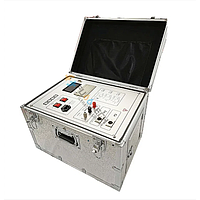
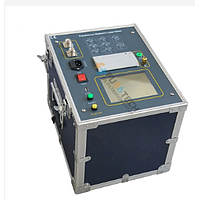
Capacitance/tan δ meter
When insulation condition, dielectric behavior, or component values need to be verified with confidence, the right test instrument makes a measurable difference. A Capacitance/tan δ meter is commonly used to evaluate capacitance and dielectric loss, helping engineers, maintenance teams, and test laboratories assess material quality, insulation aging, and electrical performance in both routine checks and more specialized diagnostic work.
On this category page, you can explore instruments used for capacitance measurement, tan delta analysis, and related dielectric testing tasks. The selection is relevant for electrical maintenance, laboratory evaluation, quality control, and applications where understanding insulation condition is just as important as reading a nominal capacitance value.
Why capacitance and tan delta testing matters
Capacitance alone does not always tell the full story of an electrical component or insulation system. In many practical situations, engineers also need to examine dielectric loss, often expressed as tan δ, because it can indicate contamination, moisture ingress, aging, or deterioration that may not be obvious from capacitance values by themselves.
This is especially useful in electrical testing environments where asset reliability depends on insulation quality. For broader insulation diagnostics, users often review related equipment such as withstand voltage test systems or a VLF tester when planning a more complete condition assessment workflow.
Typical applications for this category
Capacitance and tan delta instruments are used across several technical contexts. In power and industrial maintenance, they support evaluation of insulating materials and dielectric properties. In laboratories and production settings, they help verify whether a sample, component, or test object behaves within expected electrical limits.
These meters can also fit into R&D and precision measurement tasks. Some solutions in this category are oriented toward dielectric constant, loss factor, and resistivity analysis, while others are used in highly sensitive non-contact measurement systems based on capacitive principles. That makes the category relevant not only to electrical test engineers, but also to users working on displacement, gap, or material characterization.
Representative products in this range
A practical example for basic capacitance simulation and circuit work is the GLOBAL CDB-10 Capacitance Decade Box from Global Specialties. While it is not a diagnostic meter in the same sense as insulation test equipment, it plays an important supporting role in calibration, circuit development, and test bench setup where known capacitance values are needed.
For dielectric property analysis, the WGM TDM1515 Automatic Dielectric Constant Tan Delta & Resistivity system is a more specialized example. Its measurement scope reflects the needs of users who must evaluate capacitance, dielectric loss, and resistivity together, which is often important in material testing and insulation research.
The category also includes precision capacitive measurement solutions from MTI instrument, such as the AS-9000 series and DIGITAL D400/D410 family. These systems illustrate how capacitive measurement technology is applied in non-contact gap and displacement measurement, where resolution, repeatability, channel count, and signal interface are key selection factors.
How to choose the right capacitance/tan delta instrument
The first step is to define the measurement objective. If the task is component substitution, circuit testing, or bench simulation, a capacitance decade box may be appropriate. If the goal is insulation diagnosis or dielectric characterization, a dedicated capacitance/tan delta meter with support for loss and resistivity measurement is more relevant. If the application is non-contact position or gap monitoring, capacitive displacement systems are the better fit.
Next, consider the working range and the required sensitivity. Some users need picofarad-level measurement resolution, while others care more about trend monitoring, repeatability, or multi-parameter analysis. In production or automated environments, output type also matters, especially when analog and digital interfaces must connect with data acquisition or control systems.
It is also worth checking whether a single-channel or multi-channel configuration is needed. For example, MTI instrument models in this category include both 1-channel and 2-channel AS-9000 variants, as well as 4-channel DIGITAL D400, D401, D402, D410, D411, and D412 systems. The right choice depends on whether the job involves one point, differential measurement, or synchronized multi-point monitoring.
Understanding the differences between device types
Not every product associated with capacitance belongs to the same workflow. A decade box provides selectable reference capacitance values for setup and verification. A dielectric test instrument focuses on evaluating how insulation or materials respond electrically. A capacitive non-contact system uses changes in capacitance to infer distance, displacement, or gap without touching the target.
This distinction is important for procurement teams and technical buyers because similar terminology can lead to the wrong purchase. A maintenance department testing insulation condition will usually prioritize dielectric loss and stability analysis, while a motion or precision engineering application may prioritize bandwidth, channel architecture, and output integration.
Brands and solution coverage
This category highlights products from manufacturers such as Global Specialties, MTI instrument, and WGM, each representing a different part of the application spectrum. Global Specialties is relevant for bench and lab-oriented capacitance tools, MTI instrument is strongly associated with high-precision capacitive non-contact measurement, and WGM covers dielectric constant, tan delta, and resistivity testing needs.
Other manufacturers listed in the broader range can also support adjacent electrical testing requirements depending on the project scope. In many cases, buyers comparing a capacitance/tan delta meter will also review related solutions such as a high-voltage step-up transformer or an SF6 gas analyzer when building a more complete electrical test setup.
What technical buyers usually compare
In B2B purchasing, selection often comes down to a few practical questions rather than a long feature checklist. Users typically compare measurement range, resolution, accuracy, supported test parameters, channel count, output options, and environmental suitability. For advanced installations, integration with software, Ethernet, USB, or analog output can be just as important as the core measurement capability.
Form factor also matters. A compact DIN-mount capacitive measurement controller may be better for machine integration, while a bench-top dielectric analyzer can be more suitable for laboratory workflows. Evaluating the instrument in the context of the full test process usually leads to a more reliable purchasing decision than comparing specifications in isolation.
Finding the right fit for your testing workflow
The products in this category serve different but related needs across electrical testing, dielectric analysis, and precision capacitive measurement. Whether the requirement is a reference capacitance tool, a dedicated tan delta and resistivity instrument, or a multi-channel non-contact capacitive measurement system, the best option depends on the test method, the object under test, and the level of precision required.
By focusing on application needs first, it becomes easier to narrow the shortlist and select an instrument that fits both the technical process and the integration environment. Use this category to compare suitable solutions and identify the most relevant platform for your measurement or diagnostic task.
Get exclusive volume discounts, bulk pricing updates, and new product alerts delivered directly to your inbox.
By subscribing, you agree to our Terms of Service and Privacy Policy.
Direct access to our certified experts