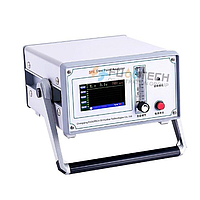
Dew point meter
Moisture control is a small detail that can have a big impact on production stability, compressed air quality, coating performance, and storage conditions. When condensation forms at the wrong point in a process, it can lead to corrosion, clogged lines, damaged components, or inconsistent product quality. That is why a dew point meter is widely used wherever air dryness needs to be checked rather than assumed.
On this page, you can explore instruments for portable spot checking, routine maintenance, and more precise humidity verification. The category covers handheld units, thermo-hygrometers with dew point indication, and specialized chilled mirror instruments for applications that require higher reference-level measurement.
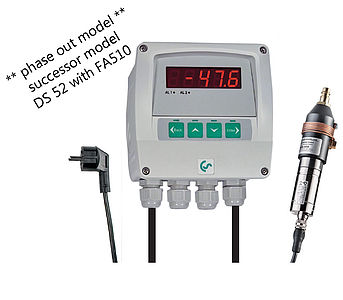
Why dew point matters in industrial environments
Dew point is the temperature at which air becomes saturated and water vapor begins to condense at a given pressure. In practical terms, a lower dew point means drier air. This parameter is especially important in compressed air systems, HVAC checks, surface preparation, laboratories, electronics production, food processing, and other environments where excess moisture can cause process problems.
Monitoring dew point helps reduce condensation risk inside pipelines, pneumatic equipment, enclosures, and production areas. It also supports maintenance planning by showing whether dryers, filters, and moisture control measures are performing as expected. In broader environmental monitoring setups, dew point measurement is often used alongside air and gas transmitters when continuous process visibility is needed.
Common types of dew point meters in this category
This category includes several instrument styles designed for different levels of portability, accuracy, and application complexity. Some models are simple handheld devices for field inspection, while others combine humidity, temperature, dew point, and water concentration data in one unit.
Portable examples such as the EXTECH RH600 and PCE DPM 3 are suitable for maintenance teams that need direct readings in service environments. These instruments are useful for checking dryers, compressed air lines, and indoor process areas, while functions like data logging can help document trends over time instead of relying on a single reading.
For quick indication tasks, products such as the Wöhler TI 410 or the ELCOMETER 114 Dewpoint Calculator serve a different role. They are typically chosen when users need a practical way to assess condensation conditions in the field without moving to a more complex monitoring setup.
When to use handheld meters and when to use chilled mirror instruments
Not every application needs the same measurement principle. Many day-to-day industrial checks can be handled with compact handheld instruments that estimate dew point from humidity and temperature sensing. These are practical for routine inspection, troubleshooting, and general environmental verification.
For applications where measurement accuracy and stability are more critical, chilled mirror technology is often considered. Instruments such as the BalunTech BL784 and BalunTech BL783 use a chilled mirror approach to detect the condensation point directly, which makes them relevant for calibration work, higher-precision laboratory tasks, or processes that require tighter moisture control.
The right choice depends on how the reading will be used. If the goal is preventive maintenance or periodic field checking, a portable meter may be enough. If the result is used for validation, process qualification, or more demanding quality control, a precision instrument may be the better fit.
Typical applications for dew point measurement
Dew point measurement is widely used in compressed air and gas systems because water vapor can damage pneumatic tools, valves, and downstream equipment. Even when systems appear to operate normally, moisture can still accumulate and affect performance over time. Measuring the dew point gives a clearer picture of actual dryness conditions inside the process.
It is also important in coating and surface preparation work, where substrate temperature and ambient conditions influence the risk of condensation. In these situations, dew point information may be checked together with related instruments from brands such as ELCOMETER, especially where coating inspection and environmental conditions need to be assessed together.
Other common use cases include HVAC diagnostics, storage areas, clean spaces, packaging environments, and laboratories. In more complete monitoring systems, dew point may be reviewed alongside parameters from air quality sensors to understand both moisture behavior and overall environmental conditions.
What to consider when choosing a dew point meter
The first point to check is the expected measurement range. Some applications only need general ambient or HVAC readings, while others involve much drier process air and require lower dew point capability. A meter that is suitable for room-condition checks may not be the right tool for compressed air verification.
Accuracy should also be considered in the context of the process. For example, a maintenance technician looking for a quick pass/fail indication may prioritize portability and ease of use, while a quality or laboratory team may focus more on repeatability, sensor response, and reference-level performance. Data logging can also be valuable if you need to store time-stamped measurements for service records or audits.
Connection type, pressure conditions, and operating environment are equally important. Some instruments are intended for handheld field use, while others are better suited to bench testing or integration into a controlled workflow. If your process requires broader environmental monitoring rather than spot checks alone, it may also be worth reviewing OMEGA and other manufacturer pages for related humidity and dew point instruments.
Examples of instruments available in this category
The range includes practical handheld devices such as the EXTECH RH600 and PCE DPM 3, both of which combine dew point measurement with other useful humidity-related parameters. These are suitable for technicians who need a portable tool for maintenance and diagnostics in the field.
For users looking at environmental handhelds, several OMEGA instruments in the broader lineup support dew point, humidity, temperature, and wet-bulb measurement in a compact form factor. Depending on the model, these can be useful for HVAC, laboratory, packaging, and general environmental checks.
At the more specialized end, BalunTech chilled mirror models are intended for applications where precision matters more than convenience alone. The category therefore serves a wide span of needs, from simple indication and inspection to more controlled moisture analysis.
Good measurement practice for more reliable readings
A dew point reading is only useful when the measurement conditions are appropriate. Stable sampling conditions, enough response time, and proper sensor placement all affect the result. In compressed air testing, pressure, flow, and sampling method can influence how representative the reading is, so the instrument should be matched to the actual process condition.
Regular verification and calibration are also important, especially when dew point values are used for maintenance decisions, product quality checks, or documented compliance procedures. Even a capable instrument needs proper handling to maintain dependable results over time.
Choosing the right dew point meter for your workflow
The best selection usually comes down to how often you measure, how dry the process needs to be, and how much confidence the application demands from each reading. A simple handheld unit may be ideal for routine service rounds, while a higher-precision instrument is more appropriate when the measurement directly affects quality assurance or process validation.
This category brings together dew point meters for a range of industrial and environmental tasks, from portable field inspection to precision moisture analysis. If you are comparing options, focus on measurement range, accuracy, logging needs, and the real conditions of your application to narrow down the most suitable instrument.
Get exclusive volume discounts, bulk pricing updates, and new product alerts delivered directly to your inbox.
By subscribing, you agree to our Terms of Service and Privacy Policy.
Direct access to our certified experts