Fixed gas detection
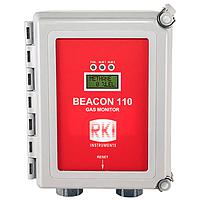
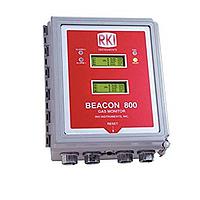
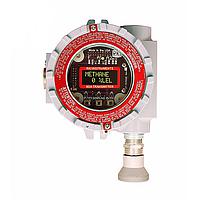
Continuous gas monitoring is a core part of industrial safety, especially in areas where hazardous, flammable, or process-related gases may be present for long periods. A well-designed fixed gas detection system helps operators identify leaks early, trigger alarms, and support safer plant operation across production lines, utilities, storage areas, and confined spaces.
Unlike portable instruments used for spot checks or personal protection, fixed detectors stay installed at defined points and watch the atmosphere around the clock. They are commonly integrated with alarm systems, controllers, or plant monitoring networks so that gas concentration data can be viewed locally and transmitted to a central system when needed.

Where fixed gas detection is used
Permanent gas monitoring is important wherever a release could develop gradually or occur unexpectedly during normal operation. Typical examples include chemical processing, wastewater treatment, fuel handling, refrigeration areas, semiconductor-related processes, laboratories, storage rooms, and enclosed technical spaces.
The gases of concern vary by application. Some sites need monitoring for toxic gases at very low ppm levels, while others focus on combustible gases in %LEL, or carbon dioxide in ppm or %vol. In broader air monitoring setups, companies may also combine fixed detectors with devices from related categories such as air and gas transmitters or air quality sensors depending on the process and ventilation requirements.
How these systems work in practice
A fixed detector is installed at a selected location based on gas behavior, process layout, ventilation pattern, and leak risk. Once powered, it continuously measures the target gas concentration and provides outputs that can be used for indication, alarms, and control actions. In many installations, this means a local display for concentration and status, plus analog or digital communication to a central panel or control system.
Many units in this category follow a straightforward industrial integration approach with 4-20 mA and RS-485 communication, making them suitable for connection to PLC, controller, or building and plant monitoring infrastructure. Alarm relays are also useful where automatic warning or interlocking functions are required.
Common ways to classify fixed gas detectors
One practical way to classify these products is by gas type. Some detectors are selected for toxic gases such as arsine or ammonia, some for VOC-related monitoring, some for carbon dioxide, and others for combustible gases such as methane or propane. In many industrial projects, each detector is configured for one target gas, so multi-point coverage is achieved by installing several detectors at different locations.
They can also be grouped by measuring range and application objective. For example, low-range toxic gas monitoring is often used where early warning at ppm level is critical, while combustible gas monitoring in %LEL is aimed at identifying flammable risk before conditions become dangerous. Carbon dioxide monitoring may be chosen either for ventilation control and exposure awareness in ppm or for process conditions where %vol measurement is more appropriate.
Another useful distinction is installation environment. Some projects require devices suitable for ordinary indoor areas, while others need detectors designed for hazardous locations with protection ratings and explosion protection approvals appropriate for the site. Environmental sealing, operating temperature range, and wiring method also matter in real-world deployment.
Examples available in this category
This category includes a wide spread of fixed detectors for different gases and concentration ranges. Within the SENKO lineup, examples include the SI-200E C6H6 for benzene monitoring, the SI-200E AsH3 for arsine, and several SI-200E VOC versions for volatile organic compounds at different ranges such as 0~40 ppm, 0~100 ppm, and 0~1,000 ppm.
There are also models tailored for carbon dioxide, including SI-200E CO2 versions in 0~5,000 ppm and 0~5%vol ranges, as well as combustible gas options such as the SI-200E CH4(IR) for methane and SI-200E C3H8(IR) for propane in 0~100%LEL. For ammonia-related applications, SI-200E NH3 variants are available in both 0~100 ppm and 0~1,000 ppm ranges. These examples illustrate how detector selection is usually driven first by gas type, then by measurement range and installation conditions.
What to consider when choosing a detector
The first selection factor is the gas that must be monitored and the concentration range expected in the application. A detector intended for low-level toxic exposure monitoring will not necessarily fit a process gas application, and vice versa. Buyers should also consider whether the monitoring objective is personnel warning, leak detection, ventilation control, or process protection, because that affects range, alarm strategy, and installation point.
It is also important to review the required output signals, power supply, enclosure protection, and site conditions. Products shown in this category commonly support 24 VDC operation, analog output, digital communication, and relay-based alarm handling. For harsh environments, features such as a wide operating temperature range and IP65 protection can be relevant for stable long-term service.
In hazardous areas, approvals such as IECEx or ATEX may be part of the specification review. Communication options and maintenance access are equally important, especially in larger systems where calibration, status checks, and integration with supervisory equipment need to be efficient.
Detection approach and installation logic
Most featured products here are described as diffusion type detectors, which means gas reaches the sensing element by natural movement in the air rather than by an active sampling pump. This approach is common for fixed point monitoring where the target gas is expected to accumulate or pass through a known area, such as near valves, manifolds, tanks, ducts, or process equipment.
Placement should be based on how the gas behaves. Heavier-than-air gases may collect in lower areas, while lighter gases can rise toward ceilings or upper structures. Airflow, obstacles, ventilation, and access for calibration all affect final mounting position. If the wider monitoring project also includes environmental trend measurement rather than point leak detection, users may compare requirements with products from Aeroqual or other specialist brands available on the site.
Why fixed monitoring is only one part of a safety strategy
Permanent detectors are highly valuable because they provide continuous coverage, but they are not a complete replacement for portable gas instruments in every workflow. Maintenance teams, contractors, and personnel entering uncertain areas may still need portable gas detection for pre-entry testing and personal protection, particularly when conditions can change away from fixed monitoring points.
In practice, the best results come from combining fixed infrastructure, alarm handling, proper placement, routine maintenance, and clear operating procedures. That combination helps reduce response time, improves visibility of gas-related risk, and supports safer day-to-day operation across industrial facilities.
Final thoughts
Choosing the right fixed gas detector starts with understanding the gas, the risk level, and the way the site is operated. From low-level toxic gas monitoring to combustible gas detection and carbon dioxide measurement, this category covers solutions for continuous monitoring in demanding industrial environments.
If you are comparing options, focus on the sensing target, range, output interface, installation area, and system integration requirements rather than model name alone. A suitable fixed gas detection setup should fit the actual hazard scenario, support reliable alarm handling, and remain practical to maintain over the long term.
Get exclusive volume discounts, bulk pricing updates, and new product alerts delivered directly to your inbox.
By subscribing, you agree to our Terms of Service and Privacy Policy.
Direct access to our certified experts