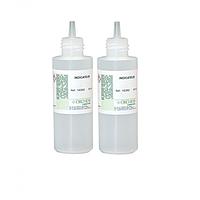
Sulfate meter
Reliable sulfate measurement matters wherever water quality affects process stability, compliance, product quality, or equipment life. In industrial utilities, laboratories, treatment systems, and field inspections, a suitable sulfate meter helps users verify sulfate concentration quickly and choose the right corrective action based on real data instead of assumptions.
This category focuses on practical solutions for sulfate testing in water and liquid samples, from simple chemical test sets to portable photometers and related reagents. Whether you need routine screening, on-site checks, or more repeatable quantitative analysis, the available options support different workflows and concentration ranges.
Why sulfate testing is important in water analysis
Sulfate is a common dissolved ion in natural water, groundwater, industrial water, and treated water streams. Its concentration can vary with source conditions, upstream contamination, process chemicals, or mineral content, so regular monitoring is often necessary in environmental control and operational quality assurance.
High sulfate levels may influence treatment performance, scaling tendencies, corrosion behavior, and final water suitability for a given application. In many facilities, sulfate testing is part of a broader liquid analysis workflow alongside conductivity, pH, turbidity, and reagent-based methods such as those found in other water testing reagents.
Common sulfate measurement methods in this category
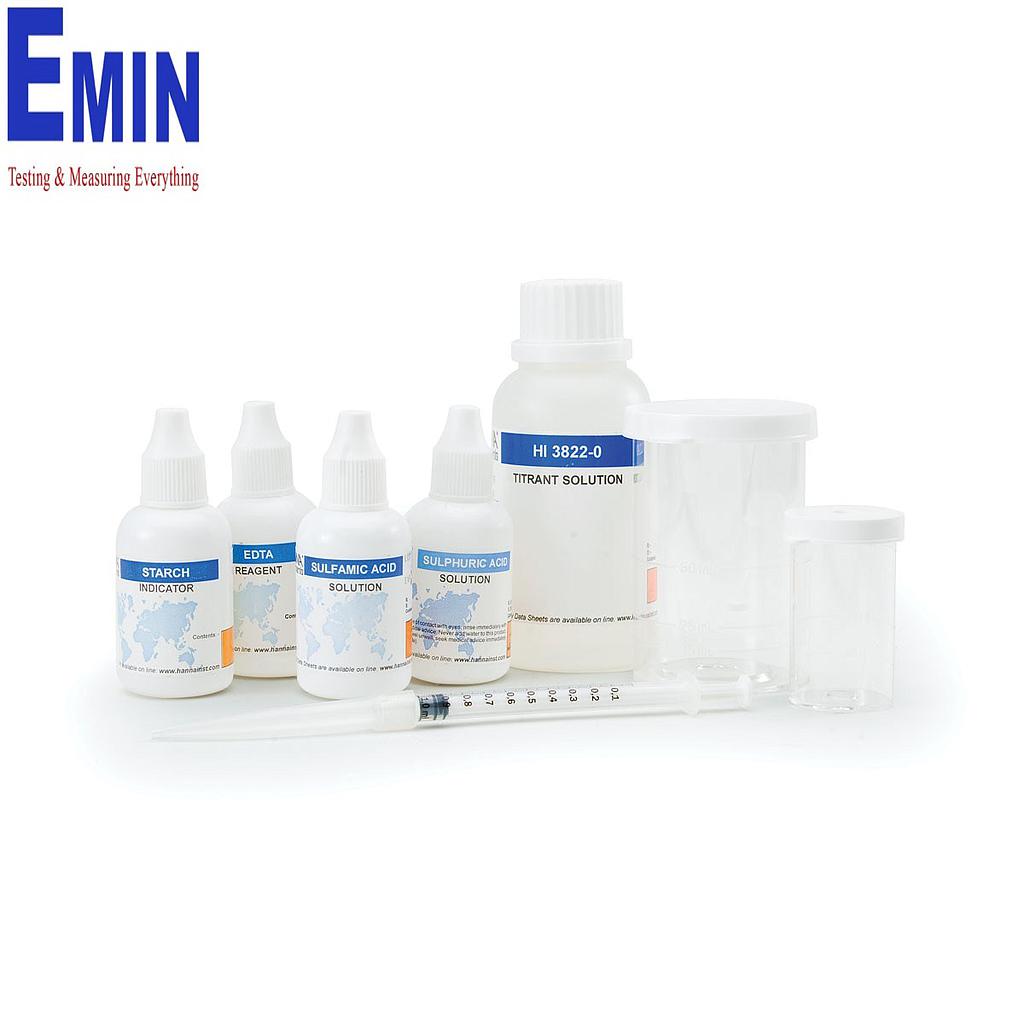
The products in this category mainly reflect two practical approaches: chemical test kits and portable photometers. Test kits are often chosen for straightforward field work, operator convenience, and lower-complexity routine checks. They are useful when teams need a compact solution without relying on a more advanced instrument platform.
Portable photometers are better suited when users need clearer numeric readings, improved repeatability, and a more structured testing procedure. In sulfate analysis, the measurement principle commonly involves reagent chemistry based on barium chloride, producing a measurable optical change that the instrument interprets.
For organizations that also use strip-based screening in broader water testing workflows, it can be helpful to review related categories such as test paper solutions for fast semi-quantitative checks on other parameters.
Representative sulfate instruments and test solutions
Among the most relevant options in this category, HANNA is strongly represented with both manual kits and portable photometers. The HANNA HI38000 Sulfate Test Set is positioned for routine chemical testing, while the HANNA HI38001 Sulfate Test Set supports higher-range sulfate measurement scenarios where broader concentration coverage is needed.
For users who require a digital reading workflow, the HANNA HI97751 Sulfate Portable Photometer and HANNA HI97751C Sulfate Portable Photometer Kit provide an instrument-based approach for sulfate measurement in the low-range segment. The HI97751C kit adds calibration and accessory support suited to users who want a more complete field package from the start.
Reagent availability is also important in ongoing operation. Products such as HANNA HI93751-01 and HI93751-03 sulfate reagents support routine test continuity, especially where instrument-based photometric analysis is performed regularly and consumption planning matters.
How to choose the right sulfate meter
The best choice depends first on the expected concentration range. Some applications require low-range sulfate monitoring, while others involve much higher concentrations in process water, wastewater, or concentrated industrial samples. Matching the test range to your real sample profile is one of the most important steps in avoiding unnecessary retests or poor method fit.
You should also consider how the measurement will be performed: occasional field checks, daily laboratory routines, or repeated production-line monitoring. A manual test set may be enough for basic on-site control, while a portable photometer is generally more appropriate when traceability, consistency, and easier result interpretation are priorities.
Another factor is reagent and accessory management. If your team runs sulfate tests frequently, it is worth checking refill availability, the number of tests per package, and whether the workflow uses cuvettes, standards, or calibration verification. In broader ion analysis programs, buyers may also compare these products with tools used in ion measurement applications depending on the parameter mix in the lab.
Typical application areas
Sulfate meters are used across many sectors where water composition affects product quality or system reliability. Common examples include environmental monitoring, industrial wastewater control, boiler and cooling water checks, process water verification, and laboratory support for utilities or manufacturing operations.
They are also relevant in facilities that need to investigate changes in source water, monitor treatment efficiency, or verify whether a sample remains within an acceptable internal limit. In these cases, sulfate testing is rarely isolated; it usually forms part of a wider decision-making process for water treatment, maintenance, and quality documentation.
Test kits, photometers, and consumables in one workflow
A practical sulfate testing program usually combines more than one item type. The core instrument or test kit provides the measurement capability, but long-term usability depends on having the right consumables available. That is why this category includes not only sulfate meters themselves, but also supporting reagents used to maintain testing continuity.
For smaller operations, a compact kit may be sufficient as a stand-alone solution. For more structured monitoring, a portable photometer paired with the correct sulfate reagent packs can improve consistency across operators and testing locations. This is especially useful when sites need repeatable procedures without moving samples back to a central laboratory for every check.
Points to review before ordering
Before selecting a product, review the sample type, target sulfate range, required reading resolution, and expected test frequency. It is also useful to confirm whether your team prefers visual endpoint testing or a digital optical reading method, and whether the work will be done in a lab, at a treatment plant, or directly in the field.
If portability matters, features such as battery operation, protective housing, and field-ready carrying kits can be important. If operating cost matters more, the number of tests supplied and the availability of replacement reagents may have greater impact over time than the initial instrument choice alone.
Short FAQ
What is the difference between a sulfate test kit and a sulfate photometer?
A test kit typically relies on manual chemical steps and visual interpretation, while a photometer measures the optical response after reagent addition and displays a numeric result. Photometers are generally preferred when users want better repeatability and easier documentation.
Are reagents important when choosing a sulfate meter?
Yes. For routine testing, reagent availability directly affects uptime, operating cost, and workflow consistency. It is a good idea to evaluate both the instrument and its compatible consumables together.
Can the same sulfate solution work for every water sample?
Not always. Selection should reflect the expected concentration range and the testing environment. A low-range photometer may suit one application, while a higher-range chemical kit may be more practical for another.
Choosing the right sulfate testing solution is mainly about method fit, range fit, and day-to-day usability. By comparing chemical kits, portable photometers, and matching reagents within this category, buyers can build a sulfate measurement setup that aligns more closely with their sample conditions, testing frequency, and operational requirements.
Get exclusive volume discounts, bulk pricing updates, and new product alerts delivered directly to your inbox.
By subscribing, you agree to our Terms of Service and Privacy Policy.
Direct access to our certified experts