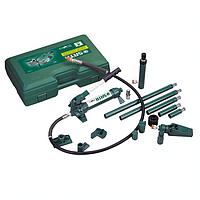
Hydraulic accessories
When a hydraulic setup needs to work safely and consistently, the small supporting components often matter just as much as the main lifting unit. Seals, connectors, jacks, handling parts, and other supporting items help complete the system, improve day-to-day usability, and reduce downtime in maintenance, workshop, and industrial lifting applications.
This Hydraulic accessories category is intended for buyers who need practical components that support hydraulic lifting and force-application tasks. Whether you are maintaining existing equipment, adding portable lifting capability, or selecting compatible parts for service work, the right accessories help ensure a more reliable and efficient setup.
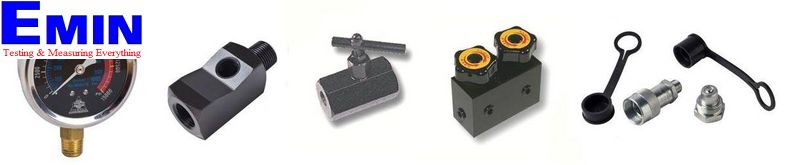
Where hydraulic accessories fit in a working system
In real industrial environments, hydraulic accessories are rarely purchased in isolation. They are usually selected as part of a broader tool chain that may include lifting devices, force-generating components, pumps, and load-handling equipment. Their role is to support connection, operation, portability, stability, or maintenance depending on the job.
For example, some applications require a compact accessory or portable hydraulic item that can be moved between service locations, while others need a component that integrates with hydraulic pumps already in use on site. This is why accessory selection often starts with the operating context rather than with a single part number.
Typical applications in maintenance, workshop, and industrial handling
Hydraulic accessories are commonly used in equipment maintenance, automotive service, fabrication, plant shutdown work, and material handling support. In these settings, buyers usually look for parts that can improve lifting convenience, provide controlled force, or help adapt existing hydraulic tools to a specific task.
They can also be relevant where load positioning and localized lifting are required. In some workflows, accessories are chosen alongside devices such as a tower jack or other lifting tools to create a more complete service arrangement for inspection, repair, or installation work.
What to consider when choosing hydraulic accessories
The first step is to match the accessory to the intended hydraulic system and job profile. Buyers should review how the item will be used: portable field service, fixed workshop maintenance, intermittent lifting, or repeated industrial operation. Compatibility with load expectations, operating method, and surrounding equipment is usually more important than simply choosing the lowest-cost option.
It is also useful to think about portability, working space, and maintenance frequency. In confined areas, compact hydraulic accessories can be easier to deploy and store. In demanding industrial environments, buyers often prioritize robust construction, straightforward handling, and easier replacement as part of routine maintenance planning.
Another key factor is how the accessory interacts with other hydraulic elements. If the application depends on controlled linear force, it may make sense to review related products such as a hydraulic cylinder to understand the broader system requirements before finalizing the accessory selection.
Featured example in this category
One representative product is the SATA 97899 LONG RAM JACK-PORTABLE HYDRAULIC EQUIPMENT. This model is suitable to mention because it reflects a common need within hydraulic support equipment: a portable solution that can deliver lifting force in service and maintenance situations.
Based on the provided product data, this unit offers a maximum load of 4T. For buyers, that indicates a practical reference point when evaluating whether a portable hydraulic item is appropriate for light-to-medium lifting support tasks, especially where mobility and straightforward deployment are important.
The product is from SATA, a manufacturer included in this category context. For procurement teams, using a recognized brand page can also simplify brand-level browsing when comparing hydraulic support items with other workshop and maintenance tools.
How accessories support safer and more efficient operation
Hydraulic systems depend on proper setup and appropriate supporting components to perform as intended. Well-matched accessories can help reduce unnecessary handling effort, improve positioning, and support smoother operation during lifting or maintenance tasks. In a B2B setting, that can translate into better workflow continuity and fewer interruptions during routine service work.
Accessories also play a role in system organization. Instead of treating them as afterthoughts, many maintenance teams treat these items as part of a complete hydraulic workflow. This approach helps ensure that lifting or force-application equipment is not only available, but also practical to use in real operating conditions.
Planning purchases for replacement, expansion, or new setups
Buyers arrive at this category with different goals. Some need replacement items to keep existing hydraulic tools in service, while others are building out a new maintenance kit for workshop or site use. In both cases, it helps to consider how each accessory contributes to the full equipment chain rather than purchasing based only on a generic label.
If the requirement involves load separation, controlled opening, or related lifting support tasks, it can be helpful to review adjacent solutions such as hydraulic spreader/lifting equipment. Looking across related categories often makes specification and compatibility decisions clearer, especially for technical buyers managing multiple use cases.
Choosing the right hydraulic accessories for your application
The most effective selection process starts with the job: what needs to be lifted, supported, connected, or maintained, and under what conditions. From there, buyers can compare portability, load suitability, compatibility with existing hydraulic equipment, and the practical requirements of workshop or field use.
As your hydraulic equipment base grows, accessories become an important part of keeping operations flexible and service-ready. A well-chosen set of hydraulic accessories can support safer handling, smoother maintenance work, and a more complete lifting solution across industrial and technical environments.
Get exclusive volume discounts, bulk pricing updates, and new product alerts delivered directly to your inbox.
By subscribing, you agree to our Terms of Service and Privacy Policy.
Direct access to our certified experts