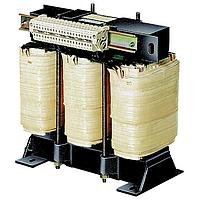
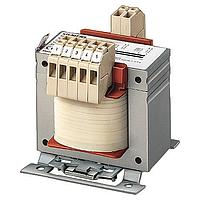
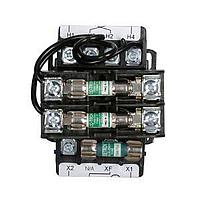
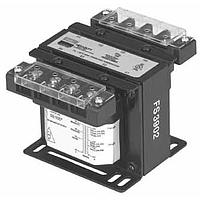
Industrial Control Transformers
Stable control power is a basic requirement in panels, machinery, and industrial automation systems. When line voltage needs to be stepped down to a usable level for relays, contactors, timers, PLC-related control circuits, or auxiliary devices, Industrial Control Transformers help create a safer and more reliable power foundation inside the enclosure.
On this page, buyers and engineers can compare industrial control transformer options for panel building, OEM machine design, retrofit projects, and maintenance stock. The right transformer is not only about matching input and output voltage; it also affects inrush handling, long-term control circuit stability, panel layout, and overall serviceability.
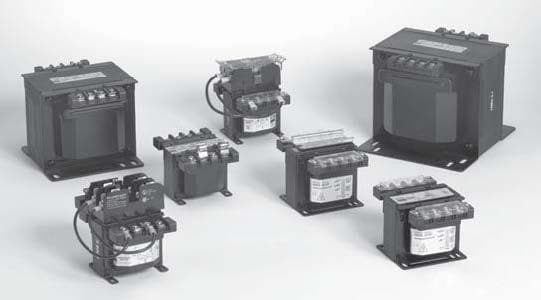
Why industrial control transformers matter in control panels
In many industrial systems, the incoming supply voltage is higher than what the control circuit should use directly. A control transformer reduces that voltage to a suitable level for control components while helping isolate the control side from the primary power circuit. This makes troubleshooting easier and can improve consistency for devices that depend on stable control voltage.
These transformers are commonly used in motor control panels, manufacturing equipment, HVAC controls, packaging machinery, and utility-related electrical systems. In practice, they support the operation of contactors, pilot devices, relays, and monitoring equipment that need dependable low-voltage control power even when the main power side is handling larger loads.
Typical applications and power architecture considerations
Selection often starts with the application environment. A compact machine panel may prioritize footprint and heat management, while a larger industrial cabinet may place more emphasis on short-term inrush capacity and coordination with protective devices. Engineers also review whether the transformer will feed a simple contactor circuit or a broader mix of indicators, relays, and electronic control hardware.
In more advanced systems, control power may work alongside backup or conditioning equipment. For example, some installations pair transformers with UPS systems to maintain critical control or monitoring functions during brief interruptions. Others may use supporting DC conversion equipment where downstream electronics require regulated DC rails rather than AC control voltage alone.
How to choose the right transformer for your application
The most important starting point is the primary and secondary voltage requirement. The transformer must match the available line supply and the control voltage expected by the connected devices. From there, sizing should take into account both steady-state load and the higher momentary inrush current created when contactors or relays energize.
It is also important to consider mounting method, enclosure space, ambient temperature, and service access. In control cabinets where multiple power conversion devices are installed together, designers may also compare related options such as DIN rail power supplies for electronic loads and AC transformers for traditional control circuits. The best choice depends on how the full panel architecture is built, not just on one voltage number.
For maintenance teams, standardization can be just as important as performance. Choosing transformer families that align with existing panel designs can simplify spare parts management, reduce wiring changes during replacement, and shorten downtime during service events.
Key features buyers often evaluate
Beyond voltage conversion, purchasing teams usually review several practical characteristics before ordering. These factors affect day-to-day reliability as much as nameplate ratings do.
- VA capacity based on continuous load and inrush demand
- Compatible primary and secondary taps for the intended supply system
- Physical size and mounting suitability for panel layouts
- Thermal performance in enclosed cabinets
- Coordination with fusing, breakers, and upstream protection
- Suitability for OEM builds, retrofits, or replacement stock
In projects with mixed AC and DC control sections, engineers may also look at related conversion products such as isolated DC/DC converters when separate DC rails are needed for communications, monitoring, or sensor networks. That broader view helps prevent underdesign on the control power side.
Brand preferences and ecosystem fit
Many buyers begin with approved or familiar manufacturers because transformer selection is often tied to plant standards, panel shop preferences, or end-user specifications. This category may be relevant for sourcing products from established industrial power brands such as Eaton, SCHNEIDER, SIEMENS, Hammond Manufacturing, SolaHD, Bel Signal Transformer, and Triad Magnetics, depending on the application and availability.
Brand choice should still be evaluated in the context of electrical design, mounting constraints, and documentation requirements. In industrial environments, consistency across the power and control ecosystem can make installation, commissioning, and long-term maintenance more straightforward.
Related products shown in the broader industrial power ecosystem
Some products associated with this category context, such as Franklingrid power and monitoring devices, show how broad industrial power design can become once a system expands beyond basic control voltage conversion. Examples include the Franklingrid NexPhase smart EV switchgear and programmable load tap changer position monitors used in power distribution and transformer monitoring applications.
These products are not direct substitutes for control transformers, but they highlight an important purchasing reality: industrial power systems often combine multiple functions, including step-down control power, circuit protection, monitoring, communications, and remote status visibility. That is why transformer selection is best handled as part of the full panel or facility power strategy.
When to replace or upgrade an existing control transformer
A replacement may be needed when a transformer runs hotter than expected, no longer matches revised control voltage requirements, or was originally sized too closely to the actual inrush load. Repeated nuisance fuse failures, inconsistent contactor pull-in, and control voltage drop under load can all indicate that the installed unit should be reviewed.
Upgrades are also common during panel modernization. As legacy electromechanical circuits are combined with newer electronics, the control power scheme may need to be separated more clearly between AC and DC sections. In those cases, reviewing transformers together with protective components and auxiliary power devices can help create a more reliable and easier-to-maintain system.
Finding the right fit for industrial power projects
Whether you are building a new control panel, updating an OEM machine, or replacing a failed unit in the field, the right industrial control transformer should support the actual electrical behavior of the application, not just the nominal voltage. Looking at load profile, inrush demand, space limits, and the surrounding power architecture will lead to a better long-term result.
This category is intended to help buyers narrow down suitable options for industrial control applications while keeping the broader system in view. If your project also involves backup power, DC conversion, or other panel power components, reviewing those related categories alongside the transformer selection can make specification and procurement more efficient.
Get exclusive volume discounts, bulk pricing updates, and new product alerts delivered directly to your inbox.
By subscribing, you agree to our Terms of Service and Privacy Policy.
Direct access to our certified experts