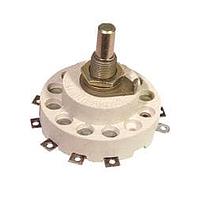
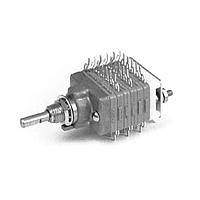
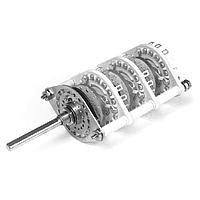
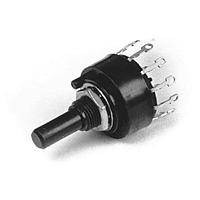
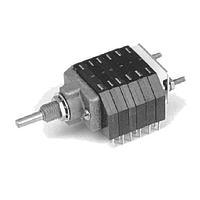
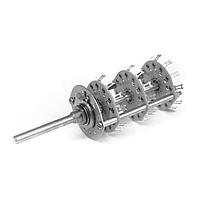
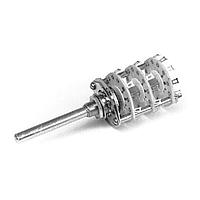
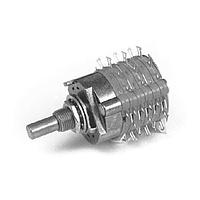
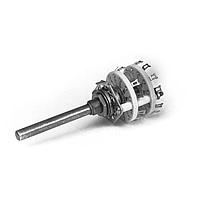
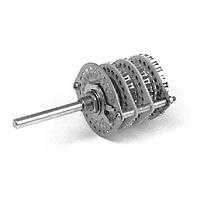
Rotary Switches
When operators need a simple and reliable way to select circuits, change operating modes, or step through defined positions, rotary switching remains a practical solution. In industrial panels, machines, instruments, and service equipment, the ability to move between fixed switch positions with clear tactile feedback is often more useful than a momentary pushbutton or a basic toggle.
Rotary Switches are widely used where multiple states must be selected in a controlled and repeatable way. This category is relevant for OEM design, panel building, maintenance work, and equipment upgrades where circuit selection, function switching, or mode control needs to be clear, compact, and dependable.
Where rotary switches fit in industrial systems
A rotary switch is typically chosen when one control point needs to handle more than two positions. Instead of simple ON/OFF behavior, it allows the user to rotate through a sequence of defined contacts or operating states. That makes it suitable for selector functions such as range selection, source selection, operating mode changes, or step-based control logic.
In industrial environments, this style of switch is often valued for its multi-position control and straightforward operator interaction. It can help simplify the front panel layout by combining several functions into a single control element, especially in compact control enclosures or equipment interfaces.
Typical applications and use cases
Rotary switches are commonly found in machinery control panels, electrical cabinets, test benches, measurement devices, and service tools. They are useful wherever an operator must intentionally move between specific settings rather than trigger a temporary action. This includes manual mode selection, function routing, or selecting one of several operating ranges.
They can also be relevant in systems that combine several kinds of operator interface hardware. For example, a panel may use a rotary selector for operating mode, while relying on control switches for direct command inputs and status-related actions. In this kind of arrangement, each switch type supports a different part of the control philosophy.
Key selection factors before you order
Choosing the right rotary switch starts with the switching logic required by the application. Buyers usually look at the number of positions needed, whether those positions are maintained, and how the switch should behave in the context of the circuit or machine function. Mechanical feel, panel layout, and ease of operation also matter, especially in equipment that is used frequently by technicians or machine operators.
Beyond the basic control function, it is important to review the intended installation environment. Panel space, wiring access, expected duty cycle, and the required level of operator safety all influence product selection. In some projects, a rotary design may be paired with a dedicated isolation device such as a disconnect switch for power separation, while the rotary unit handles mode or circuit selection.
How rotary switches differ from other industrial switch types
Not every switching task is best solved with a rotary mechanism. Rotary switches are especially useful when the operator needs a visible and intentional position-based selection. That differs from products designed for emergency shutdown, cable-actuated stopping, or signal-path switching in more specialized systems.
For example, applications focused on personnel protection and rapid stop functions are better aligned with emergency stop switches. Likewise, systems that require line-actuated stop capability across conveyor or access zones may call for cable pull switches. Understanding these distinctions helps buyers select the right device for both operation and safety intent.
Manufacturer options for design and maintenance teams
This category may be relevant to buyers sourcing components from established switch and interconnect suppliers. Brands such as C&K, Honeywell, Eaton, Bourns, Alps Alpine, and Alcoswitch - TE Connectivity are commonly associated with industrial and electromechanical control components. Depending on the project, the right choice may depend on switching architecture, panel requirements, preferred sourcing standards, or compatibility with an existing design platform.
For engineering and procurement teams, supplier consistency can be just as important as the switch form itself. Standardizing around known manufacturers may support documentation, replacement planning, and long-term maintenance, particularly when rotary switches are used across multiple machine variants or panel assemblies.
Integration considerations in panels and equipment
In practical use, a rotary switch is rarely selected in isolation. It is usually part of a wider operator interface or control assembly that may include terminals, indicators, protective devices, and other switch types. That means buyers should consider not only the switching function, but also how the device fits mechanically and electrically within the full panel or subsystem.
Panel integration often involves balancing ease of use, wiring accessibility, and serviceability. A well-chosen rotary switch can improve operator clarity by making position-based selection more intuitive, while also supporting cleaner front-panel organization in compact industrial equipment.
What to look for in a category page like this
For B2B purchasing, this category is most useful as a starting point for narrowing down the right control interface solution. Buyers typically compare rotary switches based on intended switching role, installation constraints, and the type of equipment being built or maintained. The goal is not simply to match a part name, but to identify a device that fits the operating sequence and use environment.
Application fit should remain the main priority. If the requirement is a multi-position selector, rotary switches are often the logical path. If the task is isolation, emergency stopping, or another specialized switching function, adjacent categories may offer a better match for the design intent.
Conclusion
Rotary switches continue to be a practical choice for industrial equipment that depends on clear, repeatable position selection. They are especially useful in panels and machines where operators need a reliable way to change modes, select circuits, or move through defined operating states without unnecessary interface complexity.
By focusing on switching logic, installation needs, and the broader control architecture, buyers can select rotary switches that are easier to integrate and easier to use in the field. For engineering, maintenance, and procurement teams, that leads to a more consistent and serviceable control solution over time.
Get exclusive volume discounts, bulk pricing updates, and new product alerts delivered directly to your inbox.
By subscribing, you agree to our Terms of Service and Privacy Policy.
Direct access to our certified experts