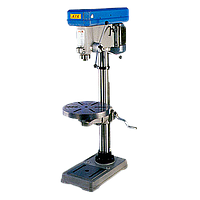
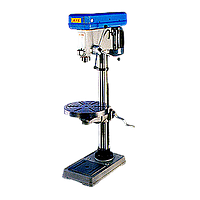
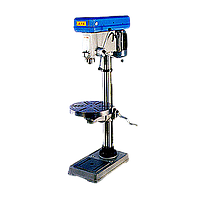
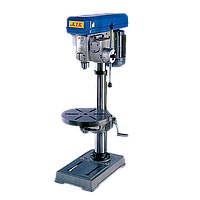
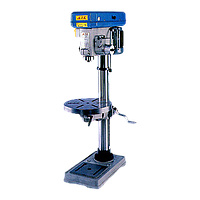
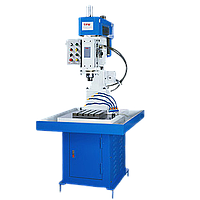
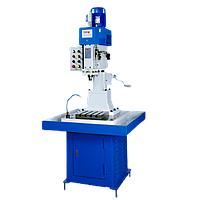
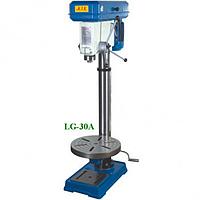
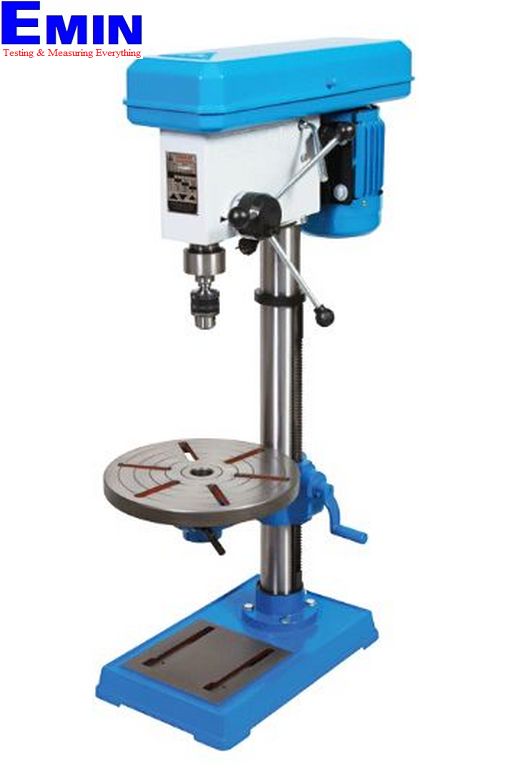
Drill press bench
Accurate hole-making starts with a machine that stays stable under load, holds spindle alignment, and matches the material and production pace of the job. For workshops, maintenance teams, fabrication lines, and general industrial users, a drill press bench is a practical choice when repeatability, controlled feed, and safer drilling are more important than handheld flexibility.
This category brings together bench and floor-style drilling machines used for metalworking and general shop operations. The range includes compact units for light drilling, heavier column machines for larger diameters, and selected accessories that support tapping or setup requirements. Whether the task is single-piece workshop work or routine production drilling, choosing the right machine starts with understanding capacity, spindle travel, speed range, and overall machine structure.
Where bench drilling machines fit in industrial work
A drill press is typically selected when operators need better control over vertical drilling than a handheld drill can provide. The fixed column, adjustable table, and guided spindle help improve hole position consistency, especially on metal parts, brackets, plates, and small fabricated components.
In many workshops, these machines are also used for reaming, countersinking, and light tapping, depending on the spindle setup and tooling. For production-oriented environments, users may also compare drilling stations with nearby process equipment such as compressed air treatment equipment when pneumatic tools and air-supported automation are part of the same line.
Typical machine types in this category
The product mix shows that this category covers more than one machine format. Compact bench models are suitable where floor space is limited and drilling diameters remain moderate, while larger pedestal or table drilling machines are better suited to heavier workpieces, larger spindle taper sizes, and more rigid setups.
For lighter-duty use, examples such as the TIEN DAT KT800 Bench Drill Press (1/2HP) and Hồng Ký HK-KC10 Drill Press Bench (70 mm) represent the kind of machines often used in repair shops, tool rooms, and general maintenance areas. On the heavier side, models such as the KTK LG-30A Bench drill, KTK RF-35 Drilling machine (32mm), and hydraulic table drilling machines like H-7150 or H-9150 are more aligned with industrial drilling tasks that require higher capacity and stronger machine construction.
Key selection criteria before buying
The first point to check is drilling capacity. A machine sized for 13 mm or 16 mm work is very different from one designed for 25 mm, 30 mm, or 35 mm drilling. Capacity should be matched not only to the hole diameter, but also to the material type, tooling quality, and expected duty cycle.
The second factor is spindle travel and taper. Shorter travel may be sufficient for small parts and shallow holes, while deeper operations benefit from a machine with longer quill movement. Taper types such as MT2, MT3, or MT4 matter because they affect tooling compatibility, chuck selection, and the machine’s suitability for larger drills or tapping heads.
Speed control is equally important. Machines with multiple stepped speeds or wider spindle speed ranges give more flexibility across steel, cast iron, and lighter materials. Buyers should also consider motor power, table dimensions, column diameter, machine height, and supply voltage, especially when installation conditions are already fixed in the workshop.
Examples from the available range
Several listed products illustrate how application needs can vary. The KTK lineup includes machines such as the LG-120A Automatic Table drilling machine for users looking for automatic feed behavior, as well as heavier hydraulic table drilling machines intended for larger drilling diameters and more stable industrial operation. These are the kinds of machines typically considered for repetitive work and larger metal parts.
For general workshop use, TIEN DAT offers smaller-format solutions including 1/2HP and 1HP machines, which are often suitable for repair benches, maintenance stations, and small-part fabrication. The Hồng Ký HK-KT340 Drilling Machine and Hồng Ký HK-KC10 Drill Press Bench also reflect the need for practical drilling equipment in standard metalworking environments where simplicity and routine operation matter.
This category also includes supporting tooling such as the YA LIANG YL-1/2 Tape chuck M3-M12. While not a standalone drilling machine, this type of accessory plays an important role in the broader drilling and tapping workflow by extending how a compatible machine can be used in threaded hole operations.
Choosing by application instead of only by size
A common mistake is selecting a machine based only on the largest advertised drilling diameter. In practice, the better approach is to define the real task: occasional drilling, daily fabrication, fixture-based production, tapping support, or mixed workshop use. A lighter machine may be enough for low-volume work, while repetitive industrial drilling usually benefits from a heavier frame, stronger spindle support, and more appropriate speed control.
Workpiece dimensions also matter. Larger tables and greater distance from spindle to table or base help when drilling taller parts, fixtures, or assemblies. If the machine is being integrated into a broader production cell, related equipment such as an industrial water cooler or chiller may also become relevant where process cooling or temperature control supports nearby machinery.
Why machine rigidity and setup matter
The real performance of a drill press depends on more than motor power. Machine rigidity, spindle alignment, table stability, and correct clamping all affect hole accuracy, tool life, and surface finish. A rigid column and a properly supported workpiece reduce vibration, especially when drilling larger diameters or tougher materials.
Setup discipline is just as important as machine selection. Operators should match spindle speed to the material and tool diameter, use the correct taper and chuck arrangement, and ensure the workpiece is secured before drilling. For shops handling varied industrial processes, it can also be useful to review adjacent equipment categories such as paper processing machinery or heat shrinking machines when building out a broader production environment from a single sourcing platform.
What buyers often compare in this category
Most B2B buyers compare a few practical points before placing an order: machine footprint, available voltage, drilling range, spindle taper, and whether the machine is intended for bench mounting or floor installation. They also look at the expected work material, because drilling mild steel, cast iron, and lighter metals can place different demands on torque and speed selection.
Another comparison point is whether the machine will remain a dedicated drilling unit or support additional operations such as tapping. When tapping is part of the workflow, compatibility with the right chuck, taper connection, and spindle configuration becomes more important than headline power alone. That is why some buyers evaluate not only the machine body but also the surrounding tooling ecosystem.
Finding the right drill press for your workshop
This selection is suited to buyers who need dependable drilling equipment for metalworking, repair, fabrication, and industrial shop use. From compact bench drills to larger hydraulic and automatic table drilling machines, the category covers a useful range of capacities and machine formats without forcing every application into the same solution.
If you are narrowing down options, focus on the actual hole sizes, material type, working height, tooling compatibility, and expected production rhythm. A well-matched bench drilling machine will usually deliver better long-term value than an oversized or underspecified model, especially when paired with the right setup and accessories for the job.
Get exclusive volume discounts, bulk pricing updates, and new product alerts delivered directly to your inbox.
By subscribing, you agree to our Terms of Service and Privacy Policy.
Direct access to our certified experts