Immersion Heaters
When process fluids need direct, efficient thermal transfer, selecting the right heating method becomes a practical engineering decision rather than a simple catalog choice. Immersion Heaters are widely used for heating water, oil, and other process media because the heating element is placed directly into the liquid, helping reduce heat loss and improve response time in tanks, vessels, and piping systems.
On this page, you can explore immersion heating solutions for different media, mounting styles, and electrical requirements. The range highlighted here includes industrial process heaters from OMEGA as well as temperature-control equipment from TAITEC, giving buyers useful options for both heating and controlled cooling applications in laboratories and industrial settings.
Where immersion heaters are used
Immersion heaters are commonly specified wherever liquids must be heated inside a container or process loop. Typical use cases include process water heating, oil temperature maintenance, utility tanks, and equipment that requires stable thermal conditions during production, cleaning, or material handling.
Because the element is in direct contact with the medium, this heater type is often preferred when compact installation and efficient heat transfer are important. Compared with external heating methods, it can simplify system design in many applications, provided the heater material, power level, and enclosure rating are matched correctly to the operating environment.
Main immersion heater types in this category
This category includes two common industrial formats: screw plug immersion heaters and flanged immersion heaters. Screw plug designs are often selected for smaller tanks or process connections where threaded installation is practical. Flanged units are typically used in larger systems or where a stronger mechanical mounting arrangement is required.
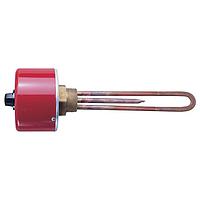
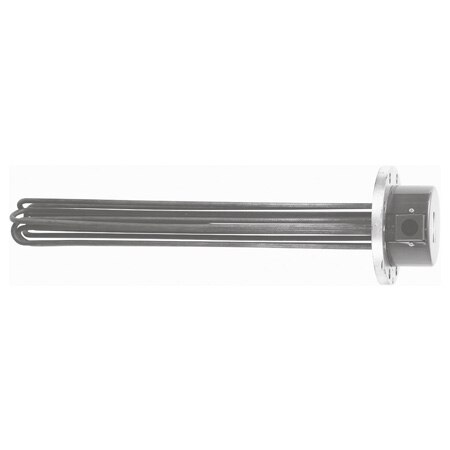
For example, the OMEGA MTS-220 series shown here is designed for process water applications with a 2 in NPT male connection, while the OMEGA TMO series is configured as a flanged immersion heater for heavy weight oil. These examples illustrate how heater form factor is closely tied to the heated medium and installation method, not just wattage alone.
Examples of products available
Within the current selection, OMEGA water heaters such as the MTS-220-3E2 and MTS-220-3A variants provide 2000 W heating capacity with stainless steel sheath construction for process water duty. Different voltage options, including 208 Vac, 240 Vac, and 480 Vac, help buyers align the heater with existing plant power standards without forcing unnecessary redesign of the electrical system.
For oil heating, OMEGA TMO models such as TMO-30315E2T93 and TMO-30415E2T93 represent flanged immersion configurations intended for heavy weight oil service. These products combine a defined flange connection, steel sheath construction, and integral thermostat in selected versions, which can be useful where process control and mounting stability matter.
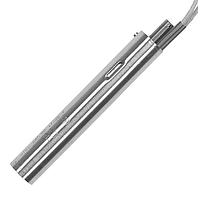
This page also features TAITEC immersion coolers including the 80LF, 150LF, and 250DF. While these are not heaters, they are relevant to buyers working on liquid temperature control more broadly. In lab and pilot environments, heating and cooling devices are often evaluated together because the process may require both warming and rapid temperature reduction at different stages.
How to choose the right immersion heater
A good starting point is the heated medium. Water and oil place very different demands on the heater. Material compatibility, allowable surface loading, and the risk of fluid degradation should all be reviewed before selection. A unit intended for process water should not automatically be treated as interchangeable with one intended for oil service.
Next, consider power, supply voltage, and phase. The products in this category include options such as 2000 W water heaters and 3000 W to 4000 W oil heaters, along with both single-phase and three-phase configurations. Matching these values to the available electrical infrastructure is essential for safe installation and expected thermal performance.
Mechanical connection is equally important. A 2 in NPT screw plug heater may suit compact process connections, while a 3 in flanged design may be more appropriate for larger vessels or oil systems. Buyers should also review enclosure type and environmental exposure, especially where moisture resistance or hazardous-location-related protection is relevant.
Why sheath material and power density matter
Two specification areas often deserve more attention than they receive during early sourcing: sheath material and power density. Sheath material influences corrosion resistance, service life, and compatibility with the process medium. In the listed examples, passivated stainless steel is used for water service, while steel appears in selected oil-heating models.
Power density affects how heat is transferred from the element to the fluid. If power density is too high for the application, localized overheating may become a concern, particularly in more viscous media such as oil. Reviewing watt density together with circulation conditions, tank geometry, and fluid characteristics helps support longer heater life and more stable process performance.
Relationship to other industrial heater categories
Not every thermal application is best solved with an immersion heater. If the process calls for heating air in cabinets or ducts rather than liquid media, duct and enclosure heaters may be the more relevant path. Likewise, for localized contact heating in tooling or machinery, cartridge heaters are often considered instead.
For surface-based thermal transfer, buyers may also compare solutions such as strip heaters depending on mounting constraints and the type of equipment being heated. This broader comparison is useful when the project requirement is still being defined and the final heating architecture has not yet been fixed.
Heating and cooling in one temperature-control workflow
In some applications, especially laboratory work, sample preparation, and small-batch processing, temperature control is not limited to heating alone. TAITEC immersion coolers such as the 80LF, 150LF, and 250DF show how flexible immersion-based temperature equipment can also support cooling over different ranges, from moderate cooling down to lower-temperature operation.
For teams planning a complete thermal setup, it may be helpful to evaluate heaters and coolers together so the process can move between setpoints with better control. This is particularly relevant when the same vessel or liquid bath must support different process stages, testing conditions, or material handling requirements over time.
Finding the right fit for your application
The most suitable choice usually depends on a combination of medium, connection type, power requirement, and installation environment. A compact screw plug heater for water service and a flanged oil heater may both belong to the same category, yet they solve very different engineering problems. Looking beyond nominal wattage helps narrow the shortlist more effectively.
By reviewing the available OMEGA and TAITEC options in context, buyers can compare immersion-based temperature solutions with a clearer view of how each design fits real process needs. Whether the goal is process water heating, oil temperature maintenance, or a broader liquid temperature-control setup, this category provides a practical starting point for informed selection.
Get exclusive volume discounts, bulk pricing updates, and new product alerts delivered directly to your inbox.
By subscribing, you agree to our Terms of Service and Privacy Policy.
Direct access to our certified experts