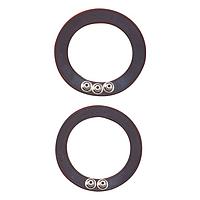
Strip Heaters
When heat needs to be applied directly to a flat metal surface, the heater design matters as much as the power rating. Strip heaters are widely used for contact heating on plates, dies, tanks, ovens, and machinery surfaces where consistent heat transfer and straightforward mounting are important.
In industrial environments, this heater format is often chosen for its simple mechanical integration and reliable surface heating performance. This category includes strip-style heating elements suited to equipment builders, maintenance teams, and process engineers looking for practical solutions for controlled heat delivery.
Where strip heaters are typically used
Strip heaters are commonly installed on flat or slightly contoured surfaces to transfer heat by conduction. Typical applications include packaging equipment, sealing bars, warming plates, metal dies, small tanks, and other machine sections that require localized heating without a bulky assembly.
Because they mount directly to the heated surface, they can support faster thermal response than indirect heating approaches in many machine designs. For projects that require a different geometry or heating method, users may also compare this format with cartridge heaters for drilled-hole installations or immersion heaters for heating liquids.
What defines this heater format
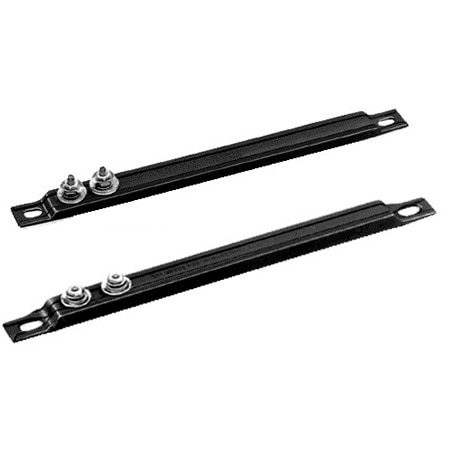
A strip heater is generally a narrow, elongated heater built to sit against a target surface. In this category, the products shown follow a strip form factor with terminals arranged on one side, making them suitable for installations where wiring access needs to remain organized and space-efficient.
Several listed models also use rust-resisting iron sheath construction and are designed for elevated operating temperatures, with maximum sheath temperature values reaching 399 °C in the provided range. That makes them relevant for many industrial surface-heating duties, provided the application is matched correctly to mounting, heat sink characteristics, and supply voltage.
Available range in this category
The selection includes multiple lengths, wattages, and voltage options, which helps support both OEM design work and replacement needs. Examples in this range include compact units such as the OMEGA SN-1015/120V and OMEGA SN-1215/120V, as well as longer heaters like the OMEGA SN-3660/120V and OMEGA SN-3660/240V for applications requiring a larger heated area.
Power levels in the listed products span from 150 W up to 600 W, with common supply options including 120 Vac and 240 Vac. That combination allows users to select a heater not only by physical fit, but also by the electrical standard already available in the machine or control panel.
How to choose the right strip heater
The first step is to match the heater to the heated surface geometry and available mounting space. Length, hole spacing, and terminal orientation all affect whether the heater can be installed cleanly and whether service access will remain practical after assembly.
Next, consider voltage, wattage, and power density together rather than in isolation. A higher wattage heater can deliver more heat, but the actual result depends on the surface material, contact quality, insulation, ambient losses, and the desired heat-up profile. It is also important to verify that the heater’s temperature capability is appropriate for the process and that the surrounding components can tolerate the operating conditions.
Examples from OMEGA
This category features products from OMEGA, including several one-end inline terminal strip heaters that illustrate the range well. For lighter-duty or shorter heating zones, models such as the SN-1520 series and SN-1825 series provide practical options in 120 Vac and 240 Vac versions.
For broader heated sections, the SN-2430, SN-3045, and SN-3660 variants extend the available length and power range. These examples show how the same basic heater style can be adapted across different machine sizes, thermal loads, and electrical requirements without changing the overall installation concept.
Installation and operating considerations
Good thermal contact is essential for stable performance. The mounting surface should be clean, flat where possible, and mechanically secure so the heater can transfer heat efficiently rather than creating localized hot spots. Uneven contact can reduce heater life and make temperature control less predictable.
Terminal routing should also be planned carefully to avoid strain, excessive radiant exposure, or interference with moving parts. In systems where heat is transferred through air rather than direct contact, other technologies such as duct and enclosure heaters or radiant heaters may be a better fit.
Why strip heaters remain a practical industrial choice
For many OEM and maintenance applications, the appeal of strip heaters comes from their balance of simplicity and functionality. They are easy to understand, straightforward to mount in the right application, and available in a range of lengths and electrical ratings that suit many common machine-heating tasks.
This category is especially useful when you need direct surface heating, compact installation, and a clear path to selecting by voltage, length, and wattage. Reviewing the available models carefully can help narrow the choice to the heater that best matches your thermal load, mounting layout, and control strategy.
FAQ
Are strip heaters suitable for heating liquids?
They are generally intended for surface contact heating rather than direct liquid immersion. If the process requires direct liquid heating, immersion-style heaters are usually the more appropriate category to review.
How important is supply voltage when selecting a replacement?
It is critical. The replacement heater should match the system voltage, such as 120 Vac or 240 Vac, unless the electrical design is being changed intentionally and safely.
What is the main difference between strip heaters and cartridge heaters?
Strip heaters mount against a surface, while cartridge heaters are typically inserted into drilled holes for concentrated internal heating of metal parts.
Choosing the right strip heater starts with the application: surface size, available voltage, required heat output, and mounting details all need to align. With a focused range of OMEGA models across multiple lengths and wattages, this category provides a practical starting point for both new equipment design and heater replacement work.
Get exclusive volume discounts, bulk pricing updates, and new product alerts delivered directly to your inbox.
By subscribing, you agree to our Terms of Service and Privacy Policy.
Direct access to our certified experts