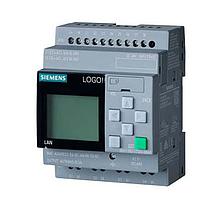
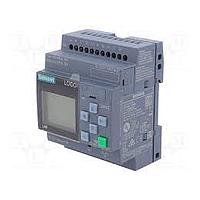
Logo Siemens
Compact automation often starts with a controller that is easy to configure, reliable in daily operation, and flexible enough for small machine or building-control tasks. That is exactly where Logo Siemens fits: a practical range of logic modules for straightforward control applications such as pump control, lighting schedules, ventilation, simple motor switching, alarm handling, and basic process automation.
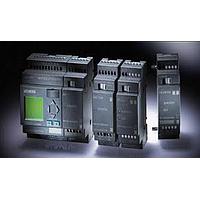
For many projects, a full PLC platform is not always necessary. Siemens LOGO! devices are widely used when engineers need a compact controller with integrated inputs and outputs, clear programming logic, and expansion potential for growing requirements. This category brings together commonly used LOGO! basic modules and related variants for different supply voltages, output types, and communication needs.

Where Siemens LOGO! logic modules are used
LOGO! modules are typically selected for small-scale automation where simplicity, space saving, and quick commissioning matter. Typical use cases include control panels for utilities, water treatment skids, HVAC support functions, machine auxiliaries, small conveyor sections, and standalone switching or timing logic in industrial buildings.
Because these devices combine control logic with onboard I/O, they are well suited to projects that do not require the complexity of a larger PLC architecture. Models in this category also support applications where users want a local display, timed control, analog-capable inputs, or relay outputs for switching loads directly.
Key differences between LOGO! variants in this category
One of the main selection points is the supply voltage and I/O configuration. Some modules are intended for 12/24 V DC systems, while others are designed for 115 V or 230 V environments. This matters not only for power compatibility, but also for how the controller integrates into existing control cabinets and field wiring.
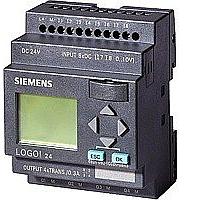
Another important difference is the output type. Relay-output versions are commonly chosen when switching a range of loads is required, while transistor-output variants may be preferred in applications that need faster DC switching behavior. Certain versions also include a display for local interaction, while others are supplied without a display when a simpler front-panel setup is sufficient.
Communication capability is another practical divider. Newer Ethernet-enabled modules support easier integration, data handling, and remote access functions in suitable applications. If the project includes operator interaction or supervisory visibility, it can also be useful to review compatible HMI options for broader automation interfaces.
Representative Siemens LOGO! models
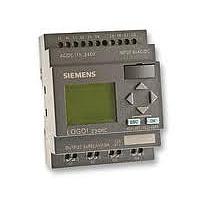
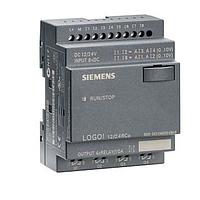
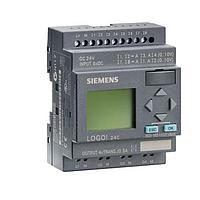
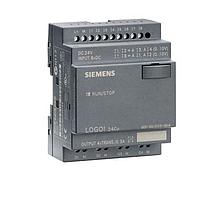
Several products in this category illustrate the range well. The SIEMENS 6ED1052-1MD00-0BA7 Logo 12/12RCE is a compact DC-powered relay-output logic module with Ethernet, making it suitable for control tasks that benefit from network connectivity and expansion capability.
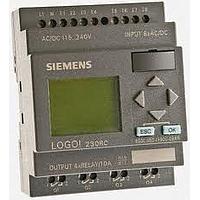
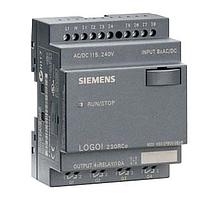
For AC-powered installations, the SIEMENS 6ED1052-1FB00-0BA6 LOGO! 230RC 8 DI/4 DO and the SIEMENS 6ED1052-2FB00-0BA6 Logo! 230Rco 8Di/4Do show the typical 230 V class options available for straightforward switching applications. On the DC side, the SIEMENS 6ED1052-2MD00-0BA6 Logo! 12/24Rco Di (4Ai)/4 Do represents a practical choice where compact control and mixed digital or analog input handling are needed.
More feature-rich generations are also present, such as SIEMENS 6ED1052-1FB08-0BA2 LOGO Programmer and SIEMENS 6ED1052-1MD08-0BA1 LOGO! 12/24RC Siemens, 8 DI (4AI)/4 DO. These examples reflect the move toward Ethernet connectivity, integrated web server functions, and data logging features in selected LOGO! basic units.
How to choose the right LOGO! module
A practical starting point is the available control power in the panel. If the cabinet is already based on 24 V DC, a 12/24 V DC LOGO! version may simplify wiring and integration. In installations built around mains-level control voltage, a 230 V variant can reduce the need for additional power conversion.
Next, review the number and type of field signals. Some applications only need digital inputs and outputs for start/stop logic, interlocking, or alarm signaling. Others benefit from inputs that can also be used in analog mode, which is useful for reading simple variable signals such as level, pressure proxy values, or setpoint references within the module’s supported range.
It is also worth thinking ahead about expansion, diagnostics, and commissioning. Ethernet-enabled versions are often easier to connect for setup and monitoring, especially where users need access to logged values or web-based visualization features. If programming or device connection is part of the project scope, related communication cables for S7, HMI, and LOGO! can be relevant during installation and maintenance.
Benefits of LOGO! in compact automation projects
The main advantage of Siemens LOGO! is its balance between simplicity and useful control functionality. For OEM panels, utility systems, and facility automation, it provides a manageable entry point into programmable logic without the overhead of a larger automation platform. This makes it attractive for projects with limited I/O count, defined control sequences, and a need for dependable operation.
Another strength is the broad usability of the platform. Depending on the model, users can work with relay outputs, analog-capable inputs, display-equipped fronts, and Ethernet-based connectivity. That versatility allows the same family to be used across different machine sections or facility subsystems while maintaining a familiar programming and maintenance approach.
For buyers standardizing around one supplier, browsing the broader SIEMENS product range can also help align LOGO! controllers with other electrical and automation components used in the same project.
Integration within a Siemens automation environment
In many real installations, LOGO! is not used in isolation. It may sit alongside HMIs, communication accessories, protection devices, or larger control systems depending on the complexity of the application. For compact operator visualization or touch interaction in more advanced projects, users may also want to compare available Siemens HMI categories where that level of interface is required.
This category is therefore useful not only for replacing an existing LOGO! module, but also for planning a small automation architecture with consistent Siemens components. Matching voltage level, output type, mounting method, and communication needs early can help reduce panel redesign and commissioning time later.
Typical buying considerations for B2B users
Industrial buyers usually evaluate more than just the part number. They need to confirm whether the logic module has a display or non-display front, whether the outputs are relay or transistor type, whether analog-capable inputs are needed, and whether Ethernet functions are relevant to the project. These details have a direct impact on wiring, maintenance access, and long-term usability.
It is also common to compare older and newer LOGO! generations when replacing an installed unit. In those cases, attention should be given to compatibility at the power and I/O level, available memory or logic capacity, and whether networking or data features are now required. A careful review of the listed products in this category helps narrow the options before final technical confirmation.
Find the right Siemens LOGO! solution for your application
This Logo Siemens category is intended for engineers, panel builders, maintenance teams, and purchasing departments looking for compact logic modules for practical automation tasks. Whether the need is a DC-powered relay unit, a 230 V AC version, or a newer Ethernet-capable controller with expanded functions, the product range here supports a wide variety of small control applications.
Choosing the right unit comes down to the real conditions of the job: voltage, I/O count, output type, communication needs, and future expansion. By comparing the available Siemens LOGO! models in context, it becomes easier to select a controller that fits the panel design and the operating requirements without unnecessary complexity.
Get exclusive volume discounts, bulk pricing updates, and new product alerts delivered directly to your inbox.
By subscribing, you agree to our Terms of Service and Privacy Policy.
Direct access to our certified experts