Weighing accessories
Accurate weighing does not depend on the balance alone. In laboratories, calibration rooms, quality control areas, and production environments, the way test weights and small samples are handled can have a direct impact on repeatability, cleanliness, and overall measurement confidence. This is where weighing accessories play an essential role.
From tweezers for small calibration weights to cleaning tools and scoops for sample transfer, these supporting items help protect sensitive equipment and reduce handling errors. For users working with analytical and precision instruments, the right accessory setup can make routine weighing safer, faster, and more consistent.
Why accessories matter in a weighing workflow
Even a high-quality scale can produce unreliable results if weights or samples are handled improperly. Finger contact, dust, residue, and mechanical damage can all affect measurement conditions, especially when working with small masses or in controlled calibration procedures. Accessories are therefore not optional add-ons in many setups; they are part of a practical measurement handling process.
Typical tasks include gripping test weights without contamination, cleaning weight surfaces before use, and transferring powders or small quantities of material into containers. In these situations, dedicated tools help maintain cleaner surfaces, reduce operator influence, and support better day-to-day use of precision scale systems and related equipment.
Common types of weighing accessories in this category
This category focuses on practical handling and maintenance tools used around weighing operations. A major group is tweezers designed for safely gripping small test weights. Several KERN models in this range, including KERN 315-242, KERN 315-246, KERN 315-247, KERN 315-248, and KERN 315-250, are intended for controlled handling of small weights where direct contact should be avoided.
Another important group is weight grips. Items such as KERN 315-273, KERN 315-274, and KERN 315-276 are useful when larger weights need to be picked up securely. Cleaning accessories are also represented, including the KERN 318-271 bellows for cleaning weights and the KERN 318-272 microfibre cloth, both of which support routine maintenance of weighing standards and accessories.
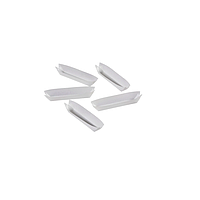
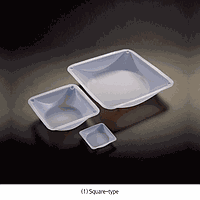
For sample handling, tools such as the DaiHan SL.Sco1013 weighing scoop and the Hammacher HA.HSN135.21 spatula-spoon can be relevant in laboratory workflows where material must be transferred cleanly and with good control before weighing.
Handling calibration weights and small masses correctly
When working with test weights, especially smaller units, correct handling is critical. Oils from the skin, fine dust, and accidental scratching may affect the condition of the weight and increase uncertainty over time. Using tweezers or weight grips helps reduce these risks and supports more consistent calibration practice.
Several KERN accessories listed here are suitable for use with weight sets across OIML classes from E1 to M3, making them relevant for a broad range of calibration and verification tasks. In practical terms, the choice between polyamide, stainless steel, or mixed-material tweezers often depends on the size of the weight, the sensitivity of the application, and the user's preference for grip and durability.
For broader calibration-related product ecosystems, users may also explore the Fluke (Calibration) brand page where calibration-focused equipment can be viewed in a wider context.
Cleaning and protecting weights during routine use
Cleanliness is one of the most overlooked factors in weighing accuracy. Dust on a calibration weight, residue on a sample pan, or lint transferred during handling can all influence results, particularly in low-mass applications. Accessories intended for cleaning should therefore be selected with care and used as part of a standard procedure.
The KERN 318-271 bellows is suitable for removing loose particles without direct mechanical contact, while the KERN 318-272 microfibre cloth can assist with gentle cleaning. These tools are especially useful in environments where weights are frequently moved between storage cases, balances, and workbenches. Combined with good storage and handling discipline, they help extend the usable condition of both weights and related components.
Choosing accessories for laboratory and industrial weighing
The right accessory depends on what is being weighed and how the process is performed. If the main task involves calibration weights, the priority is usually safe gripping and contamination control. If operators regularly transfer powders, granules, or small solid samples, then scoops and spatula-style tools become more relevant.
It is also important to match the accessory to the sensitivity of the instrument. Users working with an analyzer scale or other high-resolution balances will typically need more careful handling methods than users performing general-purpose checks. In moisture or material testing workflows, supporting tools may also be used alongside a moisture analyzer where sample preparation and transfer affect the consistency of the test.
Material choice matters as well. Stainless steel accessories are often selected for durability and cleanability, while plastic-coated or polyamide tools may be preferred when gentler contact is needed. The goal is not simply to add accessories, but to build a reliable weighing routine around the actual task.
Brands and products commonly selected in this range
KERN is the most visible manufacturer in this category based on the featured products, especially for tools related to calibration weight handling and cleaning. Its range covers multiple tweezer variants, plastic-coated weight grips, and basic cleaning tools designed for daily use around weight sets and balances.
DaiHan and Hammacher appear here as practical options for sample handling tools such as scoops and spatula-spoons. These items fit naturally into workflows where preparing, portioning, or transferring material is part of the weighing process. Rather than serving as standalone instruments, they support cleaner and more controlled operation across the weighing station.
How to build a more complete weighing setup
A well-organized weighing station usually combines the main instrument with the accessories required for safe handling, cleaning, and sample preparation. That may include tweezers for small test weights, weight grips for larger masses, cleaning tools to remove dust, and transfer tools for powders or solids. This setup helps reduce avoidable variability and supports better working habits over time.
Depending on the application, users may also look beyond accessories to complementary equipment such as counting scale systems for inventory tasks or precision-focused balances for laboratory measurement. The best combination depends on whether the priority is calibration, formulation, incoming inspection, or routine production weighing.
Final considerations
Choosing weighing accessories is really about protecting measurement quality in everyday work. Small tools such as tweezers, grips, cloths, bellows, scoops, and spatulas can improve cleanliness, reduce direct contact, and make handling more controlled around sensitive weighing tasks.
For buyers comparing options in this category, it makes sense to start with the actual workflow: what is being weighed, how often it is handled, and what level of care the process requires. With the right accessories in place, balances and test weights can be used more consistently and with fewer avoidable handling issues.
Get exclusive volume discounts, bulk pricing updates, and new product alerts delivered directly to your inbox.
By subscribing, you agree to our Terms of Service and Privacy Policy.
Direct access to our certified experts