Gasless MIG welding uses self-shielded flux-cored wire, so it does not require a separate CO₂ or mixed-gas cylinder. It is especially practical for mobile work and outdoor steel fabrication where light wind can disrupt externally supplied shielding gas.
This process is best aligned with carbon steel and structural steel work from about 1.5 mm upward, particularly in the 2–5 mm range. The trade-off is slag, more welding fumes, and a finish that is generally less refined than gas-shielded MIG.
Summary: Gasless MIG relies on self-shielded flux-cored wire. It simplifies outdoor and mobile welding by removing the gas-cylinder system. It is suited to carbon and structural steel, but requires slag removal and is less favorable for thin or appearance-critical work.
What is gasless MIG welding?
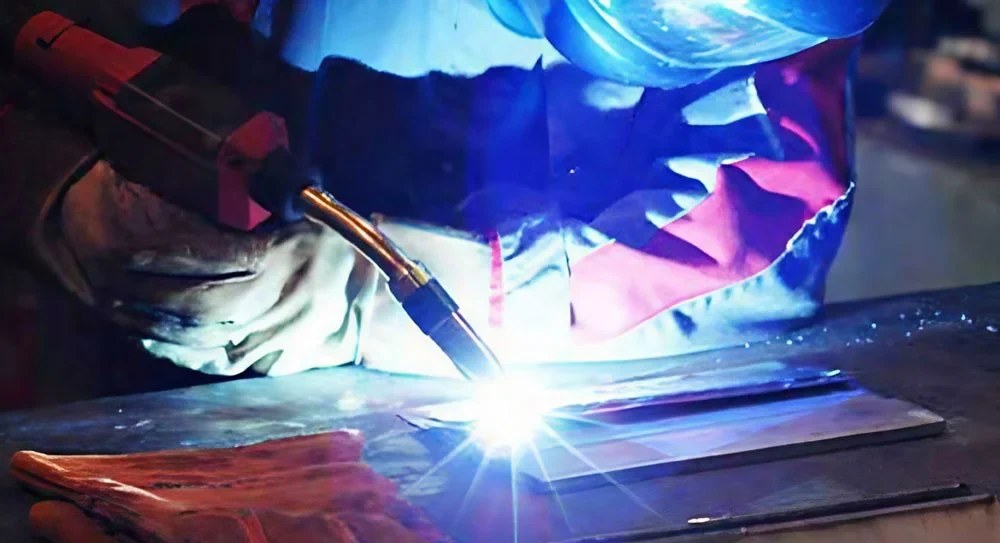
Gasless MIG welding is a wire-fed welding method that uses self-shielded flux-cored wire instead of solid wire with an external shielding-gas supply. As the arc forms, the flux core produces shielding around the weld area to help protect it from oxidation.
The equipment still uses a wire feeder and welding gun, but it does not need a separate gas cylinder, regulator, or gas hose. This makes the overall setup easier to move between job locations.
Why is gasless MIG welding useful outdoors?
Gasless MIG welding is more suitable for outdoor work because its shielding is generated at the arc rather than delivered through a gas nozzle. Light wind is therefore less likely to displace the shielding than in gas MIG welding.
This can be useful for field fabrication of steel frames, railings, canopies, and similar structural work. It also removes the need to transport or refill a gas cylinder during mobile jobs.
Which materials can a gasless MIG welder weld?
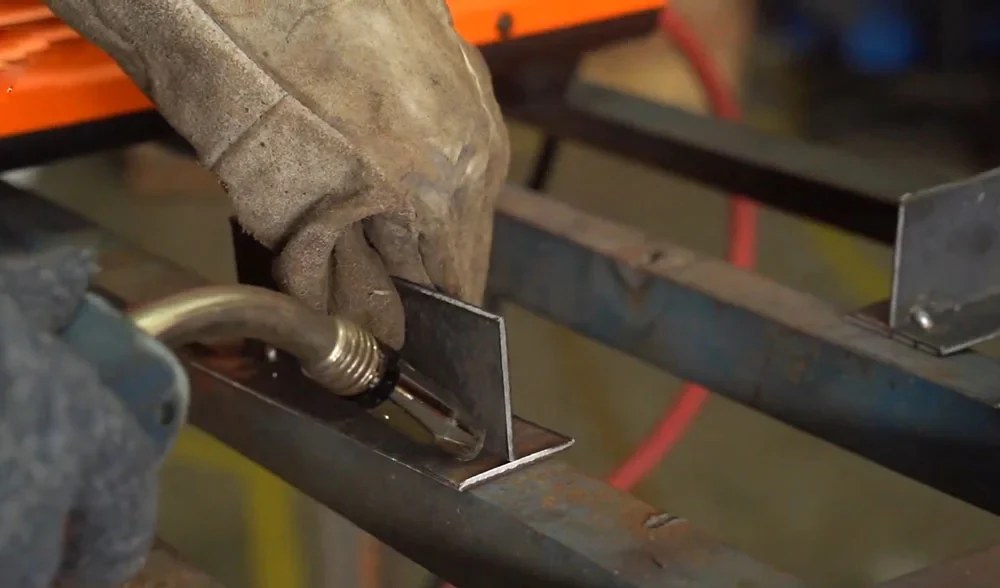
Gasless MIG welding is most appropriate for carbon steel and structural steel. The supplied information identifies material thicknesses from approximately 1.5 mm upward, with 2–5 mm described as a particularly suitable range.
| Material or condition | Suitability with gasless MIG welding | Practical consideration |
|---|---|---|
| Carbon steel | Suitable | Used for frames, gates, railings, canopies, and general steel structures. |
| Structural steel | Suitable | Useful for medium-thickness and heavier field work when settings are appropriate. |
| Galvanized steel | Possible | Clean the coating at the weld location and provide good ventilation because fumes can increase. |
| Stainless steel | Limited | Specialized flux-cored wire may be used, but slag and moderate appearance make it less suitable for decorative thin stainless work. |
| Steel below about 1.0–1.2 mm | Limited | Heat is harder to control and burn-through is more likely with poor technique. |
What are the main limitations of gasless MIG welding?
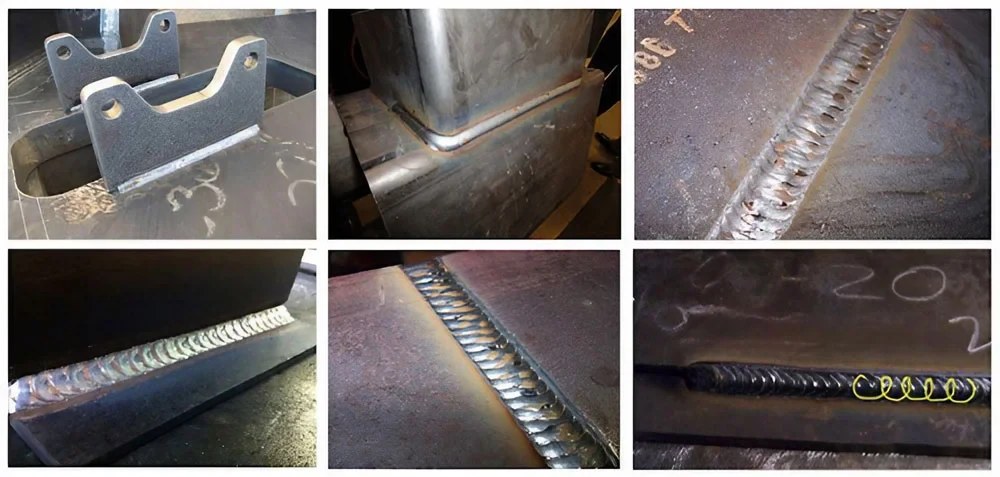
MIG welding machine leaves a slag layer that must be chipped and cleaned after welding. It can also create more spatter than gas-shielded MIG, especially if the welding current is not set appropriately.
The finish is generally less smooth and bright, making the method less suitable when visual appearance is the priority. Flux-cored wire also produces more fumes, so ventilation and suitable personal protective equipment are important.
Note: For thin steel, decorative stainless work, or applications that prioritize a clean, smooth finish, gas-shielded MIG is presented as the more suitable option in the supplied information.
How does gasless MIG compare with gas-shielded MIG?
The key difference is the shielding method: gas MIG uses solid wire with externally supplied CO₂ or mixed gas, while gasless MIG uses self-shielded flux-cored wire. That difference affects portability, cleanup, appearance, and outdoor usability.
| Criterion | Gas-shielded MIG | Gasless MIG |
|---|---|---|
| Shielding | External CO₂ or mixed gas | Generated by self-shielded flux-cored wire |
| Weld cleanup | Cleaner, with less slag | Slag requires removal |
| Weld appearance | Smoother and more refined | Moderate finish |
| Outdoor use | More affected by wind | More stable in light wind |
| Thin material | Better suited | More limited |
| Initial setup | Requires a cylinder and gas accessories | Does not require a separate gas system |
When should you choose a gasless MIG welder?
Choose a gasless MIG welder when the work is mobile, outdoors, or focused on carbon-steel and structural-steel fabrication. It is a practical fit for users who want to avoid a separate shielding-gas system and work on material from roughly 1.5 mm upward.
Consider another process when the work involves very thin material, decorative stainless steel, or a high-finish weld surface. In those cases, the supplied information indicates that gas MIG offers cleaner results and better thin-material capability.
What should you check before selecting a gasless MIG welder?
Check that the machine supports self-shielded flux-cored wire and polarity reversal, as this is identified as necessary for this wire type and is commonly used with DCEN. A stable wire-feed mechanism is also important because uneven feeding can cause an unstable arc, inconsistent welds, and extra spatter.
Select the welding-output range for the steel thickness being welded, and match the power supply to the job environment: the supplied information associates 220V with smaller workshops and mobile work, while 380V may be considered for larger projects and thicker structural work. For continuous work, review the duty cycle to understand operation at rated current and overheating risk.
Which listed models support gasless MIG welding?
The supplied information lists several models that support gasless MIG welding, but the best choice depends on the required functions, wire size, electrode capability, and work environment. Specifications below are limited to the provided product details.
| Model | Listed capabilities | Provided wire or electrode details |
|---|---|---|
| NB-250DT | Gasless MIG, gas MIG, and stick welding | 0.8–1.0 mm wire; 1.6–3.2 mm electrodes |
| MULTIG MAG V2000 | Gasless MIG, gas MIG, and stick welding | 0.8 mm gas-shielded wire; 1.0 mm flux-cored wire; 2.5 mm continuous and 3.2 mm stick welding stated |
| ZMIG 200E | Gasless MIG and stick welding | 0.8 mm flux-cored wire; 1.0–2.5 mm electrodes |
| NB-160E | Gasless MIG, gas MIG, and stick welding | 0.8–1.0 mm flux-cored wire; 1.6–3.2 mm electrodes |
| MULTIMAG V2500 | Gasless MIG, gas MIG, and stick welding | No wire or electrode size is provided |