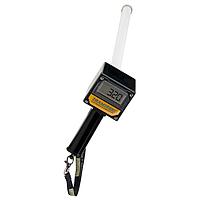
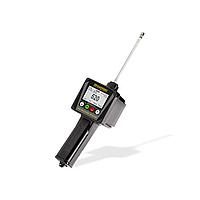
DRAMINSKI Estrous Detector
Breeding decisions often depend on timing, and even a small error in identifying the fertile window can affect conception rates, labor planning, and overall herd or kennel efficiency. In routine reproductive management, a dedicated DRAMINSKI Estrous Detector helps breeders and veterinary professionals monitor the ovarian cycle more objectively, especially when visible signs are unclear or inconsistent.
Within this category, you can find portable electronic devices designed for different animal groups, including pigs, cows, mares, sheep, goats, and dogs. These instruments are intended to support mating or insemination decisions by tracking changes associated with estrous, while also fitting into a broader veterinary workflow that may include screening, pregnancy confirmation, and herd health monitoring.

Purpose-built reproductive monitoring for different species
Estrous detection is not a one-size-fits-all task. Probe length, device form factor, and handling requirements vary depending on the species being examined, which is why this category includes several models tailored to practical field use. For example, the DRAMINSKI EDP 2 Estrous Detector For Pigs and DRAMINSKI EDC 2 Oestrus Detector For Cows And Horses are designed around the needs of larger livestock, while the DRAMINSKI DOD2 Dog Ovulation Detector addresses breeding management in dogs.
Older and newer model generations are both relevant in many operations. Devices such as DRAMINSKI EDP Estrous Detector For Pigs, DRAMINSKI EDS Estrous Detector For Sheep And Goats, and DRAMINSKI EDC Estrous Detector for cows and mares show the breadth of the lineup, covering common breeding applications where repeat measurements over several days can improve timing decisions.
How an estrous detector supports breeding decisions
These detectors are used to observe changes in the electrical resistance of mucus, which can help indicate the approach of estrous or ovulation. In practice, this gives the operator a measurable reference point rather than relying only on behavioral signs, which may be subtle, delayed, or absent in some animals.
This approach can be useful in cases of silent heat, atypical cycles, or situations where accurate insemination timing is important. For many breeders, the value is not just a single reading but the ability to build a measurement pattern across consecutive days, making the result more meaningful in real-world reproductive management.
Typical applications across farms, clinics, and breeding programs
On swine farms, a detector such as the DRAMINSKI EDP 2 Estrous Detector For Pigs may be used to support sow breeding schedules and improve the consistency of insemination timing. In cattle and equine settings, the DRAMINSKI EDC 2 Oestrus Detector For Cows And Horses can assist when external estrous signs are difficult to interpret, helping staff make more informed reproductive decisions.
In small ruminants, the DRAMINSKI EDS Estrous Detector For Sheep And Goats fits breeding programs where close observation is needed but labor time is limited. For kennels and dog breeders, models such as the DRAMINSKI DOD Dog Ovulation Detector and DRAMINSKI DOD2 Dog Ovulation Detector are relevant when determining the optimum mating period is critical and repeated unsuccessful attempts carry extra cost and stress.
What to look for when choosing a model
The first selection factor is the intended animal species. Probe dimensions, handling ergonomics, and device geometry should match the animal group being measured, so the most suitable model is usually the one built specifically for that reproductive application rather than the one with the broadest feature set.
It is also worth considering workflow-related features such as internal memory, USB data transfer, display readability, and battery operation. Newer models in this category offer practical advantages for record keeping, including storage for a large number of measurements with date and time, which can be useful when monitoring multiple animals and comparing trends over time.
For users who need simple portable operation, legacy models remain relevant thanks to straightforward measurement procedures and compact construction. For farms or breeding operations that want better traceability and data review, second-generation options like the EDP 2, EDC 2, and DOD2 can be a better fit.
Integration with a broader veterinary equipment workflow
Estrous monitoring is only one part of reproductive and herd health management. In many settings, these devices are used alongside other veterinary tools depending on the stage of the breeding cycle and the level of diagnostic detail required. If your process also involves imaging, you may want to review veterinary ultrasound scanners for reproductive examination and follow-up.
For post-breeding checks, a dedicated pregnancy detector can complement estrous tracking by helping verify outcomes after mating or insemination. In dairy environments, reproductive management is often closely linked with udder health, so mastitis detection tools may also be part of the same equipment ecosystem.
Why DRAMINSKI remains a relevant choice in this category
DRAMINSKI is the central manufacturer represented in this category, with multiple estrous detector variants developed for different species and use cases. The product range shows a clear focus on portability, battery-powered field use, and repeatable measurement routines that suit daily work in farms, breeding facilities, and veterinary practice.
Another practical advantage is the continuity across the lineup. Whether the requirement is for pigs, cows and mares, sheep and goats, or dogs, the devices follow a similar logic of operation, making adoption easier for users already familiar with reproductive monitoring instruments from the same brand.
Good measurement practice matters as much as the device
Even with the right instrument, results depend on consistent technique. Operators should follow the recommended measurement routine for the relevant animal, maintain proper probe hygiene, and compare readings over consecutive measurements rather than interpreting a single value in isolation. This is especially important when the goal is to identify the best mating date or investigate irregular cycle behavior.
Because these detectors are designed as practical decision-support tools, they are most effective when used as part of a repeatable breeding protocol. Clear record keeping, species-appropriate handling, and correlation with observed animal behavior will generally produce more useful outcomes than relying on one indicator alone.
Choosing the right DRAMINSKI Estrous Detector for your operation
The right device depends on species, herd or kennel size, record-keeping needs, and how intensively reproductive data is used in day-to-day management. Some buyers prioritize portability and basic field measurements, while others need onboard memory and USB-based data handling for larger breeding programs.
This category brings together DRAMINSKI models for several breeding scenarios, making it easier to compare options built for real veterinary and livestock use. If your priority is more reliable timing for mating or insemination, a well-matched estrous detector can be a practical addition to a broader reproductive monitoring workflow.
Get exclusive volume discounts, bulk pricing updates, and new product alerts delivered directly to your inbox.
By subscribing, you agree to our Terms of Service and Privacy Policy.
Direct access to our certified experts