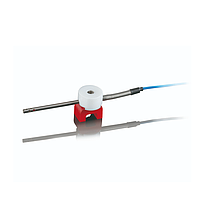
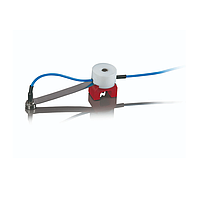
E-Type Temperature Sensor
Accurate low-temperature measurement often depends as much on the sensing element and wiring as on the instrument itself. In applications where signal stability, fast response, and compatibility with Type E thermocouple circuits matter, choosing the right E-Type Temperature Sensor solution helps reduce reading errors and simplifies installation across laboratories, process lines, and test systems.
This category focuses on Type E thermocouple-related products used for temperature sensing and signal transmission. It includes both sensing wire and extension wire options that support reliable measurement in practical industrial and technical environments, especially where long cable runs, shielding, or compact wire sizes are important.
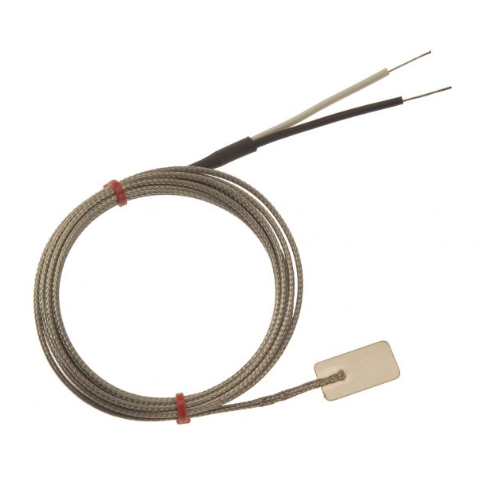
Where Type E thermocouple solutions are used
Type E thermocouples are widely selected for temperature measurement tasks that require dependable output in relatively moderate temperature ranges. They are commonly integrated into test benches, thermal monitoring setups, packaged equipment, OEM assemblies, and general-purpose industrial measurement points where a thermocouple-based signal is preferred.
In many systems, the sensing junction is only one part of the measurement chain. Bare thermocouple wire may be used for custom sensor fabrication, while insulated extension cable helps carry the signal from the sensing point to panels, controllers, or data acquisition hardware. For broader application needs, users may also compare this category with industrial temperature sensors used in more rugged plant environments.
What you can find in this category
The product selection shown here is centered on Type E thermocouple materials and extension wiring, with a strong presence of OMEGA products. Rather than treating every item as the same, it is helpful to separate them by role in the measurement system.
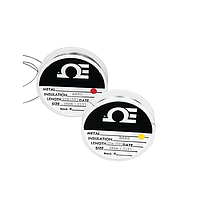
For example, OMEGA SPCC-003-100 is a fine diameter bare thermocouple wire option suited to applications where a small wire size and direct thermocouple construction are needed. Alongside that, several OMEGA twisted shielded duplex extension wires are available in different gauges and lengths, such as EXFF-E-20S-TWSH-100, EXFF-E-20S-TWSH-500, EXFF-E-16S-TWSH-100, and EXTT-E-20S-TWSH-50. These are better understood as signal transmission components within a Type E thermocouple system rather than standalone end devices.
Key selection points for E-Type thermocouple wiring and sensors
When selecting from this category, the first step is to confirm that the full measurement loop is designed for Type E thermocouple compatibility. Matching thermocouple type is essential because the conductor materials directly affect the voltage signal generated and transmitted to the instrument.
The next consideration is wire construction. Fine solid wire can be useful where compact size or faster thermal response is desirable, while stranded extension cable is often preferred where flexibility matters during routing and installation. Shielded twisted constructions are especially relevant when the thermocouple signal must travel through electrically noisy environments, helping support cleaner measurement performance.
Gauge and cable length also matter. Products in this category include options such as 16 AWG, 20 AWG, 24 AWG, and very fine 40 AWG wire, with lengths ranging from short metric coils to large spools. In practice, these choices affect handling, mechanical durability, routing convenience, and how the cable fits the installation space.
Understanding the difference between sensor wire and extension wire
Not every product associated with an E-Type temperature sensor performs the same job. Bare thermocouple wire is commonly used to create or repair sensing points, experimental assemblies, or custom probe constructions. This makes it relevant for engineering teams, labs, and OEM users that need flexibility in sensor design.
Extension wire, by contrast, is intended to carry the thermocouple signal from the sensing location to the measurement or control device. Items such as the OMEGA EXFF-E and EXTT-E series in this category are designed for that supporting role, with twisted shielded duplex construction that fits installations where cable organization and interference control are important.
If your application involves comparing thermocouple types for temperature range or plant standardization, it may also be useful to review K-type temperature sensor options alongside Type E products.
Examples from the current product range
Several listed products illustrate the range of configurations available. OMEGA SPCC-003-100 represents a fine-diameter bare wire format for custom thermocouple work in a stated process temperature range up to 150°C. This kind of product may be suitable where compact sensor construction is more important than heavy-duty cable handling.
For extension and interconnection, the OMEGA EXFF-E-20S-TWSH family appears in multiple spool lengths including 100 ft, 200 ft, 500 ft, and 30 m. Users looking for a heavier gauge can consider options such as EXFF-E-16S-TWSH-100 or EXFF-E-16S-TWSH-500, while FF-EI-24-TWSH-7.5M offers a smaller 24 AWG format in a shorter metric length. These examples show how this category supports both compact builds and longer signal runs without forcing a one-size-fits-all choice.
How to choose the right option for your installation
A practical selection process starts with the measurement point itself. If you are building or replacing the sensing junction, bare thermocouple wire may be the more relevant path. If the sensor is already defined and you need to route the signal back to instrumentation, extension cable is usually the priority.
Then consider the installation environment: required cable flexibility, expected electrical noise, available routing space, and total run length. FEP- or PFA-insulated shielded cable options in this category can be relevant where neat cable routing and signal integrity are important. For compact electronics-related measurement points, some users may also look at board mount temperature sensors when a thermocouple is not the preferred sensing method.
Finally, check the measurement architecture as a whole. Thermocouple circuits must remain consistent from sensing point to instrument input, so selecting the correct wire type, gauge, insulation style, and cable length is just as important as choosing the sensor itself.
Related temperature sensing technologies
Type E thermocouple products are only one part of a wider temperature measurement ecosystem. Depending on the application, engineers may also evaluate thermistor sensors for compact electronic sensing, or other industrial sensor formats when process conditions or interface requirements differ.
The right choice depends on the required temperature range, installation style, response needs, and instrument compatibility. Type E remains a practical option where thermocouple-based measurement is needed and the wiring infrastructure must support accurate signal transfer from field point to readout or control system.
Final considerations
This category is best approached as a source for both Type E sensing elements and the supporting cables needed to complete the measurement loop. Whether you need fine bare wire for custom thermocouple construction or twisted shielded extension wire for cleaner signal routing, the available options make it easier to match the product to the actual installation rather than adapting the installation to the cable.
Review the thermocouple type, gauge, insulation, shielding, and required cable length before ordering. A well-matched E-Type solution will help support more stable readings, cleaner system integration, and a more reliable temperature measurement setup overall.
Get exclusive volume discounts, bulk pricing updates, and new product alerts delivered directly to your inbox.
By subscribing, you agree to our Terms of Service and Privacy Policy.
Direct access to our certified experts