Thermistor Sensor
Accurate temperature feedback often depends on matching the sensing element to the application, not simply choosing any probe with the right range. In building controls, process equipment, HVAC panels, and compact monitoring points, Thermistor Sensor solutions are widely used because they offer responsive measurement in a practical, easy-to-integrate format.
This category brings together thermistor-based sensing options for different mounting styles and installation needs, from wall-mounted devices to flexible probe designs and ring lug configurations. Whether you are replacing an existing 10k NTC sensor, specifying a sensor for a new assembly, or looking for a compact readout solution, the products here support a broad range of temperature monitoring tasks.
Where thermistor sensors fit in temperature measurement
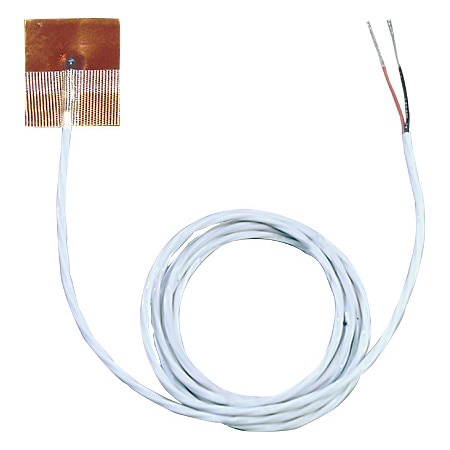
A thermistor is a temperature-sensitive resistor whose resistance changes in a predictable way as temperature changes. In many control and monitoring systems, especially those using NTC elements, this makes thermistor sensors a practical choice for fast response and good sensitivity within a defined temperature band.
They are commonly selected for indoor environmental sensing, surface temperature measurement, embedded equipment monitoring, and general-purpose control loops. If your project requires alternative sensing formats for harsher industrial duties, you may also want to review industrial temperature sensors for broader installation options.
Common thermistor sensor formats in this category
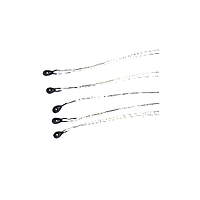
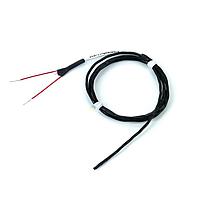
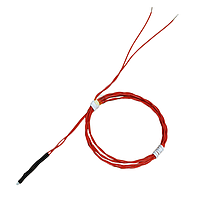
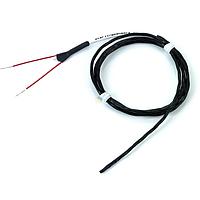
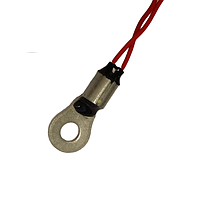
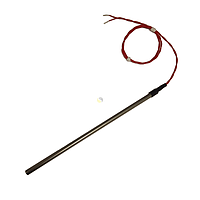
The category includes several sensor styles suited to different mechanical and electrical requirements. Flexible lead wire probes are useful where the sensing point needs to be routed into compact spaces, while wall-mounted units are better suited to room or enclosure monitoring. Ring lug versions are typically chosen when the sensor must be fixed securely to a surface or terminal point for stable contact measurement.
Examples in this range include the Sterling Sensors NFCSET series with flexible PFA lead wire, the Sterling Sensors NGINTT wall-mounted 10k thermistor, and ring lug options such as the NFLUGTM0401M0AS7 and NFLUGTM0601M0AS7. For applications where installation method matters as much as the sensing element, these format differences can be more important than the nominal resistance alone.
Typical applications and selection logic
Thermistor sensors are often used in HVAC control panels, refrigeration and comfort monitoring, machinery temperature supervision, cabinet monitoring, and OEM equipment builds. In these environments, users usually need a balance of response speed, manageable wiring, and compatibility with existing controllers or indicators.
Selection normally starts with the sensing type required by the receiving device, such as a 10k NTC element. After that, it helps to review temperature range, probe dimensions, mounting style, cable material, and whether the sensor needs a process connection, wall housing, or direct contact attachment. If your system is specifically designed around NTC sensing characteristics, you may also compare options in the NTC-type temperature sensor range.
Featured products and practical use cases
Several products in this category illustrate how thermistor sensors are adapted for different real-world installations. The Dwyer WTI-100 is an LCD wall-plate temperature indicator designed for use with a remote thermistor, making it a useful option where local visual indication is needed at the point of measurement rather than only at the controller. Its NTC thermistor input and wall-plate format make it relevant for facilities and building monitoring tasks.
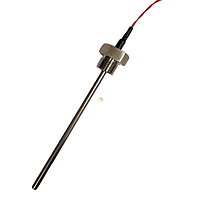
For direct sensing, Sterling Sensors offers multiple probe configurations. The NNPSTT1/80801MC7 handheld thermistor probe suits manual spot-checking or service work, while the NFCSET6MM series provides fixed probes with flexible lead wire in different insertion lengths. For mounted process points, the NFTHRT6MM series with process connection can be suitable where the sensor must be installed more securely into equipment or assemblies.
Why mounting style matters as much as sensor type
In technical B2B purchasing, the sensor element is only one part of the decision. A thermistor with the right electrical characteristics can still be the wrong fit if the probe length, attachment method, or housing does not match the installation environment. That is why this category includes wall-mount, handheld, flexible probe, ring lug, and process-connection variants rather than only one general-purpose format.
For example, a wall-mounted thermistor is more appropriate for ambient room monitoring, while a ring lug sensor may be better for attachment to metal surfaces or terminals. A probe with PFA lead wire can be useful when routing flexibility and cable protection are important. This practical distinction helps buyers narrow down options quickly and avoid mismatched replacements.
Brands and product ecosystems available
This category includes solutions from manufacturers such as Sterling Sensors and Dwyer, each supporting different use cases within temperature measurement. Sterling Sensors appears prominently in probe-style, wall-mounted, ring lug, and process-connected thermistor formats, while Dwyer contributes indicator-oriented solutions that can complement remote sensor installations.
Depending on the application, buyers may be sourcing a standalone sensing element, a replacement sensor for an existing control loop, or a complete point-level indication setup. Looking at the manufacturer ecosystem can help when consistency, maintenance familiarity, or cross-project standardization is part of the purchasing decision.
How to choose the right thermistor sensor
When comparing products in this category, it is useful to confirm a few core points before ordering:
- Required sensor type and nominal resistance, such as NTC or 10k NTC
- Expected operating temperature range for the application
- Mechanical format, including wall mount, insertion probe, ring lug, or process connection
- Lead wire length and material based on routing and environmental needs
- Whether you need sensing only or a local display/indicator solution
If your application instead requires a different sensing principle, such as thermocouple-based measurement, it may be more appropriate to compare with a K-type temperature sensor. That comparison is especially relevant when higher temperature capability or different instrumentation compatibility is required.
Supporting reliable replacement and new system design
Thermistor sensors are often purchased either as replacements for installed devices or as components in new equipment and control systems. In both cases, consistency matters: matching the electrical characteristic is important, but so is selecting the right physical form for repeatable installation and dependable readings.
By bringing together multiple thermistor sensor styles in one place, this category makes it easier to compare practical options for ambient, surface, and process-adjacent temperature measurement. If you are specifying a new build or replacing an existing probe, focusing on sensor type, mounting method, and integration requirements will help narrow the selection to the most suitable product.
Get exclusive volume discounts, bulk pricing updates, and new product alerts delivered directly to your inbox.
By subscribing, you agree to our Terms of Service and Privacy Policy.
Direct access to our certified experts