Electromagnetic Flow Meters
When accurate liquid flow data matters, electromagnetic technology is often the practical choice for conductive media in industrial lines, water treatment systems, chemical dosing, and process monitoring. Electromagnetic Flow Meters are widely used where mechanical moving parts are undesirable and where users need stable output, repeatable readings, and integration with control systems.
This category brings together mag meters suited to different pipe sizes, installation methods, and operating conditions. Whether the application involves compact low-flow measurement, inline process control, or higher-capacity insertion-style monitoring, the available range helps buyers compare options by flow profile, media compatibility, output signal, and installation constraints.
How electromagnetic flow meters fit into industrial measurement
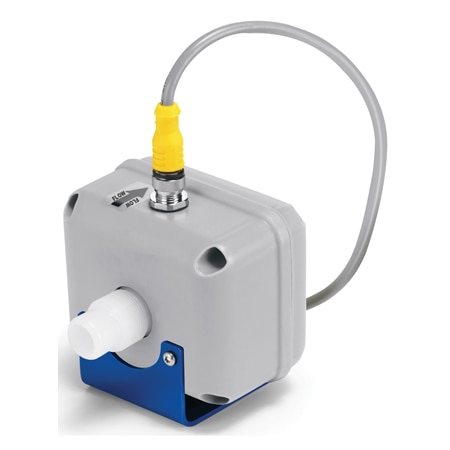
A mag meter measures flow based on the interaction between a conductive liquid and a magnetic field. In practice, this makes it a strong fit for water-based liquids, saltwater, certain chemical solutions, and other conductive process media. Because the measurement principle does not rely on turbines or gears, electromagnetic designs are often selected when low maintenance and reliable long-term measurement are important.
Compared with some other flow technologies, these instruments are especially relevant when users need analog output such as 4-20 mA, pulse signaling, or communications such as RS485 Modbus. For buyers comparing technologies across a wider product range, this flow measurement portfolio can also help place mag meters alongside other instrument types used in process systems.
Typical configurations in this category
This category includes both inline electromagnetic meters and insertion electromagnetic meters. Inline models are commonly chosen for dedicated process lines where the meter body is installed directly into the piping. They are often preferred when users want a defined pipe size, compact integrated display, and direct signal output to PLC, SCADA, or local instrumentation.
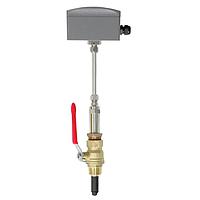
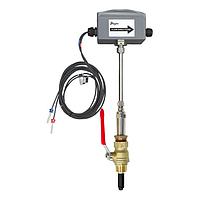
Insertion designs serve a different purpose. They are useful in larger pipes where full-bore installation may be less practical, and they can be attractive for utility water, distribution lines, or retrofit projects. If your application requires a different measurement approach for conductive liquids in larger pipe networks, it may also be useful to compare with paddlewheel flow meters depending on media conditions and system requirements.
Representative product examples
For inline measurement, the YOKE YK-LDG-80S-M2F212P(2)NK is an example of a flanged electromagnetic flow meter designed for process integration, with an LCD display, 4-20 mA output, and RS485 Modbus communication. This kind of configuration is relevant in installations where operators need both local indication and connection to automation systems.
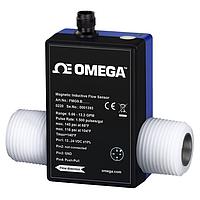
The MultiTech LT-LDE-DN15 represents a more compact precision-oriented format, suitable for applications that require careful velocity-based measurement and current output in smaller lines. For low-flow applications, several OMEGA models such as the FMG81A, FMG82A, FMG83A, and FMG84A illustrate how electromagnetic technology can be applied to small pipe and tube sizes with PVDF wetted materials and current or pulse-style output options.
On the larger-pipe side, OMEGA FMG982 and FMG983 series models show the role of fixed-depth insertion meters in systems where high flow capacity and practical installation are priorities. These examples are useful not because every project is the same, but because they show the breadth of this category across low-flow dosing lines, standard process piping, and high-volume utility networks.
What to consider when selecting a mag meter
The first selection point is always the process medium. Electromagnetic meters require conductive liquid, so the fluid’s conductivity and chemical compatibility with wetted materials matter. Temperature, pressure, and pipe connection style should also be reviewed early, especially when choosing between flanged inline construction and saddle-mounted insertion formats.
The second key factor is the expected operating range. Some applications need accurate measurement across a relatively low flow window, while others focus on wide-range monitoring in larger pipes. Buyers should also consider output requirements such as 4-20 mA, pulse, or communication signals, particularly when the meter will feed a controller, data logger, or plant monitoring platform.
Finally, installation environment matters. Protection rating, enclosure type, power supply, and access for maintenance can all influence the right choice. In some systems, supporting hardware from flow measurement accessories may also be needed to complete installation, wiring, or integration.
Common application areas
Electromagnetic flow meters are commonly used in water handling and treatment, chemical transfer, utility monitoring, wash systems, and process lines carrying conductive liquids. Their non-mechanical sensing principle can be valuable where particles, corrosive solutions, or continuous-duty operation make mechanical wear a concern.
Low-flow models are often relevant for controlled feed systems, skid-based equipment, and compact process setups. Larger insertion models are more aligned with distribution pipes and utility-scale monitoring, where users need dependable indication without moving to a more invasive full-bore installation.
Signals, displays, and system integration
In many industrial environments, flow measurement is not only about local reading. It is also about how data moves into the broader control architecture. That is why outputs such as 4-20 mA, pulse, and digital communication remain important in this category. They support trending, alarming, batching, and general process visibility.
Some models in this range include integrated LCD indication, while others focus more on electrical output for connection to external systems. If the application also requires straightforward local visualization without a more advanced meter architecture, users sometimes compare with indicating flow meters for simpler monitoring points.
Why buyers often narrow the shortlist by installation style
Installation style affects far more than mounting. It influences shutdown requirements, available pipe modifications, service accessibility, and total project effort. Full-bore inline meters are often favored when a new line is being designed or when precise meter sizing is part of the process design. They can offer a clean, dedicated measuring section with direct alignment to the pipe size.
Insertion meters, by contrast, are frequently reviewed for retrofit work or larger pipe systems where minimizing mechanical changes is important. In many projects, that single choice between inline and insertion quickly reduces the shortlist and makes the next steps—material compatibility, signal type, and operating range—much easier to evaluate.
Choosing the right category for your process
This selection of electromagnetic flow meters is best suited to users working with conductive liquids and looking for a balance of accuracy, integration flexibility, and application-specific installation options. The range shown here covers small-line low-flow instruments, standard inline process meters, and insertion-style units for larger pipework.
If you are comparing solutions for a new project or replacing an existing meter, focus first on media conductivity, pipe size, installation method, and required output signal. With those basics defined, it becomes much easier to identify a suitable model from this category and build a more reliable flow measurement setup.
Get exclusive volume discounts, bulk pricing updates, and new product alerts delivered directly to your inbox.
By subscribing, you agree to our Terms of Service and Privacy Policy.
Direct access to our certified experts