
Barometer
Reliable atmospheric pressure data matters in more places than many buyers first expect. From HVAC field service and environmental checks to laboratory routines and portable inspection work, a suitable barometer helps users verify ambient conditions, compare readings over time, and support pressure-related diagnostics with better confidence.
In this category, you can find handheld and portable instruments designed for measuring absolute atmospheric pressure in practical industrial and technical settings. The range includes compact units for routine barometric checks as well as vacuum/barometer instruments that are useful when pressure monitoring needs to be combined with flexible hose connection options and portable operation.
Where barometers are typically used
Atmospheric pressure measurement is relevant wherever ambient conditions influence process stability, test repeatability, or system performance. In maintenance and service work, technicians often use barometric readings as a reference when evaluating ventilation behavior, room conditions, or pressure-sensitive equipment.
Barometers are also common in environmental monitoring, building diagnostics, and general field measurement. When the application goes beyond simple ambient checks and moves toward portable vacuum or pressure verification, users may also compare options from the broader vacuum pressure portable range depending on the measurement task.
What to look for when choosing a barometer
The right instrument depends less on the product name and more on how the device will actually be used. Buyers usually start with the required measuring range, expected accuracy, display readability, and whether the instrument will be used indoors, on site, or in harsher environments where ingress protection and housing durability are important.
It is also worth checking practical details such as pressure units, battery operation, response behavior, and available functions like hold, min/max, averaging, or tare. For users comparing atmospheric instruments with other pressure tools, the wider manometers category can help clarify whether the application calls for ambient pressure measurement, differential pressure work, or a more general pressure monitoring setup.
Examples from this category
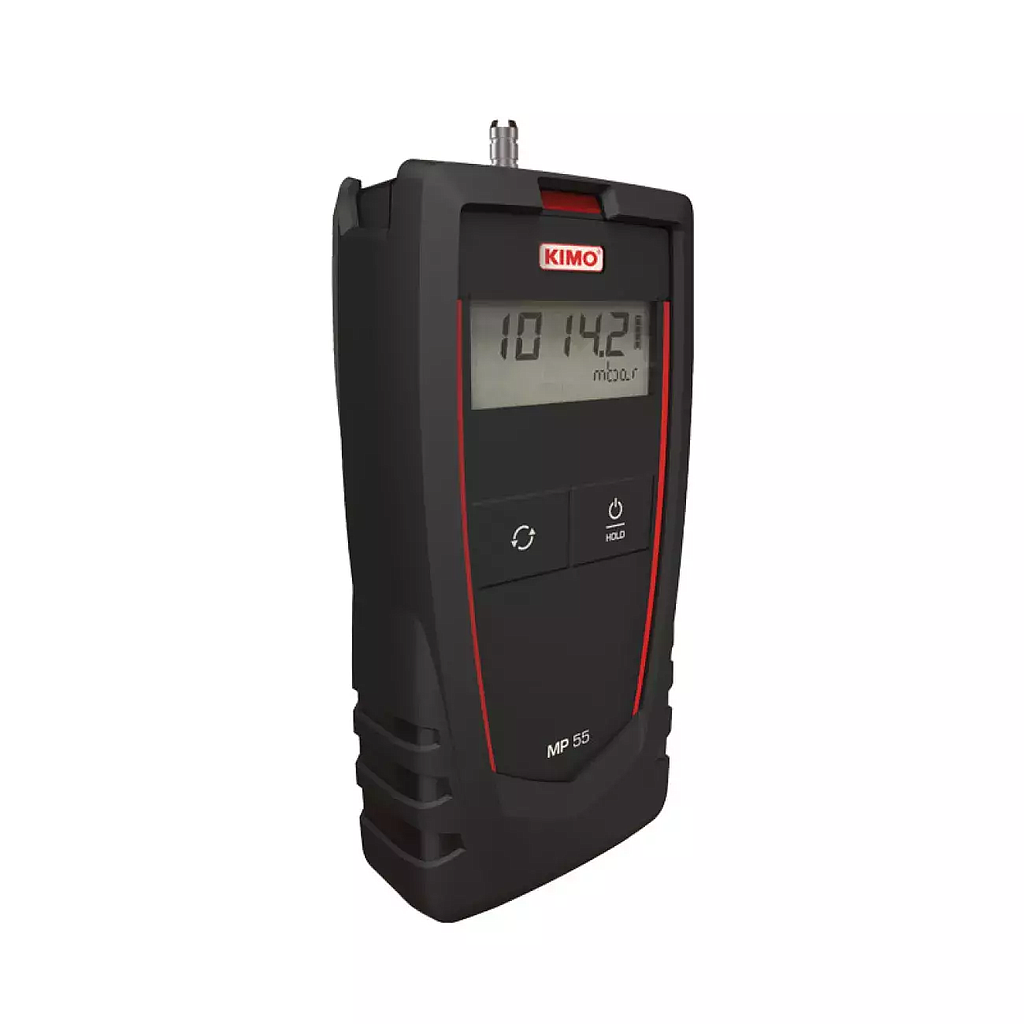
A clear example of a dedicated atmospheric instrument is the Sauermann MP55, which is designed for measuring ambient pressure in the 700 to 1100 mbar range. Its portable format, LCD display, and common engineering units such as mbar, mmHg, and hPa make it suitable for straightforward field checks where simple, direct barometric readings are needed.
Another important group in this category is represented by the Senseca ECO 240 series, including variants such as ECO 240-1-UT-VAC, ECO 240-1-MCM-VAC, ECO 240-1-QC6-VAC, and ECO 240-1-ST6-VAC. These instruments combine barometer and vacuum-oriented use cases, with portable battery-powered operation, multiple display units, and different pressure connection styles that can matter in service and testing workflows.
Connection styles and portability considerations
For many B2B buyers, the connection type is not a minor detail. In portable pressure work, a device with a G1/8 pressure port may be preferred because it fits more easily into existing hose-based setups, while quick couplings or screw connections can simplify repeated measurements in field service or workshop environments.
The Senseca ECO 240 family illustrates this well, as different versions are offered with different connection arrangements for tubing and quick-connect use. That makes the selection process more application-driven: one user may prioritize fast connection changes, while another may prefer a secure tubing interface for repeatable checks. If your project involves broader environmental condition tracking, it may also be useful to review pressure, temperature & humidity monitors for multi-parameter monitoring needs.
Features that improve everyday usability
In handheld instruments, usability has a direct impact on measurement quality. A readable display, sensible unit selection, stable battery life, and a housing that holds up in everyday transport all contribute to more consistent use in the field. Features such as min/max capture, hold, tare, and averaging are especially useful when readings fluctuate or when users need to document a stable value.
Protection rating can be equally important. For example, some portable models in this category are designed with robust housings and high ingress protection, making them more suitable for industrial environments where dust, humidity, or frequent handling would quickly expose the limits of lighter-duty devices.
Brand options in the category
This category includes products from recognized instrumentation brands, with examples from Sauermann and Senseca represented in the listed products. These brands are relevant for buyers looking for portable pressure instruments for service, maintenance, and technical measurement tasks.
Depending on project scope, some buyers also compare broader brand portfolios across pressure instrumentation suppliers such as OMEGA, PCE, Edgetech Instruments, or Tunix. The best fit usually comes down to the required measurement approach, desired form factor, and whether the instrument will be used mainly for ambient barometric checks or for a wider set of portable pressure tasks.
How to narrow down the right model
A practical way to choose is to begin with the measurement scenario. If the main goal is monitoring atmospheric pressure in normal ambient conditions, a dedicated handheld atmospheric model may be the most straightforward choice. If the workflow includes hose connection, vacuum-related checks, or more flexible portable pressure handling, a combined vacuum/barometer format can be more appropriate.
It also helps to think about accessories and deployment. Buyers should consider whether the instrument will be carried in a case, used with tubing, operated across changing temperatures, or shared by technicians who need fast setup and clear on-screen units. Small differences in connectivity and included set options can make a noticeable difference in day-to-day use.
Choosing a barometer for dependable pressure reference
A good barometric instrument supports more than a single reading on a screen. It helps create a dependable reference for maintenance, inspection, and environmental checks, especially when atmospheric conditions influence the interpretation of other pressure measurements.
This Barometer category is intended to make that selection easier by grouping practical portable instruments for atmospheric pressure and related vacuum/barometer tasks. If you are comparing models, focus on the operating environment, connection requirements, unit options, and handling preferences to identify the most suitable device for your application.
Get exclusive volume discounts, bulk pricing updates, and new product alerts delivered directly to your inbox.
By subscribing, you agree to our Terms of Service and Privacy Policy.
Direct access to our certified experts
