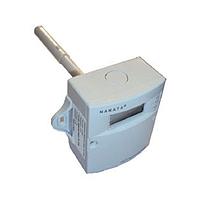
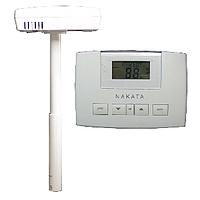
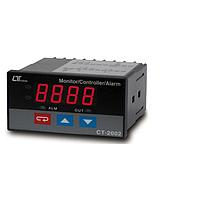
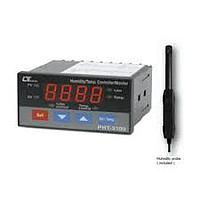
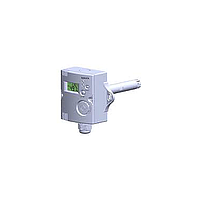
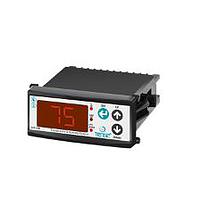
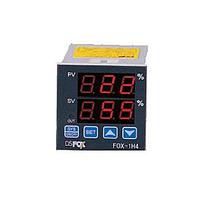
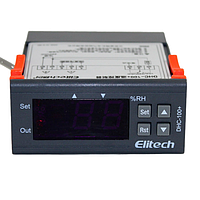
Humidity controller
Stable humidity is critical in many industrial and commercial environments. When moisture levels drift too high or too low, product quality, equipment reliability, storage conditions, and process consistency can all be affected. A humidity controller helps maintain the required range by monitoring ambient conditions and switching connected equipment such as humidifiers, dehumidifiers, alarms, or ventilation devices according to set parameters.
On this category page, buyers can explore humidity control solutions used in automation panels, storage rooms, laboratories, HVAC-related systems, production areas, and environmental control applications. The goal is not only to measure moisture, but to keep the operating environment within a defined band that supports process stability and reduces manual intervention.
Where humidity controllers are commonly used
Humidity control is important wherever environmental conditions directly influence materials, instruments, or process outcomes. Typical examples include warehouses for moisture-sensitive goods, greenhouses, clean or semi-controlled rooms, electrical cabinets, packaging areas, and test environments where excessive humidity can cause condensation or material degradation.
In practical use, the controller acts as the decision layer between sensing and output action. Once the measured humidity reaches the configured threshold, the unit can trigger a relay output to start or stop external devices. This simple control logic makes humidity controllers suitable for both standalone applications and integration into wider automation systems.
How a humidity controller works in an automation setup
Most systems follow a straightforward sequence: a sensor detects relative humidity, the controller compares the real-time value to the setpoint, and the output changes state when the condition requires correction. Depending on the control strategy, the device may operate with a single threshold, a differential band, or upper and lower switching points to reduce unnecessary cycling.
In broader control architectures, humidity control is often combined with temperature, ventilation, or timing logic. For applications that require coordinated environmental regulation, users may also consider related solutions such as PID Controllers for tighter process control or programmable controllers when multiple inputs and outputs need to be managed together.
Key points to evaluate before selecting a model
Choosing the right unit starts with the application environment. Buyers should consider the required humidity range, the acceptable control tolerance, sensor compatibility, installation format, output type, and whether the controller will be used in a compact panel, a room-level system, or a dedicated machine. The switching method also matters, especially when controlling humidifiers, dehumidifiers, fans, or warning devices with different electrical loads.
Another important factor is operating simplicity. In many facilities, operators need a controller that is easy to set, easy to read, and reliable in continuous use. A clear display, practical parameter setting, and stable relay behavior can be just as important as the measurement function itself, particularly in daily production or building management tasks.
Humidity control in relation to other process variables
Humidity is rarely the only variable that matters. In real installations, moisture often interacts with temperature, airflow, liquid handling, and power regulation. That is why humidity controllers are frequently selected as part of a broader control strategy rather than as isolated devices.
For example, systems dealing with water tanks, condensate, or fluid-based environmental processes may also require a level controller to supervise liquid status. In heating or chamber applications, a power controller may help regulate the energy delivered to heaters or other loads that indirectly affect moisture conditions.
Common application priorities in B2B purchasing
Industrial buyers usually focus on repeatability, compatibility, and maintainability. A humidity controller may be technically simple, but it still needs to fit the electrical standard, panel layout, and operating routine of the site. For OEMs, machine builders, and maintenance teams, consistency across devices can reduce setup time and simplify spare part planning.
It is also common to compare products based on control philosophy rather than appearance alone. Some users need basic on/off environmental control, while others need a device that can be integrated into a more structured automation panel. Defining the required level of control in advance helps avoid over-specification on one side and insufficient performance on the other.
Manufacturers often considered in this category
This category may include humidity control solutions from manufacturers such as Conotec, LUTRON, TENSE, and NAKATA. Each brand is generally evaluated in the context of application fit, user interface preferences, installation needs, and overall system design. For many buyers, brand selection is less about choosing a name in isolation and more about finding the right balance between function, integration, and long-term serviceability.
When comparing manufacturers, it is useful to look beyond the basic humidity switching function. Consider how the device will be wired, how operators will interact with it, and whether the controller aligns with the rest of the monitoring and control equipment already used on site. This approach leads to a more practical purchasing decision than comparing specifications without reference to the real application.
How to compare options on this page
As you review available humidity controllers, start by matching the device to the actual control task: maintaining room humidity, protecting equipment from excess moisture, supporting storage quality, or automating a humidification or dehumidification cycle. Then check whether the installation environment calls for a compact panel device, a more visible front-facing controller, or a model suited to continuous operational monitoring.
It is also helpful to consider future expansion. If the current project may later require linked control of temperature, timing, liquid level, or programmable logic, choosing equipment that fits naturally into a wider industrial control ecosystem can make upgrades easier. A well-matched humidity controller supports not only immediate environmental control, but also a more organized and dependable automation setup over time.
Maintaining the right moisture level is a practical requirement in many industries, from storage and facility management to manufacturing and testing. By selecting a humidity controller that fits the process, load, and control method, users can improve stability, reduce manual correction, and build a more reliable operating environment. Explore the products in this category with the application in mind, and compare options based on how they will perform in the real conditions of your system.
Get exclusive volume discounts, bulk pricing updates, and new product alerts delivered directly to your inbox.
By subscribing, you agree to our Terms of Service and Privacy Policy.
Direct access to our certified experts