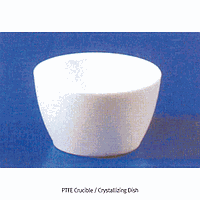
Crucibles
When laboratory work involves high-temperature treatment, ash determination, evaporation, or controlled heating of small samples, the choice of vessel matters as much as the heating method itself. Crucibles are a core part of many analytical and materials workflows because they provide a stable container for sample preparation under demanding thermal conditions.
Within labware selection, this category focuses on practical options for routine laboratory use, including porcelain and PTFE designs as well as matching covers for selected formats. Whether the priority is thermal resistance, contamination control, sample handling, or compatibility with an existing setup, choosing the right crucible helps improve repeatability and day-to-day handling in the lab.
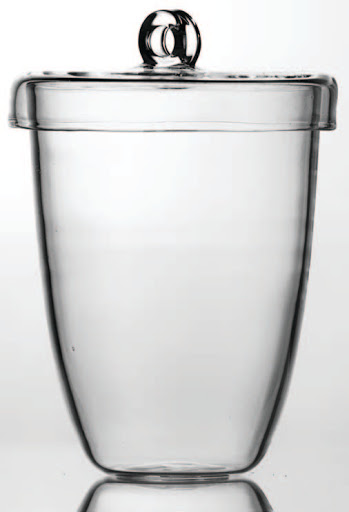
Crucibles for laboratory heating, preparation, and analysis
A crucible is typically used to hold small quantities of material during heating, ignition, drying, fusion, or residue testing. In many laboratories, these vessels are part of standard procedures where the sample must be exposed to elevated temperatures while maintaining shape stability and manageable handling.
This category includes both complete crucibles and related accessories such as covers. That makes it useful not only for new setups, but also for replacing individual items already in service. In workflows where sample integrity and clean handling are important, having the correct body style, size, and cover fit can make routine operations more consistent.
Material options and why they matter
Material selection is one of the first decisions when choosing a crucible. Porcelain is widely used in general laboratory practice because it is suitable for many heating applications and is familiar in analytical environments. PTFE, by contrast, is typically chosen where chemical compatibility and non-metallic contact are more important than high-temperature furnace use.
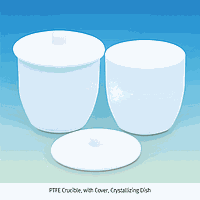
For example, the DaiHan range in this category includes porcelain crucibles in medium-form and high-form versions, along with dedicated porcelain covers. For applications requiring a PTFE vessel, the SciLab SL.Cru4004 Crucible, PTFE, 100㎖ offers an alternative format for specific chemical handling needs. The right material should always be matched to the process conditions, especially the heating profile and the substances being handled.
Understanding form factor: medium-form, high-form, and covers
Crucible geometry affects filling, heating behavior, and ease of manipulation. Medium-form crucibles are often selected for balanced everyday use, offering a practical proportion between diameter and height. High-form crucibles provide a deeper profile, which may be preferred when handling smaller openings, reducing splashing, or working with sample volumes that benefit from a taller shape.
Examples in this category include porcelain medium-form items such as DaiHan SC.CM30, SC.CM45, SC.CM60, SC.CM80, SC.CM100, and SC.CM120, as well as high-form models like DaiHan SC.CT30 and SC.CT45. Matching accessories are also available, including DaiHan SC.CC47, SC.CC54, and SC.CC69 covers. A properly fitted cover can help reduce contamination from the surrounding environment and support more controlled handling during heating or cooling stages.
How to choose the right crucible size
Capacity and dimensions should be selected according to sample volume, expected expansion during heating, and handling requirements. A vessel that is too small can make loading difficult and increase the risk of material loss, while an oversized crucible may reduce efficiency for small sample batches or complicate weighing and transfer steps.
In this category, available capacities range from compact porcelain formats such as 30㎖ and 45㎖ up to 100㎖ and 120㎖ options, with different diameters and heights depending on the form. That variety helps laboratories standardize around a specific procedure or maintain multiple sizes for different methods. If your process also uses related sample containers, it may be helpful to review nearby labware groups such as bowls or ampoules for complementary handling needs.
Representative products in this category
This selection is centered on practical lab crucibles rather than broad equipment systems. On the porcelain side, DaiHan offers multiple capacity points in both medium-form and high-form designs, which is useful when a lab wants similar material characteristics across several sample sizes. Covers are available separately for certain diameters, allowing replacement without changing the main vessel.
On the PTFE side, the SciLab SL.Cru4004 Crucible, PTFE, 100㎖, Φ62×h59mm is a representative option where a polymer vessel is preferred for chemical compatibility or process-specific handling. For buyers comparing brands across wider laboratory supply needs, manufacturer pages such as SciLab can also help identify related items within the same product ecosystem.
Typical laboratory use cases
Crucibles are commonly used in analytical laboratories, educational labs, materials testing, quality control, and general sample preparation. Typical tasks include drying residues, heating powders, processing solids, or preparing materials for gravimetric or thermal procedures. In these contexts, repeatable shape, reliable material behavior, and easy cleaning are often more important than having a very broad feature set.
Because this category includes both crucibles and separate lids, it is also suitable for maintenance purchasing. Labs do not always need to replace complete sets at the same time. Being able to source only the required crucible body or only the matching cover can reduce waste and simplify stock planning.
What to check before ordering
Before purchasing, confirm the required material, vessel form, capacity, outer dimensions, and whether a cover is needed. The diameter is particularly important when replacing an existing lid or matching a cover to a crucible already in service. Even when capacity appears similar, body shape and opening size can vary between models.
It is also worth considering how the crucible fits into the broader workflow, including tongs, furnaces, balances, drying steps, and storage. If your laboratory regularly works with sample transfer or solvent-related handling, adjacent categories such as bottle top solvent pumps may be relevant elsewhere in the process, although they serve a different function from thermal labware.
Choosing with confidence
A well-matched crucible supports safer handling, cleaner sample preparation, and more consistent routine work. From porcelain medium-form and high-form vessels to replacement covers and PTFE options, this category is designed to help laboratories select the format that fits their procedure rather than forcing a one-size-fits-all choice.
If you are comparing capacities, material types, or replacement parts, start with the practical details of your method: sample volume, thermal exposure, vessel shape, and cover compatibility. That approach makes it easier to narrow the range and choose crucibles that integrate smoothly into everyday lab operations.
Get exclusive volume discounts, bulk pricing updates, and new product alerts delivered directly to your inbox.
By subscribing, you agree to our Terms of Service and Privacy Policy.
Direct access to our certified experts