What puzzles many people is that this degradation usually happens very slowly. The TDS meter is not yet powered on normally, is still calibrated, and is still producing measurement results, so it's difficult to notice the abnormality until image errors start affecting the work.
Even when measuring the same water sample, the results vary each time
A glass of water is kept constant, the temperature remains unchanged, and the measurement procedure is the same, yet the screen displays significantly different values between consecutive tests. The first test shows 125 ppm, then increases to 140 ppm, and then drops to 115 ppm, even though the water sample is completely unchanged.
A difference of a few units is still within the normal range for many handheld devices. A difference of tens of ppm is a different story. In this case, the electrodes often no longer maintain their initial stability, causing the received signal to change continuously even under the same measurement conditions. This situation is quite common in RO, DI systems, or applications requiring constant water quality monitoring.
The calibration was completed, but the error returned
Many people believe that simply recalibrating will resolve all discrepancies. This is true for errors arising from normal use, but it becomes ineffective if the electrode itself has begun to age.
A readily apparent sign is that the device completes the calibration process perfectly, even with fairly good results immediately afterward. However, within a few days or weeks, errors reappear and continue to increase.
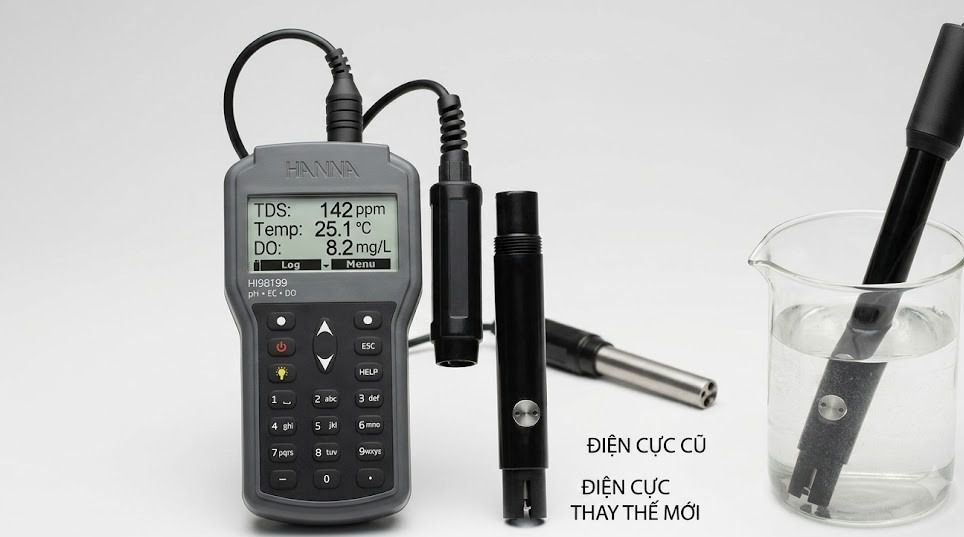
The sensor surface changes in physical properties after prolonged use. Standard solutions can help the device re-establish the reference value, but they cannot restore the electrode to its original state. This is also why specialized devices like the HI98199 allow for the replacement of only the HI763063 electrode without replacing the entire unit.
The screen took a long time to stabilize
A good electrode usually responds quite quickly. After immersing it in the water sample, the displayed value will quickly stabilize and remain almost constant.
If it previously took only a few seconds but now requires tens of seconds or more to record the final result, the sensor's responsiveness has significantly deteriorated.
This sign is often overlooked because the degradation process is gradual. Everyday users find it difficult to notice the small changes between measurements. Only when placed next to a new electrode or another device of the same type does the difference become apparent.
Regular electrode cleaning did not improve accuracy
Mineral deposits on sensors are a common occurrence in water sources with high hardness, such as well water or industrial wastewater. After each cleaning, measurement results usually improve significantly if the cause is solely due to surface deposits.
However, there are cases where electrodes are cleaned correctly but errors persist. Measurement results continue to fluctuate, response speed remains slow, and stability remains almost unchanged.
This usually indicates that degradation has occurred within the sensor structure itself. Once the electrode surface loses its original properties, conventional cleaning methods will no longer yield noticeable results.
Two measuring devices used to test the same water sample yielded significantly different results
This is a method used by many laboratories and water treatment plants to assess electrode condition.
With the same water sample, measured at the same time, and under the same operating conditions, the results between two devices can differ significantly. If one device has just been calibrated, its electrodes are new, or it has a more stable operating history, the error is likely originating from the other electrode.
This comparison method is particularly useful in water quality control systems, where every operational decision is based on measured data.
How often should the electrodes in a TDS meter be replaced?
Electrode lifespan depends on frequency of use, working environment, and the quality of the water in contact with it daily. An electrode used in a laboratory with proper maintenance procedures can maintain performance for many years. Field applications or environments containing high levels of minerals often lead to significantly faster degradation.
Therefore, the time for replacement should be assessed based on actual performance rather than just the number of years of use. Unusual fluctuations, slow response times, repeated errors after calibration, or significant discrepancies when compared to other equipment are all more concerning signals than any fixed timeframe.
Read more: What TDS level is safe to drink? Understanding TDS correctly before assessing water quality
The electrode directly determines the accuracy of all EC/TDS measurements. Most deviations that occur after prolonged operation are related to sensor degradation rather than the device itself.
Early detection of abnormalities helps maintain the reliability of water quality control and avoids costly misdiagnosis of the cause of the problem. With devices that support electrode replacement, such as the HI98199, the simplest solution often lies in a new probe compatible with the existing equipment.
Factors That Can Make Users Think a TDS Meter Electrode Is Faulty
Not every abnormal TDS reading is caused by a deteriorating electrode. Before deciding to replace the probe, several factors related to measurement technique should be ruled out. Electrode immersion depth, air bubbles trapped on the sensor surface, sample temperature, and the condition of the calibration solution can all affect the measurement result.
Air Bubbles on the Electrode Can Cause Unstable Readings
One often-overlooked factor is the presence of air bubbles between the electrode and the solution. When the electrode is first immersed in a sample, small air bubbles can adhere to the sensor surface and alter the electrical path through the solution. As a result, the TDS reading may fluctuate or take longer to stabilize.
During measurement, immerse the electrode to the depth specified by the manufacturer. Gently stir the sample or move the electrode to remove any trapped air bubbles, then wait until the reading stabilizes before recording the result. Some conductivity meter operating procedures also recommend this step before evaluating the measurement.
Temperature Changes Can Also Affect TDS Readings
TDS is commonly estimated from the electrical conductivity of a solution, making temperature an important factor to consider. Measuring the same sample at different temperatures can produce different results if the instrument does not provide temperature compensation or if measurement conditions are not controlled.
Therefore, when an electrode is suspected of having a problem, do not look only at the ppm value displayed on the screen. Check whether the sample temperature, temperature compensation mode, and measurement conditions are consistent between tests.
A Practical Check Before Buying a New Electrode
If you suspect that the electrode is deteriorating, a simple check can be performed using a suitable calibration solution within the instrument's measurement range. Take several repeated measurements under the same conditions and observe the stability of the readings.
If the instrument consistently produces readings that deviate from the standard value or cannot maintain a stable calibration even after the electrode has been properly cleaned, the sensor is more likely to have degraded.
It is important to note that TDS is not a direct measurement of the total amount of each dissolved substance. Many TDS meters actually measure electrical conductivity and then use a conversion factor to estimate TDS. This factor can vary depending on the type of solution and the instrument. Therefore, a ppm value from one meter should not be treated as an absolute reference for all other TDS meters. Some instruments allow users to adjust the EC-to-TDS conversion factor within a specified range.
Frequently Asked Questions About TDS Meter Electrodes
1. How long does a TDS meter electrode last ?
There is no fixed replacement interval that applies to every electrode. Service life depends on measurement frequency, water composition, mineral concentration, cleaning and maintenance practices, and storage conditions. Electrode condition should be assessed based on measurement stability and response performance rather than simply the number of years it has been in use.
2. If a TDS meter can still be calibrated, does that mean the electrode is definitely in good condition ?
No. An instrument may still complete the calibration process even when the electrode has begun to deteriorate. If the reading quickly deviates again after calibration, both the electrode and the calibration solution, as well as the measurement conditions, should be checked instead of simply repeating the calibration process.
3. Why does a TDS meter give different readings for the same water sample ?
Possible causes include temperature differences, air bubbles, electrode immersion depth, stabilization time, deposits on the sensor surface, or electrode deterioration. If all measurement conditions are kept consistent but the readings still fluctuate significantly, the electrode should be inspected.
4. Can purified water be used to calibrate a TDS meter ?
Purified water should not be automatically used as a calibration solution. Calibration should be performed with a standard solution that is appropriate for the instrument and its measurement range, according to the manufacturer's instructions. Purified water may be used for rinsing purposes in many procedures, but it should not be considered a calibration standard.
5. Does a dirty electrode need to be replaced immediately ?
Not necessarily. If the problem is simply deposits on the sensor surface, proper cleaning may restore measurement performance. Replacement should be considered only if the electrode continues to produce unstable readings, responds slowly, or fails to achieve the required calibration after other potential causes have been ruled out.
6. Should a TDS electrode be continuously immersed in water ?
A single storage rule should not be applied to every type of electrode. The appropriate storage method depends on the sensor design and the manufacturer's instructions. For many handheld conductivity electrodes, the standard procedure is to rinse the probe after measurement and store it according to the specific instructions provided for that particular TDS meter.