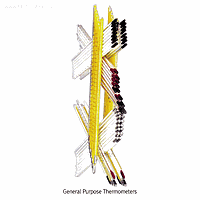
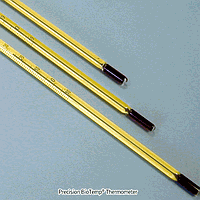
Liquid in Glass Thermometers
When a process needs a simple, continuous temperature reading without external power, a mechanical thermometer is still a practical choice. In many plants, laboratories, utility systems, and OEM installations, Liquid in Glass Thermometers remain useful for local indication, routine checks, and backup temperature monitoring where operators want an immediate visual reference.
This category brings together liquid-filled thermometers designed for direct reading in industrial environments. They are commonly selected for piping, tanks, equipment panels, and general-purpose thermal monitoring, especially when durability, easy installation, and straightforward maintenance matter more than digital communication features.
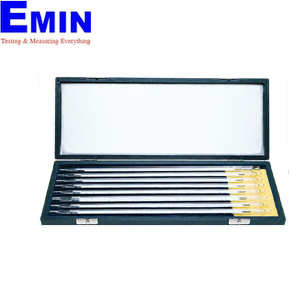
Why liquid-in-glass thermometers are still widely used
A liquid-in-glass design measures temperature through the expansion of a filled fluid inside a sealed sensing element and scale assembly. The main advantage is simplicity: there is no wiring, no transmitter, and no need for a separate display. That makes these instruments well suited for locations where operators only need a reliable local reading at the point of measurement.
In industrial settings, these thermometers are often chosen for their balance of readability and ruggedness. Compared with more complex systems, they can be easier to deploy for spot indication, and they work well alongside broader temperature monitoring setups such as temperature meters and indicators when a site needs both local and centralized visibility.
Typical applications across industrial and commercial systems
Liquid-in-glass thermometers are commonly used in HVAC lines, boiler support systems, water treatment skids, compressors, food processing support equipment, and general industrial machinery. They are especially helpful where technicians need to confirm process temperature during startup, inspection, or preventive maintenance without opening a cabinet or connecting a handheld instrument.
Because they provide direct visual feedback, they also fit well in systems where trend precision is less important than quick confirmation of operating condition. For surface screening or non-contact temperature checks in surrounding areas, some users may also pair local thermometers with a thermal imaging camera to spot hot zones, insulation issues, or uneven heating patterns.
Key selection points for this category
Choosing the right model usually starts with the temperature range. The instrument should cover normal operating temperature comfortably, with enough margin for expected peaks. A range that is too broad may reduce reading resolution, while a range that is too narrow can make the instrument unsuitable for real process conditions.
Another important factor is stem length and installation geometry. In this category, representative products include both 3.5 in and 6 in stem versions, with 180° adjustable stems for horizontal or vertical mounting. That flexibility is useful when the reading angle changes depending on pipe routing, panel layout, or equipment access.
Buyers should also check connection style, wetted materials, and environmental suitability. For example, the featured Dwyer models use a direct-read scale, 1/4 in NEF thread connection, and materials such as stainless steel and aluminum in the assembly. These details help determine whether the thermometer fits the mechanical and process conditions of the application.
Representative product options in this range
Several Dwyer models in this category illustrate how the range is organized by operating temperature and stem configuration. For shorter insertion depth, the Dwyer ITA9353D through ITA9358D series offers 3.5 in stem options with different temperature spans, while longer insertion applications can look at 6 in stem models such as Dwyer ITA9601D through ITA9606D.
These examples share a similar industrial format, including adjustable stem orientation and stated accuracy of ±1%. The main difference between them is the usable temperature range, from lower-temperature applications up to higher-temperature service points. This makes it easier to match the thermometer to chilled systems, ambient process lines, medium-temperature utility loops, or hotter equipment sections without overcomplicating selection.
How to match thermometer design to the installation point
For piping and vessels, visibility is often as important as sensing depth. A thermometer that is technically compatible but difficult to read in place can slow down maintenance and increase the chance of operator error. Adjustable-angle designs help solve that issue by allowing the dial and stem orientation to be aligned with the installer’s viewing position.
Shorter stems may be suitable for compact connections or shallow thermowell arrangements, while longer stems can improve immersion in larger lines or vessels. If the installation includes protective fittings, mounting hardware, or replacement parts, it is worth reviewing available temperature accessories to support a cleaner and more serviceable assembly.
Brand context and broader temperature measurement ecosystem
This category is centered on industrial temperature indication, with Dwyer featured prominently in the product selection shown here. Depending on purchasing standards, project preferences, or compatibility requirements, buyers may also compare broader temperature-related offerings from manufacturers such as OMEGA, skSATO, DaiHan, Dickson, Alla, and Amarell where relevant to their instrumentation strategy.
In practice, liquid-in-glass thermometers often work as part of a larger measurement ecosystem. They may be used for local checks, while electronic devices handle data logging, alarms, or remote monitoring. In some workflows, supplementary tools such as temperature indicating labels are also useful for quick exposure verification on equipment, packaging, or maintenance checkpoints.
What buyers often look for before ordering
Industrial users typically review four points before making a final choice: process temperature range, stem length, mounting orientation, and connection compatibility. Reading accuracy and material suitability also matter, particularly when the thermometer will be exposed to vibration, heat cycling, or outdoor conditions.
For replacement purchases, it is also helpful to verify whether the new unit needs to match an existing scale style, insertion depth, or installation footprint. For new projects, the goal is usually to select a thermometer that supports clear visibility and stable operation without adding unnecessary complexity to the system.
Final considerations
For many local monitoring tasks, liquid-in-glass thermometers remain a sensible option because they are easy to read, simple to install, and well suited to point-of-use temperature indication. Whether the application involves a compact line connection or a higher-temperature process point, selecting the right range, stem length, and mounting format will have the biggest impact on usability.
If you are narrowing down options in this category, start by matching the thermometer to the actual installation condition rather than choosing by range alone. That approach usually leads to a better fit for operation, maintenance access, and long-term reliability.
Get exclusive volume discounts, bulk pricing updates, and new product alerts delivered directly to your inbox.
By subscribing, you agree to our Terms of Service and Privacy Policy.
Direct access to our certified experts