Controlling Dust and Microplastic Particles from Conveyor Belts in Electronics Cleanrooms
Take a lint-free cleanroom wipe, dampen it slightly with alcohol, and wipe along the guide rails and belt of a conveyor that has been running for a few months. If the wipe picks up gray or black streaks, that dust is being generated by the conveyor itself.
No matter how thoroughly cleanroom air filtration is engineered, it cannot capture particles generated directly inside the production line. Belts, rails, and pulleys rub against one another every day and gradually wear down. This article walks through those dust-generation points and how to address them—from selecting the right conveyor to ongoing maintenance.
Where Do Dust and Microplastic Particles on Conveyors Come From?
The primary cause is mechanical abrasion. The easiest way to trace the source is to follow the belt path and examine every contact point.
Both aluminum and plastic guide rails gradually wear down at contact surfaces, producing fine powder—polymer dust from the belt or plastic components, and potentially metallic fines from the rails if their surfaces are not properly treated.
When a PCB stops at a buffer point waiting for a downstream SMEMA ready signal while the belt keeps running, the belt slips continuously beneath the board edge. Friction concentrates in one exact spot, abrading both the PCB edge and belt surface. This is the most overlooked dust source because it happens while the line is waiting—and production lines spend considerable time waiting.
The belt travels over pulleys, guide rollers, and drive gears; wherever components are misaligned or unevenly worn, the belt rubs harder and sheds particles faster.
What Problems Does Dust on PCBs Cause?
The consequences compound across consecutive stages of the assembly process.
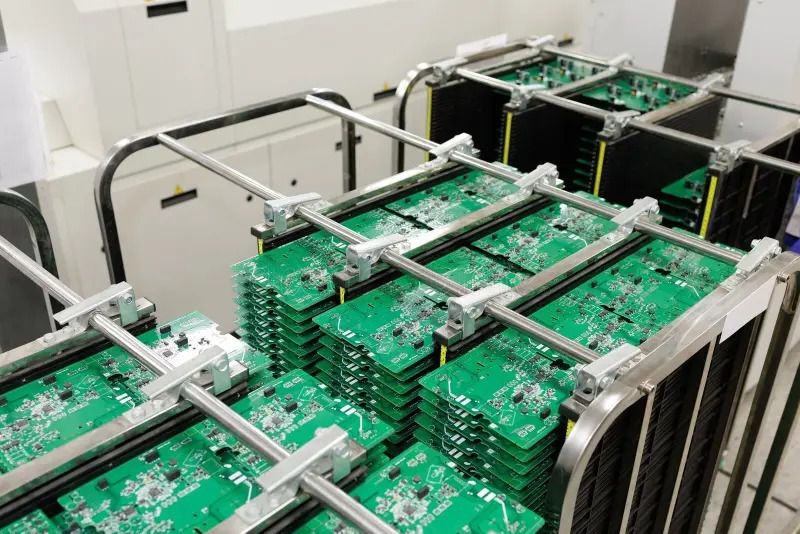
Before solder paste printing or component placement, dust settling on solder pads compromises solder joint quality, leading to uneven wetting, weak adhesion, or premature joint lifting. On ultra-fine components or narrow-pitch ICs, a single conductive particle combined with ambient humidity can bridge adjacent leads and cause a short circuit.
At inspection stations, dust on the PCB or camera lens causes automated optical inspection (AOI) systems to misread particles as foreign debris or component defects, driving up false call rates. Lines with high false calls waste operator time on manual re-verification—a hidden cost rarely traced back to conveyor dust.
Finally, electrostatic attraction plays a major role. Suspended micro-particles readily cling to PCB surfaces via static charge and, once attached, are difficult to remove with standard compressed air. Conveyor materials therefore govern not only how much dust is generated, but also whether particles remain trapped on the board.
Which Materials and Configurations Eliminate Dust at the Source?
Decisions made at the equipment specification stage have a far more lasting impact than any downstream maintenance routine.
Prioritize high-grade polyurethane belts over standard PVC or rubber. Polyurethane offers superior mechanical strength, a smooth surface, low aging degradation, and minimal particle shedding under friction. Belts should also feature permanent, inherent static-dissipative properties compounded into the base material rather than surface coatings that wear off over time.
Aluminum alloy guide rails with a hard-anodized surface finish significantly improve wear and scratch resistance where belts and PCBs slide, while suppressing metallic particle generation.
Static-dissipative mica or acrylic top covers serve two purposes: they shield boards from external airborne particles settling from above, and they contain internally generated wear debris so it does not disperse into the cleanroom environment.
Configure the conveyor drive so the motor stops completely when a board waits at the exit sensor instead of letting the belt slip continuously underneath. This control adjustment requires zero additional hardware yet virtually eliminates the second dust source described above.
How Should Conveyors Be Maintained to Prevent Dust Buildup Over Time?
Even well-engineered equipment requires proper operating discipline to stay clean.
Over-tensioned belts increase radial load on pulleys and rails, accelerating wear. Under-tensioned belts slip and chatter. Check tension regularly against manufacturer specifications, as each conveyor model has distinct tolerances.
Eccentric or worn pulleys, non-parallel rails, and belt tracking against rail walls all generate debris rapidly. Visually sighting along the belt path during operation quickly reveals lateral drift.
Periodically wipe belts and rail channels using lint-free cleanroom wipes moistened with a dedicated solvent such as IPA. Verify chemical compatibility with belt and polymer parts per manufacturer guidelines beforehand. Avoid blasting running conveyors with high-pressure air guns—this does not remove dust, it merely aerosolizes particles so they settle onto neighboring PCBs.
Log your cleaning and inspection schedule, and use the white-wipe test from the start of this article as your benchmark. If each wipe comes away cleaner than the last, your configuration and maintenance routine are working.
What Should You Prepare for EMIN to Recommend the Right Conveyor Configuration?
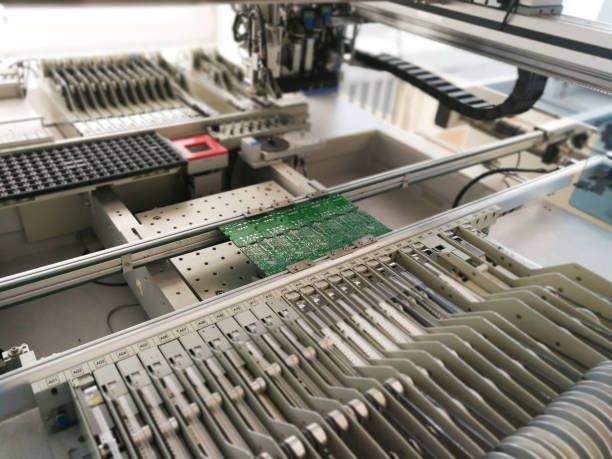
EMIN supplies a comprehensive range of PCB handling conveyors for SMT lines—including single-rail linking conveyors, turn conveyors, barcode scanning conveyors, parallel conveyors, loaders, unloaders, and board inverters. For cleanroom or ESD-controlled environments, specify your requirements upfront, as compliance levels depend on the machine series and selected options.
Share these five details with EMIN so our engineers can recommend the right conveyor type, belt material, protective cover, and idle-stop logic:
Why Address Conveyor Dust Before Upgrading Air Filtration?
Air filtration keeps the surrounding room clean, whereas the conveyor determines whether PCBs pick up contamination while moving through that space. Getting belt materials and drive control right eliminates particle generation at the source, delivering compounding benefits: cleaner boards, fewer AOI false calls, longer belt and rail service life, and lighter maintenance workloads.