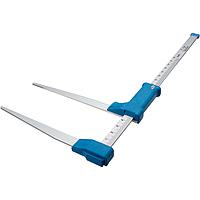
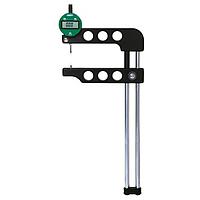
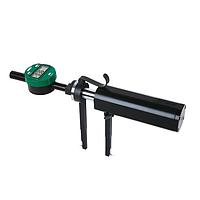
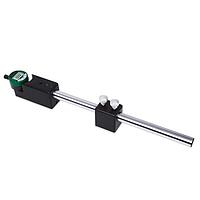
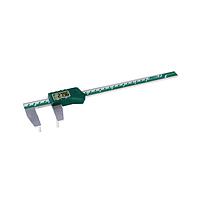
Diameter measurment caliper
In field surveying, forestry work, and outdoor inventory tasks, measuring diameter is often less about microns and more about speed, repeatability, and handling large objects efficiently. That is where diameter measurment caliper tools become especially useful. Compared with workshop calipers, this category is better suited to wide measurement spans, rugged handling, and practical use in real working environments.
On this page, you can explore diameter calipers designed for applications such as tree trunk measurement and other large-diameter checks where a standard bench caliper would be too limited. The focus is not only on range, but also on usability, durability, and choosing a format that fits the job.
Where diameter calipers are typically used
These instruments are commonly selected when the object being measured has a relatively large external diameter and must be checked directly on site. A common example is forestry, where operators need to measure tree trunks quickly during surveys, classification work, and inventory collection. In this context, a long-span caliper is easier to position and read than many general-purpose tools.
They can also be relevant wherever large round sections need direct external measurement without complex setup. While smaller parts are often handled with vernier calipers or more compact shop tools, this category addresses situations where reach and structure matter more than compact size.
What makes this category different from standard calipers
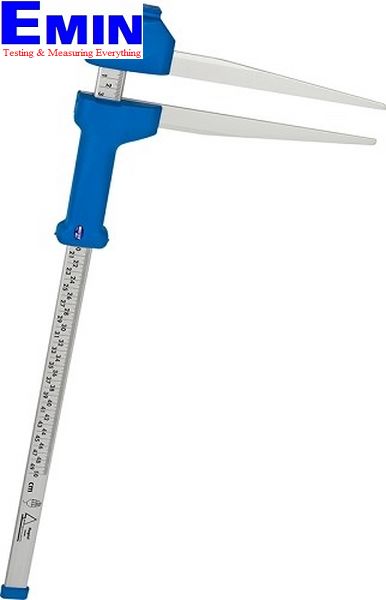
A diameter caliper in this category is built around large measuring range and practical field use. Based on the listed products, the available range extends from 0-400 mm up to 0-1270 mm, which is far beyond what typical handheld calipers are intended to cover. That wider span makes them suitable for trunks, poles, and other larger cylindrical forms.
Another important difference is construction. The featured models use alloy-coated aluminium scales with a non-reflective finish, along with handles made from armoured glass fiber poly carbonate plastic. In real use, these details support easier handling outdoors, reduce glare, and help the tool remain manageable even at longer lengths.
Representative HAGLOF models in this range
The most prominent brand in this category is HAGLOF, with several size options that allow buyers to match the tool to their normal working diameter range rather than over-specifying from the start. This is useful for teams that need a dedicated caliper for a defined survey scope.
Examples include the HAGLOF 11-100-1101 Caliper, 0-400mm for smaller diameter work, the HAGLOF 11-100-1103 Caliper, 0-650mm as a balanced mid-range option, and the HAGLOF 11-100-1107 Caliper, 0-1270mm for larger trunks or applications requiring maximum reach. Models such as HAGLOF 11-100-1105, 0-950mm and HAGLOF 11-100-1106, 0-1020mm provide intermediate choices when the measurement profile falls between standard range steps.
Across these examples, the shared design language is clear: lightweight structural materials, foldable jaws, and a form factor intended for repeated transport and use in the field. Instead of treating each model as a completely different instrument, it is more useful to view them as size variants within the same working concept.
How to choose the right diameter measurement range
The first step is to define the actual diameter range you expect to measure most often. If your work mainly involves smaller trunks or similar objects, a 0-400 mm or 0-500 mm model may be more convenient to carry and operate. If larger diameters are routine, moving to 0-800 mm, 0-950 mm, 0-1020 mm, or 0-1270 mm can reduce the need for workarounds and improve measuring consistency.
It is usually better to choose a range that covers normal use with some margin, rather than automatically selecting the longest version available. Oversized tools can be less convenient in transport and handling. The right balance depends on the maximum object size, working frequency, and whether the tool will be used by one operator or shared across a team.
Key design points to look at before buying
Beyond range, buyers should pay attention to jaw design, readability, and field durability. The listed products feature foldable jaws made from aluminium and steel, which is valuable when tools need to be transported between sites. A non-reflective scale is also beneficial outdoors, where strong ambient light can make conventional surfaces harder to read.
Material choice matters because these instruments are often used away from controlled workshop conditions. A lightweight but robust frame helps reduce fatigue during repeated measurement tasks. If your application is more bench-based and focused on smaller components, a digital caliper or a dial caliper may be more appropriate than a long-range diameter caliper.
Good measuring practice for reliable results
Even a well-designed caliper depends on correct handling. The jaws should be positioned squarely across the diameter, and the operator should avoid applying inconsistent pressure that could shift the contact points. On uneven natural surfaces such as bark, repeat measurements from consistent positions can help improve comparison and record quality.
It is also important to keep the tool clean after use, especially when working outdoors. Dirt, moisture, and residue can affect smooth movement and readability over time. Proper storage and routine inspection help maintain performance and reduce unnecessary wear, particularly for larger instruments that may be transported frequently.
Who this category is best suited for
This category is especially relevant for forestry professionals, survey teams, environmental monitoring work, and users who regularly measure large external diameters in the field. It is not simply a substitute for a general caliper; it is a more specialized solution for jobs where standard compact instruments are too small or awkward to use effectively.
If your work involves broad external diameter checks on large objects, the models in this category provide a more practical path than trying to adapt a standard caliper beyond its intended use. Choosing by realistic range, handling comfort, and operating environment will usually lead to a better long-term fit than selecting by specification alone.
Diameter measurement becomes much easier when the instrument matches the scale of the task. With HAGLOF options covering multiple range levels and designs intended for field use, this category helps buyers narrow down the right tool for repeatable, straightforward large-diameter measurement.
Get exclusive volume discounts, bulk pricing updates, and new product alerts delivered directly to your inbox.
By subscribing, you agree to our Terms of Service and Privacy Policy.
Direct access to our certified experts